
Anxiety is a normal feeling that most people experience from time to time. You may feel anxious before an exam, job interview, medical appointment, or important decision. In many cases, this feeling goes away once the stressful situation is over. However, anxiety may become a health concern when it is strong, happens often, or begins to affect your daily life. Understanding anxiety symptoms can help you recognize when normal worry may need professional attention.
Quick Summary
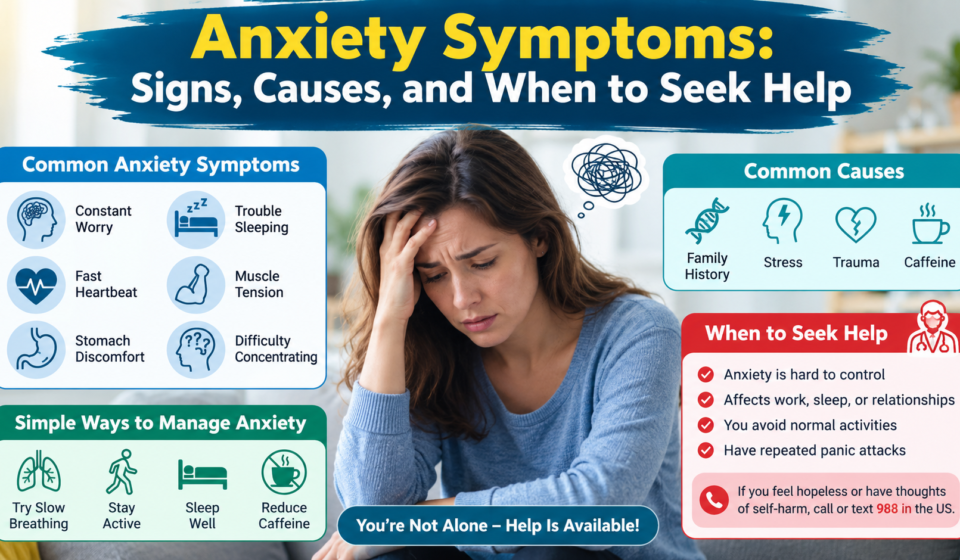
Anxiety can affect your thoughts, emotions, body, and behavior. Common symptoms include constant worry, restlessness, poor sleep, muscle tension, fast heartbeat, sweating, dizziness, and difficulty concentrating. Anxiety may be linked to stress, genetics, trauma, medical conditions, caffeine, certain medications, or substance use. Treatment may include therapy, medication, healthy habits, or a combination of these options. Talk to a doctor if anxiety is difficult to control or affects your work, sleep, relationships, or daily activities.
Table of Contents
- What Is Anxiety?
- Common Anxiety Symptoms
- Physical Symptoms
- Emotional and Behavioral Signs
- Common Causes
- Types of Anxiety Disorders
- Treatment Options
- Simple Ways to Manage Anxiety
- When to Seek Help
- Frequently Asked Questions
- Conclusion
- Trusted Resources
- Medical Disclaimer
What Is Anxiety?
Anxiety is a feeling of fear, nervousness, or worry. It is the body’s natural response to stress or possible danger. A small amount of anxiety can sometimes be helpful. It may encourage you to prepare for a test, complete an important task, or stay alert in a difficult situation. The problem begins when anxiety feels excessive, lasts for a long time, or happens even when there is no clear danger. For example, a person may worry so much about making a mistake at work that they cannot sleep, concentrate, or complete simple tasks.
Common Anxiety Symptoms
Anxiety symptoms are different for each person. Some people mainly experience emotional symptoms, while others notice physical changes.
Common signs include:
- Constant or excessive worry
- Feeling nervous or restless
- Difficulty concentrating
- Irritability
- Trouble sleeping
- Muscle tension
- Tiredness
- Fast heartbeat
- Sweating or shaking
- Dizziness
- Stomach discomfort
- Avoiding certain situations
Having one or two of these symptoms does not always mean you have an anxiety disorder. Symptoms become more concerning when they continue, become severe, or interfere with normal life.
Physical Symptoms of Anxiety
Anxiety can cause real physical symptoms because it activates the body’s stress response.
A person may notice a pounding heart, rapid breathing, sweating, trembling, headaches, tight muscles, nausea, or dizziness.
Some people also feel chest discomfort, shortness of breath, numbness, or tingling during a panic attack.
These symptoms can feel frightening. However, chest pain and breathing problems may also be signs of other medical conditions.
Do not automatically assume that severe physical symptoms are caused by anxiety. Seek urgent medical care for serious chest pain, fainting, severe breathing difficulty, or symptoms that feel like an emergency.
Emotional and Mental Signs
Anxiety can make it difficult to relax or think clearly.
You may feel that something bad is about to happen, even when there is no clear reason. You may replay conversations, worry about small mistakes, or constantly ask others for reassurance.
Anxiety may also cause:
- Racing thoughts
- Fear of losing control
- Difficulty making decisions
- Poor concentration
- Irritability
- Feeling mentally exhausted
For example, someone waiting for routine medical results may repeatedly check their phone and imagine the worst possible outcome.
Behavioral Signs
People with anxiety often avoid situations that make them uncomfortable.
They may avoid driving, flying, public speaking, social events, medical appointments, or crowded places.
Avoidance may provide temporary relief, but it can make anxiety stronger over time.
For example, a person who feels anxious during meetings may stop speaking, then stop attending meetings, and later avoid work opportunities completely.
Other behavioral signs may include procrastination, repeated checking, leaving places early, or depending heavily on another person for support.
What Causes Anxiety?
There is not always one clear cause of anxiety. It may develop due to several factors working together.
Possible causes and risk factors include:
- Family history of anxiety
- Long-term stress
- Difficult childhood experiences
- Trauma
- Major life changes
- Financial or work pressure
- Relationship problems
- Certain personality traits
- Medical conditions
- Certain medications
- Alcohol or drug use
- High caffeine intake
Some medical conditions, such as thyroid problems or abnormal heart rhythms, can cause symptoms that feel similar to anxiety.
That is why new, unexplained, or severe anxiety symptoms should be discussed with a healthcare professional.
Common Types of Anxiety Disorders
There are several types of anxiety disorders.
1. Generalized Anxiety Disorder
This condition causes ongoing and excessive worry about everyday matters, such as health, money, family, or work. The person may find it difficult to control the worry.
2. Panic Disorder
Panic disorder involves repeated panic attacks. A panic attack is a sudden period of intense fear that may include a fast heartbeat, shaking, sweating, dizziness, or shortness of breath.
3. Social Anxiety Disorder
Social anxiety causes strong fear in social situations. A person may worry about being judged, embarrassed, or rejected by others.
4. Specific Phobias
A specific phobia is an intense fear of a particular object or situation, such as flying, needles, animals, heights, fans or enclosed spaces.
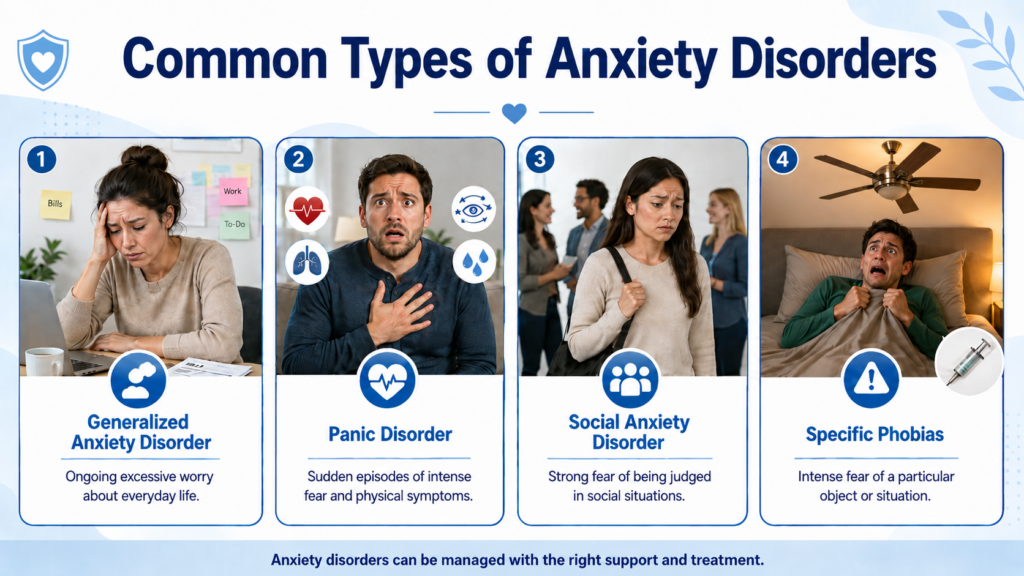
Four common anxiety disorders: generalized anxiety, panic disorder, social anxiety, and specific phobias.
How Is Anxiety Treated?
Treatment depends on the type and severity of anxiety.
1. Therapy
Talking with a licensed mental health professional can help you understand your anxiety and learn better ways to manage it.
Cognitive behavioral therapy, often called CBT, is commonly used. It helps people identify unhelpful thoughts and slowly face situations they have been avoiding.
2. Medication
A doctor may prescribe medication when anxiety is moderate or severe.
Some medications take time to work. Never start, stop, or change anxiety medication without speaking with your healthcare provider.
3. Combined Treatment
Some people improve with therapy alone. Others may need medication, lifestyle changes, or a combination of treatments.
The goal is not always to remove every anxious feeling. Treatment aims to make symptoms easier to manage and improve daily life.
Simple Ways to Manage Anxiety
Healthy habits may help reduce mild anxiety and support professional treatment.
1. Try Slow Breathing
Breathe in slowly through your nose, pause briefly, and breathe out gently.
Avoid fast or very deep breathing, as this may make dizziness worse.
2. Reduce Caffeine
Coffee, energy drinks, and some sodas may increase nervousness, shaking, fast heartbeat, and sleep problems.
Try reducing caffeine gradually instead of stopping suddenly.
3. Follow a Sleep Routine
Go to bed and wake up at similar times each day.
Keep your bedroom quiet and limit screen use before bedtime.
4. Stay Active
Regular movement may support mood and sleep.
A short walk, gentle stretching, or another safe activity can be a good place to start.
5. Break Tasks into Smaller Steps
Large tasks can feel overwhelming.
Instead of trying to complete everything at once, focus on one small step.
6. Talk to Someone
Speak with a trusted family member, friend, therapist, or support group.
You do not have to manage anxiety alone.
Avoid using alcohol, drugs, or unproven supplements to control anxiety. These may make symptoms worse or interact with medications.
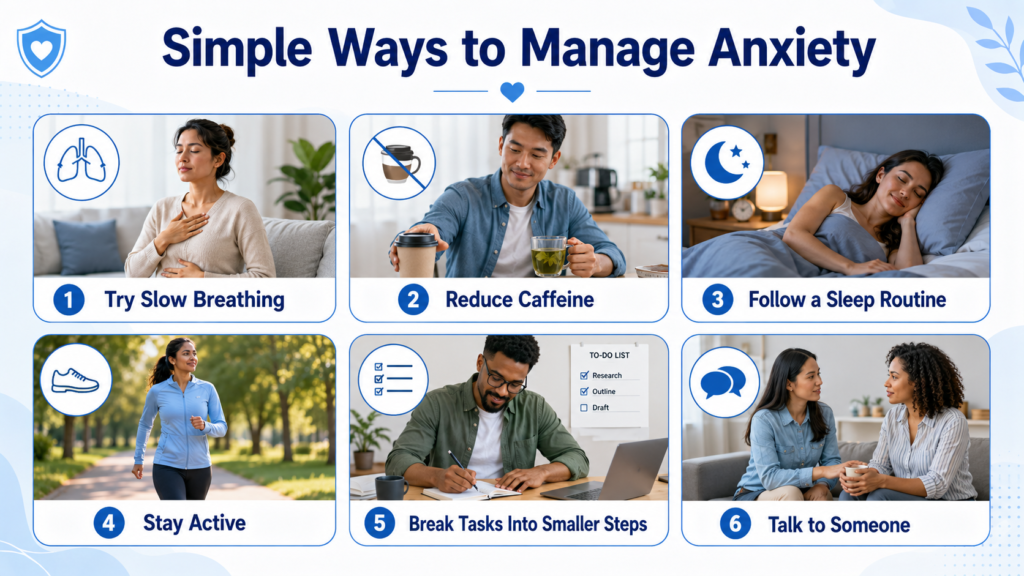
Six simple ways to manage anxiety, including breathing, sleep, exercise, reducing caffeine, small steps, and social support.
When to Seek Help
Talk to a doctor or mental health professional if:
- Anxiety is difficult to control
- Symptoms continue for several weeks
- Anxiety affects your sleep
- You avoid normal activities
- You have repeated panic attacks
- Anxiety affects work or relationships
- You use alcohol or drugs to cope
- Physical symptoms are new or severe
- Self-care is not helping
Seek immediate help if you have thoughts of suicide, self-harm, or feel unable to stay safe.
In the United States, call or text 988 for the Suicide & Crisis Lifeline. Call 911 for a life-threatening emergency.
Frequently Asked Questions (FAQs)
1. What are the early signs of anxiety?
Early signs may include frequent worry, poor sleep, restlessness, muscle tension, irritability, stomach discomfort, or trouble concentrating.
2. Can anxiety cause physical symptoms?
Yes. Anxiety may cause a fast heartbeat, sweating, shaking, headaches, nausea, dizziness, or shortness of breath.
However, new or severe physical symptoms should be checked by a doctor.
3. Can caffeine make anxiety worse?
Yes. Caffeine may increase nervousness, shaking, rapid heartbeat, and sleep problems in some people.
4. How long can anxiety symptoms last?
Temporary anxiety may improve when the stressful event ends. Anxiety disorder symptoms may continue for weeks, months, or longer without proper support.
5. Can anxiety go away on its own?
Mild anxiety may improve with time and healthy habits. Persistent or severe anxiety may require professional treatment.
6. Are panic attacks dangerous?
Panic attacks are usually not physically dangerous, but their symptoms can resemble a medical emergency.
Seek urgent care for new chest pain, fainting, severe breathing problems, or uncertain symptoms.
Conclusion: Understanding Anxiety Symptoms
Anxiety symptoms may affect the body, thoughts, feelings, and behavior.
Occasional anxiety is normal, but constant worry, panic attacks, poor sleep, physical discomfort, or avoidance may be signs that you need extra support.
Simple steps such as reducing caffeine, improving sleep, staying active, and talking to someone may help. However, these habits do not replace medical care.
Speak with a doctor or qualified mental health professional if anxiety continues, becomes difficult to control, or interferes with your daily life.
Trusted Resources
- National Institute of Mental Health
- MedlinePlus
- American Psychiatric Association
- Substance Abuse and Mental Health Services Administration
- National Center for Complementary and Integrative Health
Medical Disclaimer
This article is for general educational purposes only. It does not replace professional medical advice, diagnosis, or treatment. Always speak with a qualified healthcare professional about your symptoms or treatment options. Call 911 for a medical emergency.