
Knee or joint pain can make exercise feel difficult, but complete inactivity may increase stiffness and weakness. Gentle movement can support the muscles around painful joints and make daily tasks easier.
The best low-impact exercises for bad knees and joint pain create less pounding than running or jumping while improving strength, flexibility, balance, and heart health. The safest choice depends on your symptoms.
Quick Summary
Joint-friendly options include water exercise, swimming, stationary cycling, flat-surface walking, tai chi, and gentle leg-strengthening movements. Begin with short sessions, use controlled form, and stop if you develop sharp pain, sudden swelling, or instability.
Table of Contents
- Why low-impact exercise may help
- Symptoms and causes of joint pain
- Best low-impact exercises
- Exercise safety tips
- Prevention and treatment options
- When to see a doctor
- Frequently asked questions
- Conclusion
- Trusted resources
Why Low-Impact Exercise May Help Bad Knees
Low-impact does not mean effortless. It means an activity places less jarring force on the joints than running, jumping, or high-impact aerobics.
Joint-friendly physical activity may reduce arthritis-related pain, improve function and mood, and strengthen the muscles supporting the knee.
Exercise is not a guaranteed cure, but it can be one useful part of managing many long-term joint problems.
Common Symptoms and Causes of Knee and Joint Pain
Symptoms may include stiffness, swelling, warmth, weakness, reduced movement, clicking or grinding, or a feeling that the knee may give way.
Common causes include osteoarthritis, previous injury, tendon or bursa irritation, overuse, weak supporting muscles, and a sudden increase in activity. Persistent or unexplained pain should be assessed by a healthcare professional.
Best Low-Impact Exercises for Bad Knees and Joint Pain
1. Water Walking or Water Aerobics
Water supports part of your body weight, making movement easier on painful joints. Walk forward, backward, or sideways in waist- or chest-deep water.
Start with 10 minutes at an easy pace. Hold the pool wall if balance is difficult. Water exercise is commonly recommended as a joint-friendly activity.
2. Swimming
Swimming provides a full-body cardiovascular workout with very little impact on the knees. Freestyle and backstroke may be comfortable choices.
Some people find the breaststroke kick irritating. Use a stroke that feels natural and stop if a particular movement causes pain.
3. Stationary Cycling
A stationary bike provides smooth, repeated knee movement without running-related impact. It can help build leg endurance and maintain mobility.
Set the seat high enough that your knee stays slightly bent at the bottom of the pedal stroke. Begin with low resistance for five to ten minutes. A recumbent bike may offer extra support.
4. Flat-Surface Walking
Walking is affordable and easy to adjust. Choose a flat, even surface instead of hills, stairs, or rough trails.
Wear supportive shoes and begin with five to ten minutes. You can divide exercise into shorter sessions if a long walk is uncomfortable.
5. Tai Chi or Chair Yoga
Tai chi uses slow movements and gentle weight shifts. Chair yoga offers stretching and controlled movement with added support. Both can be adapted for balance or mobility limitations.
Avoid deep knee bends and twisting positions. A beginner or chair-based class is a sensible starting point.
6. Straight-Leg Raises
Lie on your back with one knee bent and the other leg straight. Tighten the thigh of the straight leg, lift it several inches, pause, and lower slowly.
Try 8 to 10 repetitions on each side. This strengthens the front thigh without repeatedly bending the knee. Do not add ankle weights unless advised by a professional.
7. Glute Bridges
Lie on your back with your knees bent and feet flat. Tighten your abdominal and glute muscles, lift your hips gently, and lower with control.
Start with 8 to 10 repetitions. Strong hip and glute muscles help control leg position during walking and other daily movements.
8. Seated Knee Extensions
Sit upright in a sturdy chair. Slowly straighten one leg until it is almost level with the floor, pause, and lower it. Repeat 8 to 12 times per side.
Work only within a comfortable range. Do not force the knee completely straight.
9. Gentle Leg Stretches
For a seated hamstring stretch, extend one leg with the heel on the floor and lean slightly forward from the hips. For a calf stretch, step one foot back while keeping the rear heel down.
Hold each stretch for 15 to 30 seconds without bouncing. Stretching should feel gentle, not sharp or painful.
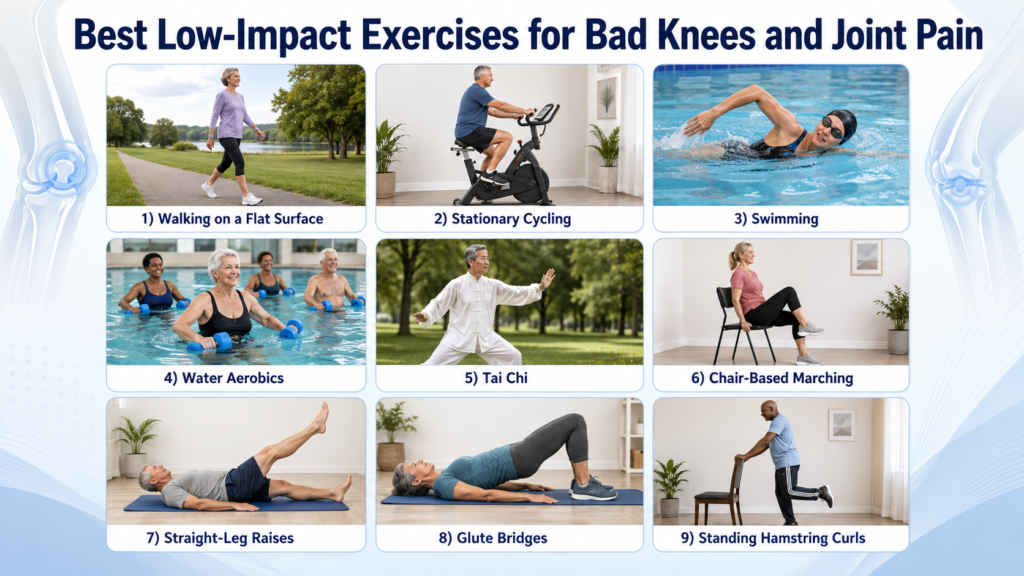
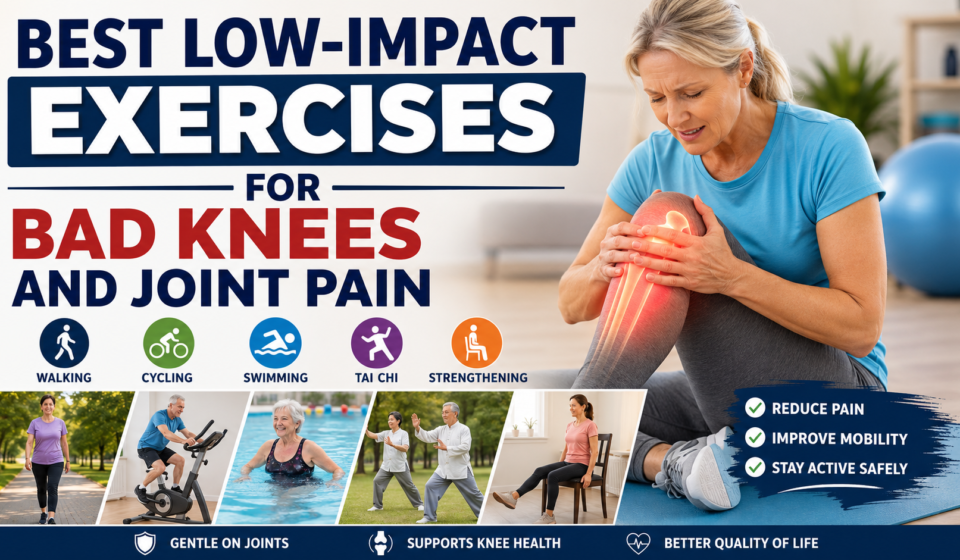
Nine low-impact exercises for bad knees, including walking, cycling, swimming, tai chi, chair marching, leg raises, bridges, and hamstring curls.
How to Exercise Safely With Joint Pain?
Warm up with easy marching, gentle cycling, or range-of-motion movements. Exercise slowly and increase only one factor at a time, such as duration or resistance.
Mild muscle effort may be normal, but sharp joint pain is a warning sign. Reduce or stop the activity if pain, swelling, or instability increases. If you feel much worse the next day, the session may have been too long or intense.
Use stable surfaces, supportive shoes, and a chair or rail when needed. Avoid jumping, sudden turns, and painful twisting unless cleared by a professional.
Prevention and Other Treatment Options
You cannot prevent every joint problem, but gradual activity, stronger supporting muscles, appropriate footwear, and avoiding repetitive painful movements may reduce strain.
Treatment depends on the cause. Options may include activity changes, physical therapy, weight management, medication, braces, injections, or surgery in selected cases. The plan should match the diagnosis.
Avoid products or home remedies that promise a guaranteed cure. Supplements and medications can have side effects or interactions, so discuss them with a healthcare professional.
When to See a Doctor
Seek prompt medical care if you cannot bear weight, the knee looks deformed, swelling is sudden or severe, the joint gives way, you cannot bend or straighten it, or severe pain follows an injury. Fever with redness, warmth, and swelling also needs medical attention.
Make an appointment if pain lasts for several weeks, repeatedly limits normal activities, disturbs sleep, or keeps worsening. A doctor or physical therapist can identify the likely cause and recommend suitable exercises.
Frequently Asked Questions (FAQs)
1. What Is the Safest Cardio Exercise for Bad Knees?
Water walking, swimming, and stationary cycling are often well tolerated because they reduce impact. The best choice still depends on your diagnosis, balance, strength, and symptoms.
2. Is Walking Good for Knee Pain?
Walking may be helpful when done on a flat surface at a comfortable pace. Start with short sessions and reduce the distance if pain or swelling increases.
3. Should I Exercise When My Knee Is Swollen?
Do not push through unexplained or significant swelling. Stop the activity that triggered it and seek advice if swelling is sudden, hot, red, severe, or persistent.
4. Are Squats Bad for Painful Knees?
Not always, but deep or poorly controlled squats may worsen symptoms. A shallow sit-to-stand from a higher chair may be a gentler alternative.
5. How Often Should I Do Low-Impact Exercise?
Many beginners start with 5 to 15 minutes on several days each week and build gradually. Your routine should reflect your health, symptoms, and medical guidance.
6. Can Exercise Make Joint Pain Worse?
Yes, if the exercise is unsuitable, technique is poor, or intensity increases too quickly. Modify any activity that causes sharp pain, new swelling, instability, or prolonged worsening.
Final Thoughts
The best low-impact exercises for bad knees and joint pain are activities you can perform comfortably and consistently. Water exercise, swimming, cycling, walking, tai chi, stretching, and basic strengthening can support mobility and confidence without unnecessary pounding.
Start slowly, focus on controlled form, and allow your body to adapt. Do not ignore severe, sudden, or persistent symptoms. Consult a doctor or physical therapist for an accurate diagnosis and a personalized exercise plan.
Trusted Resources
- Centers for Disease Control and Prevention
- American Academy of Orthopaedic Surgeons
- Mayo Clinic
- Arthritis Foundation
- CDC: Self-Care and Physical Activity Guidance for Arthritis.