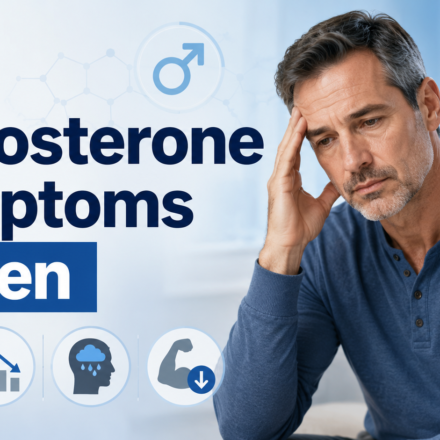


Low testosterone symptoms in men may affect sexual health, energy, mood, muscle strength, body composition, and fertility. However, these symptoms do not always mean that testosterone levels are low.
Fatigue, reduced sex drive, erection problems, and mood changes may also be linked to poor sleep, stress, depression, diabetes, thyroid disease, obesity, or certain medicines.
For this reason, testosterone deficiency should not be diagnosed based on symptoms alone. Medical guidelines recommend confirming the condition with relevant symptoms and repeat morning blood tests.
Quick Summary
Low testosterone, also called low T or testosterone deficiency, may cause reduced sex drive, fewer morning erections, fatigue, lower muscle strength, increased body fat, and mood or concentration changes.
A proper diagnosis usually requires symptoms plus at least two separate morning testosterone tests showing consistently low levels.
Treatment depends on the cause. Some men may benefit from better sleep, gradual weight loss, management of another medical condition, or prescription testosterone therapy.
Testosterone treatment is not appropriate for everyone and may reduce sperm production. Men who want children should discuss fertility plans with a doctor before treatment.
Table of Contents
- What Is Low Testosterone?
- Common Symptoms
- Causes and Risk Factors
- Prevention and Healthy Habits
- Diagnosis
- Treatment Options
- When to See a Doctor
- Final Thoughts
- FAQs
- Trusted Resources
What Is Low Testosterone?
Testosterone is the main male sex hormone. It supports sex drive, sperm production, muscle development, bone strength, red blood cell production, and male physical development.
Low testosterone is medically called testosterone deficiency or male hypogonadism. It occurs when the body does not produce enough testosterone to support normal functions.
Testosterone levels change throughout the day and may temporarily decrease during illness, severe stress, or poor sleep. One low blood test does not always confirm the condition.
Healthcare professionals usually consider symptoms, medical history, and repeat morning blood tests before making a diagnosis.
Many U.S. clinicians use a total testosterone level below approximately 300 nanograms per deciliter, or ng/dL, as a useful cutoff. However, laboratory ranges vary, so results must be interpreted by a qualified healthcare professional.
Common Low Testosterone Symptoms in Men
The signs of low testosterone may develop slowly and can differ from one person to another. Some men have several symptoms, while others notice only mild changes.
1. Reduced Sex Drive and Erection Problems
A lower interest in sex is one of the more common low T symptoms. Some men also notice fewer spontaneous or morning erections.
Low testosterone can contribute to difficulty getting or maintaining an erection, but it is not the only cause. Diabetes, blood vessel disease, high blood pressure, smoking, stress, anxiety, and certain medicines may also cause erectile dysfunction.
A man with erection problems should not assume that testosterone treatment is automatically needed. A medical evaluation may reveal another cause that requires different treatment.
2. Fertility Problems
Testosterone supports sperm production. Men with testosterone deficiency may have a lower sperm count and may find it more difficult to have a biological child.
However, fertility problems can have many causes. Testing may include a physical exam, hormone tests, and semen analysis.
Prescription testosterone can reduce sperm production further. Men who want to preserve fertility should tell their doctor before starting treatment.
3. Reduced Muscle Strength and Increased Body Fat
Low testosterone may contribute to reduced muscle mass, lower physical strength, and increased body fat.
For example, a man may notice that exercise feels harder or that his waist size is increasing without a major change in daily habits.
These changes are not specific to low testosterone. Aging, inactivity, poor nutrition, sleep problems, and other medical conditions can cause similar effects.
4. Changes in Hair, Breast Tissue, and Testicles
Some men with long-term testosterone deficiency may notice less facial or body hair.
Enlarged breast tissue may occur, and the testicles may appear smaller in some cases.
These physical changes should be discussed with a healthcare professional because they may have causes other than low testosterone.
5. Fatigue, Mood, and Concentration Changes
Ongoing tiredness, low motivation, irritability, depressed mood, or trouble concentrating may occur with testosterone deficiency.
However, these symptoms can also result from anemia, sleep apnea, thyroid disease, depression, chronic illness, or lack of sleep.
A primary care doctor may check for several possible causes rather than ordering only a testosterone test.
6. Reduced Bone Strength
Testosterone helps maintain healthy bones. Long-term testosterone deficiency may contribute to lower bone density and weaker bones.
A doctor may recommend bone-density testing if a man has long-standing low testosterone, an unexplained fracture, or other risk factors for osteoporosis.
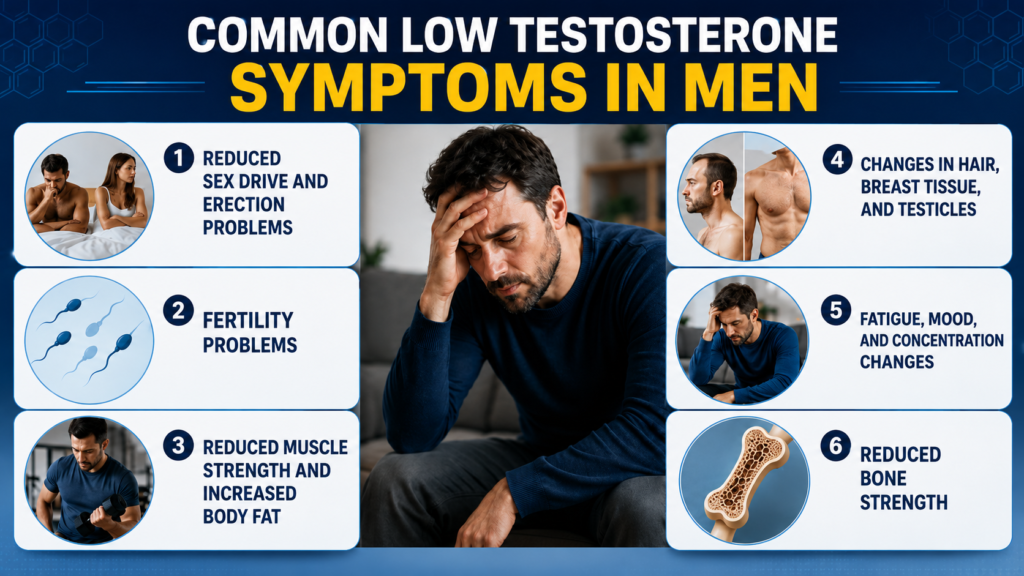
Common low testosterone symptoms in men, including fatigue, fertility problems, muscle loss, and reduced bone strength.
Causes and Risk Factors
Low testosterone can develop when the testicles do not produce enough hormone. This is known as primary hypogonadism.
It may also occur when the pituitary gland or hypothalamus does not send the correct signals to the testicles. This is called secondary hypogonadism.
Possible causes include testicular injury, infections, genetic conditions, chemotherapy, radiation treatment, pituitary disorders, high prolactin levels, and serious chronic illness.
Obesity, type 2 diabetes, sleep apnea, kidney disease, and liver disease are also associated with a higher likelihood of low testosterone.
Certain medicines, including long-term opioid use and some prostate cancer treatments, may lower testosterone.
Anabolic steroid use can also disturb the body’s natural hormone production. Never stop a prescribed medicine without speaking with the healthcare professional who prescribed it.
Can Low Testosterone Be Prevented?
Not every cause of testosterone deficiency can be prevented. Genetic disorders, testicular injury, pituitary disease, and some cancer treatments may affect testosterone despite healthy habits.
However, several practical steps may support overall hormone health.
1. Maintain a Healthy Weight
Obesity is commonly associated with lower testosterone levels. Gradual and sustainable weight loss may help some men when excess body weight is a contributing factor.
Choose balanced meals with vegetables, fruit, whole grains, beans, fish, lean protein, nuts, and healthy fats.
Regular walking, strength training, and other safe physical activities may also support weight, sleep, and energy levels.
2. Improve Sleep
Most adults should aim for approximately seven to nine hours of sleep each night.
Loud snoring, pauses in breathing, morning headaches, and severe daytime tiredness may be signs of obstructive sleep apnea.
Sleep apnea should be evaluated because it can affect overall health and may be associated with low testosterone.
3. Manage Medical Conditions
Work with your healthcare team to manage diabetes, obesity, kidney disease, liver disease, and other chronic conditions.
Take prescribed medicines as directed and attend regular follow-up appointments.
4. Avoid Unregulated Testosterone Boosters
Over-the-counter testosterone boosters are not a substitute for medical testing or approved treatment.
These products may contain uncertain ingredients or interact with medicines. Avoid anabolic steroids and testosterone products obtained without a prescription.
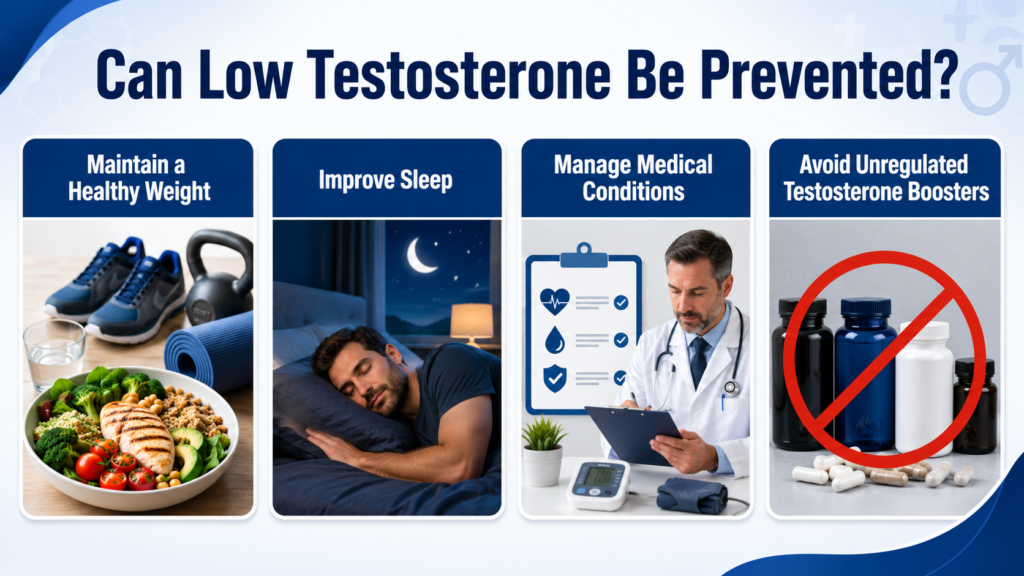
Infographic showing ways to help prevent low testosterone, including healthy weight, better sleep, medical care, and avoiding unregulated boosters.
How Low Testosterone Is Diagnosed?
Diagnosis usually begins with a review of symptoms, medical history, medicines, sleep habits, and fertility plans.
A doctor may also perform a physical examination to check body hair, breast tissue, testicular size, and muscle mass.
Morning Testosterone Tests
Testosterone levels are generally highest in the morning. Doctors often recommend testing during the early morning hours.
If the first result is low, the test is usually repeated on another morning.
A diagnosis is generally based on both symptoms and consistently low morning testosterone results.
Additional tests may include luteinizing hormone, follicle-stimulating hormone, prolactin, thyroid function, and red blood cell levels.
These tests help identify whether the problem begins in the testicles, pituitary gland, or another part of the body.
Low Testosterone Treatment Options
Treatment depends on the cause, symptoms, medical history, and fertility goals.
1. Treating an Underlying Cause
Some men may improve after addressing another health problem.
Treatment may include better sleep, treatment of sleep apnea, gradual weight loss, improved diabetes control, or a review of medicines that may affect testosterone.
Any medicine change should be made with the prescribing doctor.
2. Testosterone Replacement Therapy
Testosterone replacement therapy may be considered when a man has symptoms and repeatedly low testosterone levels.
Prescription options include gels, patches, injections, implanted pellets, and certain oral formulations.
The best option depends on cost, convenience, insurance coverage, medical history, and possible side effects.
Treatment requires regular monitoring. A doctor may check testosterone levels, blood pressure, red blood cell levels, symptoms, and prostate-related concerns when appropriate.
The U.S. Food and Drug Administration requires testosterone products to include information about possible increases in blood pressure.
3. Who May Need to Avoid Treatment?
Testosterone therapy may not be appropriate for men who are planning to have children.
It may also be unsuitable for some men with prostate or breast cancer, elevated hematocrit, untreated severe sleep apnea, uncontrolled heart failure, or certain recent cardiovascular events.
Never use another person’s testosterone or increase a prescribed dose without medical guidance.
When to See a Doctor
Schedule an appointment with a primary care doctor if low testosterone symptoms continue or affect daily life.
Medical evaluation is especially important for persistent loss of interest in sex, fewer morning erections, erectile problems, unexplained fatigue, reduced strength, physical breast changes, or fertility concerns.
A primary care doctor can begin the evaluation and refer you to a urologist or endocrinologist if needed.
Urgent care may help with a same-day concern, but it may not complete the repeat morning testing required for diagnosis.
Low testosterone symptoms alone rarely require an emergency room visit. Call 911 or go to the nearest emergency room for severe chest pain, difficulty breathing, fainting, sudden weakness, or another medical emergency.
Final Thoughts
Low testosterone symptoms in men may include reduced sex drive, fewer morning erections, fatigue, decreased strength, increased body fat, fertility problems, and changes in mood or concentration.
Because these symptoms can also come from other conditions, proper testing is safer than self-diagnosis or unregulated products.
A reliable diagnosis usually requires symptoms and at least two low morning testosterone results.
Treatment may include better sleep, gradual weight management, and treatment of another condition, medicine review, or prescription testosterone therapy.
Consult a primary care doctor, urologist, or endocrinologist if symptoms continue or interfere with your daily life.
Frequently Asked Questions (FAQs)
1. What are the first signs of low testosterone?
Reduced sex drive and fewer morning erections may be early signs. Some men also notice fatigue, lower motivation, reduced strength, or mood changes.
2. Can low testosterone cause erectile dysfunction?
Yes, it can contribute to erection problems. However, diabetes, circulation problems, stress, medicines, and high blood pressure may also cause erectile dysfunction.
3. Is one low testosterone test enough?
Usually not. Guidelines generally recommend a second morning blood test along with an evaluation of symptoms.
4. Can weight loss improve testosterone?
Gradual weight loss may help some men when obesity is a contributing factor. It will not correct every cause of testosterone deficiency.
5. Does testosterone therapy affect fertility?
Yes. Testosterone therapy can reduce sperm production. Men who want children should discuss other options with a doctor.
6. Are testosterone boosters safe?
Over-the-counter boosters are not proven substitutes for medical diagnosis or prescription treatment. Ask a doctor or pharmacist before using them.
Trusted Medical Resources
- Endocrine Society
- American Urological Association
- U.S. Food and Drug Administration
- MedlinePlus
- Cleveland Clinic
Medical Disclaimer
This article is for general educational purposes only and is not a substitute for professional medical advice, diagnosis, or treatment. Always consult a qualified healthcare professional regarding symptoms, test results, medicines, supplements, fertility concerns, or treatment decisions. Call 911 or visit the nearest emergency room for a medical emergency.