
Heart disease does not always begin with a dramatic emergency. In many men, the first warning signs are easy to dismiss.
You may feel more tired than usual, become short of breath while climbing stairs, or notice pressure in your chest during a brisk walk. Because these symptoms can also happen with stress, poor sleep, indigestion, or being out of shape, many people ignore them.
That can be a mistake.
Recognizing the early signs of heart disease in men does not mean diagnosing yourself. It simply means knowing when a change in your body deserves a conversation with a healthcare professional.
Quick Summary
Possible early warning signs include chest pressure, reduced stamina, shortness of breath, unusual fatigue, pain in the arm or jaw, palpitations, dizziness, ankle swelling, and persistent erectile dysfunction.
These symptoms can have many causes, but new, recurring, or worsening changes should be discussed with a primary care doctor.
Chest pain or pressure with sweating, nausea, faintness, shortness of breath, or pain spreading to the arm, back, neck, or jaw may be a heart attack. Call 911 immediately.
Table of Contents
- What Heart Disease Means
- Early Warning Signs in Men
- Common Risk Factors
- When to Seek Medical Care
- How Heart Disease Is Diagnosed
- Treatment Options
- Ways to Lower Your Risk
- Frequently Asked Questions
- Final Thoughts
What Does “Heart Disease” Mean?
Heart disease is a broad term. It includes several conditions that affect the heart and blood vessels, such as coronary artery disease, heart rhythm problems, heart failure, and valve disease.
Coronary artery disease is one of the most common forms. It develops when fatty deposits, known as plaque, build up inside the arteries that carry blood to the heart. As those arteries become narrower, the heart may not receive enough oxygen-rich blood, especially during physical activity.
Some men develop obvious symptoms. Others have mild symptoms, or no symptoms at all, until the condition becomes more serious.
This is why changes from your normal routine matter. A symptom does not have to be severe to be worth checking.
Early Signs of Heart Disease in Men
1. Chest Pressure or Tightness
Chest discomfort is one of the best-known warning signs, but it does not always feel like sharp pain.
Some men describe it as pressure, squeezing, fullness, burning, heaviness, or a dull ache. The discomfort may be in the center or left side of the chest.
It may appear when you are walking quickly, carrying groceries, shoveling snow, doing yard work, or feeling emotionally stressed. It may improve after you rest.
For example, a man who used to walk several blocks without difficulty may begin noticing chest heaviness halfway through the same route. Even if the feeling goes away after a few minutes, it should not be ignored.
New chest discomfort needs medical evaluation because heart symptoms can be difficult to distinguish from indigestion, muscle strain, or anxiety without proper testing.
2. Shortness of Breath
Feeling winded after intense exercise is normal. Becoming breathless during activities that were once easy may not be.
You might notice that climbing one flight of stairs now requires a break, or that walking from the parking lot leaves you breathing harder than expected.
Shortness of breath can be caused by many conditions, including lung disease, anemia, infection, poor fitness, or anxiety. It can also occur when the heart is not pumping effectively or is not receiving enough blood.
Contact a doctor when breathlessness is new, persistent, getting worse, or appearing alongside chest pressure, dizziness, swelling, or unusual fatigue.
3. A Noticeable Drop in Energy
Everyone feels tired from time to time. The concern is not an occasional low-energy day. It is a clear and unexplained decline in what you can normally do.
Maybe mowing the lawn suddenly feels exhausting. Perhaps you need to rest after carrying a laundry basket, or your usual workout feels much harder even though nothing else has changed.
Fatigue alone does not confirm heart disease. However, ongoing fatigue combined with shortness of breath, chest discomfort, sweating, dizziness, or reduced stamina deserves medical attention.
4. Pain in the Arm, Shoulder, Jaw, Back, or Upper Abdomen
Heart-related discomfort does not always remain in the chest.
It can spread to one or both arms, the shoulders, neck, jaw, upper back, or upper abdomen. Some men mainly notice discomfort in one of these areas and do not experience intense chest pain.
Muscle pain often becomes worse when you move, twist, or press on the area. Heart-related discomfort may be more difficult to pinpoint and may appear during physical effort.
Still, these patterns are not reliable enough for self-diagnosis. When pain is new, unexplained, or linked with sweating, breathlessness, nausea, or chest pressure, seek medical help.
5. Palpitations, Dizziness, or Fainting
Palpitations can feel like your heart is racing, pounding, fluttering, or skipping beats.
Brief episodes may happen after too much caffeine, dehydration, stress, lack of sleep, or intense exercise. Repeated episodes, however, may be related to an abnormal heart rhythm.
Make an appointment with your primary care doctor if palpitations are happening frequently or lasting longer than usual.
Seek urgent medical evaluation when they occur with chest pain, shortness of breath, dizziness, weakness, or fainting. Unexplained fainting, especially during exercise, should always be taken seriously.
6. Swelling in the Ankles, Feet, or Legs
Swollen feet are common after a long flight or many hours of standing. Persistent swelling can have other causes.
When the heart is not pumping efficiently, fluid may collect in the lower legs and ankles. You may also notice that your shoes feel tighter by the end of the day.
Heart problems are not the only explanation. Kidney disease, liver problems, vein disorders, and certain medicines can also cause swelling.
Contact your doctor if swelling is new, affects both legs, keeps returning, or comes with rapid weight gain or shortness of breath.
7. Persistent Erectile Dysfunction
Erectile dysfunction is common and can be related to stress, anxiety, diabetes, hormone changes, medication side effects, or relationship concerns.
It can also be associated with blood-vessel problems.
An erection depends on healthy blood flow. In some men, ongoing erectile dysfunction may appear before more obvious symptoms of cardiovascular disease.
This does not mean that every case is caused by heart disease. It does mean that persistent erectile dysfunction is worth discussing with a healthcare professional, especially if you also have high blood pressure, diabetes, high cholesterol, or a history of smoking.
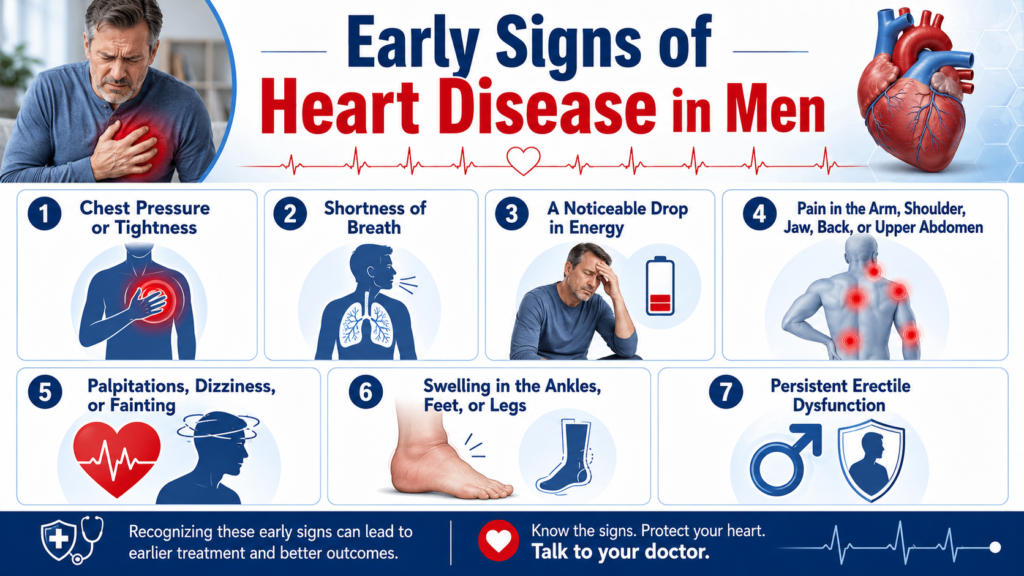
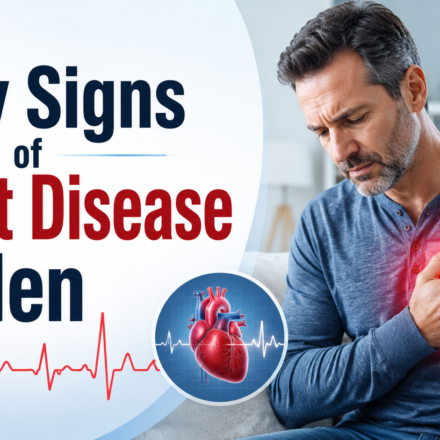
Early signs of heart disease in men, including chest pain, fatigue, shortness of breath, and swelling.
Common Heart Disease Risk Factors
Heart disease often develops over many years. Several factors can raise the risk, including:
- High blood pressure
- High LDL cholesterol
- Smoking
- Diabetes
- Excess body weight
- Physical inactivity
- A diet high in sodium, added sugar, or saturated fat
- Heavy alcohol use
- Poor sleep
- Older age
- A family history of early heart disease
Many of these conditions are silent. You cannot feel high blood pressure or high cholesterol in the same way you feel a headache or sore throat.
That is why routine health checks matter. Your doctor may recommend blood pressure screening, cholesterol testing in mg/dL, and blood sugar testing based on your age and medical history.
When Should You Seek Medical Care?
1. Call 911 for Possible Heart Attack Symptoms
Call 911 immediately if chest pain, pressure, squeezing, or heaviness:
- Lasts more than a few minutes
- Goes away and then comes back
- Spreads to the arm, jaw, back, shoulder, or neck
- Occurs with sweating, nausea, faintness, or shortness of breath
Do not drive yourself to the emergency room. Emergency medical professionals can begin treatment on the way to the hospital.
Do not wait to see whether the symptoms improve, and do not rely on a home remedy.
2. When Urgent Care May Be Appropriate
Urgent care may be helpful for mild, non-emergency symptoms that need same-day attention.
However, urgent care centers may not have all the testing needed to evaluate a possible heart problem. If the medical team suspects a serious condition, they may send you directly to an emergency room.
3. When to See a Primary Care Provider
Schedule a visit if you notice recurring chest discomfort during activity, reduced stamina, and persistent shortness of breath, frequent palpitations, leg swelling, or ongoing erectile dysfunction.
You should also discuss your risk if you have diabetes, high blood pressure, high cholesterol, or a strong family history of heart disease.
How Heart Disease Is Diagnosed?
Diagnosis usually begins with a conversation.
Your healthcare professional will ask about your symptoms, when they occur, how long they last, and whether they improve with rest. They may also ask about your family history, smoking habits, diet, exercise, sleep, and current medicines.
Depending on your situation, testing may include blood work, an electrocardiogram, an echocardiogram, a stress test, coronary CT angiography, or coronary angiography.
Not everyone needs every test. The right approach depends on your symptoms and overall level of risk.
A normal test result also does not always rule out every heart condition. Some rhythm problems come and go, and some forms of coronary artery disease require more than one type of evaluation.
Treatment Options
Treatment varies from person to person.
For some men, the main focus may be controlling blood pressure, lowering cholesterol, improving blood sugar, stopping smoking, and becoming more active.
Others may need prescription medicines. These can include statins, blood pressure medicines, antiplatelet medicines, medicines for angina, or medicines that help control an abnormal heart rhythm.
Some people may need a procedure, such as angioplasty with a stent, or coronary artery bypass surgery.
Treatment can reduce symptoms and lower the risk of complications, but no responsible clinician can promise a guaranteed cure.
Never start daily aspirin on your own. Aspirin can increase the risk of bleeding and is not appropriate for everyone. Always ask a healthcare professional first.
Practical Ways to Lower Your Risk
You do not need to change everything overnight.
Start with one or two realistic steps. A 10-minute walk after dinner, choosing a lower-sodium lunch, or scheduling a blood pressure check can be a useful beginning.
Most adults should work toward about 150 minutes of moderate physical activity each week. If you have chest discomfort, breathlessness, or have not exercised in a long time, ask your doctor what level of activity is safe.
Choose more vegetables, fruit, beans, whole grains, fish, nuts, and lean protein. Cut back on highly processed foods, sugary drinks, excess sodium, and foods high in saturated fat.
Avoid smoking and vaping. If quitting has been difficult, ask about counseling, nicotine-replacement options, and other evidence-based support.
Sleep also matters. Most adults need around seven to nine hours a night. Loud snoring, pauses in breathing during sleep, and severe daytime tiredness may be signs of sleep apnea, which is linked with cardiovascular risk.
Finally, take prescribed medicines as directed and attend follow-up visits. Feeling well does not always mean your blood pressure or cholesterol is under control.
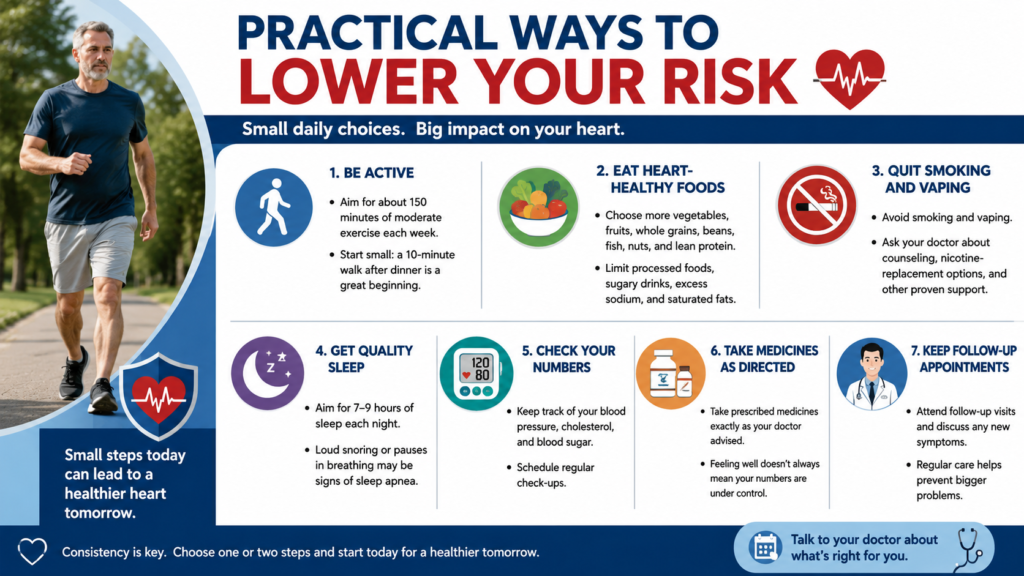
Heart-healthy lifestyle tips, including exercise, nutritious food, better sleep, regular checkups, and avoiding smoking.
Frequently Asked Questions (FAQs)
1. Can Men Under 40 Develop Heart Disease?
Yes. Heart disease is more common with age, but younger men can still develop it.
Risk may be higher in men who smoke, have diabetes, high blood pressure, obesity, very high cholesterol, inherited heart conditions, or a strong family history of early heart disease.
2. Can Heart Problems Feel Like Indigestion?
They can.
Heart-related discomfort may feel like burning, pressure, fullness, or pain in the upper abdomen. This is one reason heart symptoms are sometimes mistaken for acid reflux.
Call 911 if new “indigestion” occurs with physical activity, sweating, nausea, breathlessness, chest pressure, or pain in the arm or jaw.
3. Is Fatigue by Itself a Sign of Heart Disease?
Usually, fatigue alone is not enough to identify the cause.
Poor sleep, anemia, stress, depression, thyroid problems, infections, and medication side effects can all make you feel tired.
It becomes more concerning when it is persistent, unexplained, or accompanied by shortness of breath, reduced stamina, dizziness, swelling, or chest discomfort.
4. Does a Normal EKG Mean My Heart Is Healthy?
Not necessarily.
An EKG records the heart’s electrical activity during a specific period. It can detect many rhythm problems and signs of heart damage, but it does not rule out every type of heart disease.
Your doctor may recommend additional testing depending on your symptoms.
5. Should I Take Aspirin During a Suspected Heart Attack?
Call 911 first and follow the dispatcher’s instructions.
Aspirin is not safe for everyone, especially people with certain allergies or bleeding problems. Do not delay emergency care while searching for aspirin.
6. Can Lifestyle Changes Reverse Heart Disease?
Healthy habits can improve blood pressure, cholesterol, blood sugar, and physical fitness. They may also slow the progression of cardiovascular disease.
However, lifestyle changes should not replace medical care, prescribed medicine, or recommended procedures.
Final Thoughts
The early signs of heart disease in men can be subtle.
You may notice chest pressure during activity, shortness of breath, reduced energy, upper-body discomfort, palpitations, dizziness, ankle swelling, or persistent erectile dysfunction. None of these symptoms proves that you have heart disease, but they should not be ignored when they are new, recurring, or getting worse.
A primary care doctor can help assess your symptoms, review your risk factors, and decide whether testing is needed.
For severe chest discomfort, trouble breathing, fainting, cold sweating, or pain spreading to the arm, neck, jaw, shoulder, or back, call 911 and go to an emergency room immediately.
Trusted Resources
- Centers for Disease Control and Prevention
- American Heart Association
- National Heart, Lung, and Blood Institute
- MedlinePlus
- Mayo Clinic
Medical Disclaimer
This content is provided for educational and informational purposes only. It is not a substitute for professional medical advice, diagnosis, or treatment. Speak with a qualified healthcare professional about any symptoms, medicines, or treatment decisions. Call 911 for possible heart attack symptoms or any medical emergency.