
Quick Summary
Perimenopause is the natural transition before menopause. It often begins in the 40s, although timing differs for every woman.
Early signs may include irregular periods, hot flashes, night sweats, sleep problems, mood changes, brain fog, vaginal dryness, and urinary symptoms.
These symptoms can also result from pregnancy, thyroid disease, anemia, stress, medicines, or other conditions. Contact your primary care doctor or OB-GYN if symptoms are new, severe, or affecting daily life.
Table of Contents
- What is perimenopause?
- Early signs and symptoms
- Causes and diagnosis
- Practical symptom relief
- Treatment options
- When to see a doctor
- Frequently asked questions
- Conclusion
What Is Perimenopause?
Perimenopause means “around menopause.” During this stage, the ovaries release eggs less regularly and estrogen and progesterone levels become less predictable.
These hormonal changes can affect periods, body temperature, sleep, mood, and vaginal comfort.
Menopause is reached after 12 consecutive months without a menstrual period when pregnancy or another condition does not explain the change. Perimenopause may last several years, and symptoms vary widely.
Early Signs of Perimenopause in Your 40s
1. Changes in Your Periods
A changing menstrual cycle is often one of the earliest signs.
Periods may become closer together, farther apart, lighter, heavier, shorter, or longer. You may also skip a period occasionally.
Pregnancy is still possible because ovulation can continue. Bleeding between periods, after sex, or after 12 months without a period should be evaluated.
2. Hot Flashes and Night Sweats
A hot flash is a sudden feeling of warmth, usually in the face, neck, or chest. You may sweat, feel flushed, or notice a faster heartbeat.
Hot flashes during sleep are called night sweats. Keeping the bedroom cool, dressing in layers, and noting triggers such as alcohol, spicy foods, or hot drinks may help.
3. Sleep Problems
You may have trouble falling asleep, staying asleep, or returning to sleep after waking. Night sweats, stress, anxiety, and caffeine may contribute.
A regular bedtime, a cool room, and avoiding caffeine late in the day may help. Loud snoring, pauses in breathing, or severe daytime sleepiness should be discussed with a doctor.
4. Mood Changes
Some women notice irritability, sadness, anxiety, or increased emotional sensitivity.
Hormonal changes may contribute, but poor sleep and midlife stress can also affect mood. Seek professional help if symptoms persist, worsen, or interfere with daily activities.
5. Brain Fog
You may find it harder to focus, recall names, or manage several tasks at once. Poor sleep and stress can make this worse.
Sudden confusion, weakness on one side, or difficulty speaking requires emergency care.
6. Vaginal Dryness or Pain during Sex
Lower estrogen levels can make vaginal tissue drier and more sensitive. This may cause burning, irritation, or painful sex.
A water-based lubricant may provide short-term relief. A vaginal moisturizer can help with ongoing dryness.
See your doctor for persistent pain, pelvic pain, unusual discharge, or bleeding after sex.
7. Urinary Changes
Some women experience urinary urgency, frequent urination, leakage, or repeated urinary tract infections.
These symptoms may also be caused by infection, diabetes, pelvic floor weakness, or medicines. A clinician can identify the cause and recommend treatment.
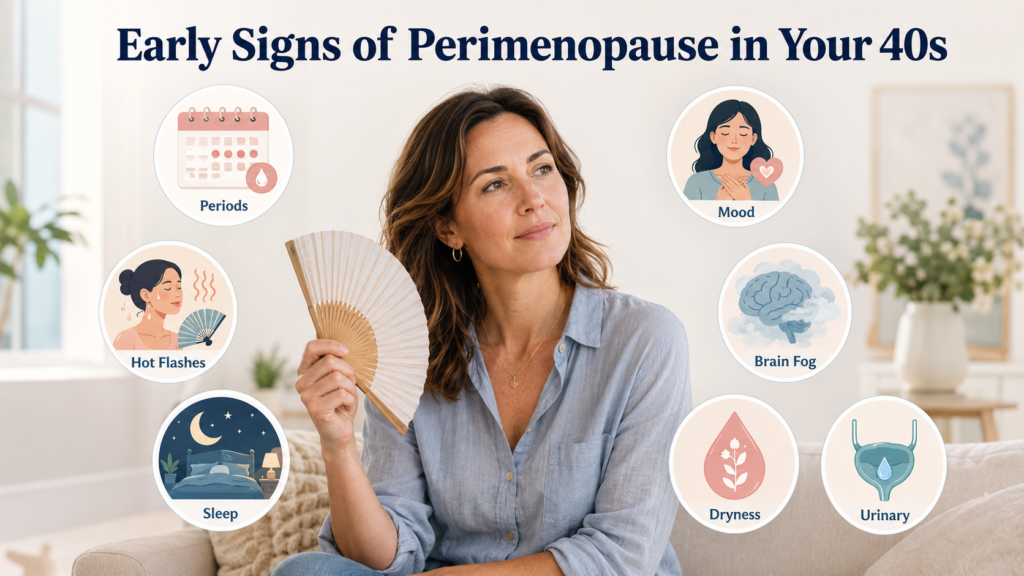
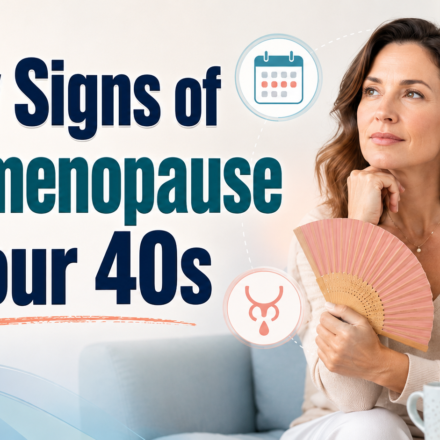
Woman in her 40s with icons showing common perimenopause symptoms such as period changes, hot flashes, sleep problems, mood changes, brain fog, dryness, and urinary issues.
What Causes Perimenopause?
Perimenopause is mainly caused by natural reproductive aging.
As ovarian function changes, ovulation becomes less regular and hormone levels fluctuate. This can lead to irregular periods and other symptoms.
Smoking may be associated with earlier menopause. Surgery to remove the ovaries and some cancer treatments can cause symptoms to begin suddenly. Symptoms before age 40 should be evaluated for primary ovarian insufficiency or another medical condition.
How Is Perimenopause Diagnosed?
There is no single test that confirms perimenopause in every woman.
A doctor usually considers age, symptoms, menstrual pattern, pregnancy possibility, medical history, and medicines.
Hormone levels change from day to day, so one blood test may not give a clear answer. Testing may still help when symptoms are unusual.
Your doctor may order a pregnancy test, complete blood count, thyroid test, or other tests to rule out possible causes.
Practical Ways to Manage Symptoms
Simple habits may improve comfort:
- Track periods, hot flashes, sleep, and possible triggers.
- Keep your bedroom cool and use lightweight bedding.
- Exercise regularly at a level that is safe for you.
- Eat balanced meals with vegetables, fruit, whole grains, lean protein, and healthy fats.
- Limit smoking, excess alcohol, and late-day caffeine.
- Use vaginal lubricants or moisturizers for dryness.
These habits support heart, bone, and overall health, but they cannot prevent the natural menopause transition.
Treatment Options
Treatment depends on your symptoms, health history, need for contraception, and personal preferences.
1. Menopausal Hormone Therapy
Hormone therapy may reduce hot flashes, night sweats, and vaginal symptoms.
It is not suitable for everyone. Discuss the possible benefits and risks with a clinician, especially if you have a history of blood clots, stroke, liver disease, breast cancer, heart disease, or unexplained vaginal bleeding.
2. Hormonal Birth Control
Low-dose hormonal birth control may help manage irregular bleeding and provide contraception.
Because pregnancy remains possible during perimenopause, ask your healthcare professional how long you should continue birth control.
3. Nonhormonal Treatment
Certain nonhormonal prescription medicines may help with hot flashes, mood symptoms, or sleep problems.
Local vaginal estrogen or other prescription treatments may help manage vaginal dryness, painful sex, and urinary symptoms.
Do not start herbal remedies, supplements, or compounded hormones without speaking with your doctor or pharmacist. “Natural” products can still cause side effects or interact with medicines.
When Should You See a Doctor?
Schedule a visit with your primary care doctor or OB-GYN if symptoms affect your sleep, work, relationships, sexual comfort, or overall quality of life.
Seek medical advice for:
- Bleeding between periods or after sex
- Periods lasting longer than seven days
- Bleeding that is much heavier than usual
- Pelvic pain or unusual vaginal discharge
- Possible pregnancy
- Bleeding after 12 months without a period
Urgent care may be appropriate for a suspected urinary infection, persistent dizziness, or symptoms needing same-day evaluation.
Call 911 or go to an emergency room for severe bleeding accompanied by fainting, chest pain, and shortness of breath, severe weakness, or confusion.
Can Perimenopause Be Prevented?
Natural perimenopause cannot be prevented because it is a normal stage of life.
However, avoiding smoking, exercising regularly, eating a balanced diet, getting enough sleep, and attending preventive health visits can support your long-term health.
Frequently Asked Questions (FAQs)
1. What is usually the first sign of perimenopause?
For many women, the first sign is a change in their menstrual cycle. Some women notice hot flashes, mood changes, or sleep problems first.
2. Can perimenopause start at age 40?
Yes. Perimenopause often begins during the 40s. Symptoms that begin before age 40 should be evaluated by a doctor.
3. Can you still get pregnant during perimenopause?
Yes. Ovulation may become irregular, but pregnancy remains possible. Continue using contraception if you do not want to become pregnant.
4. Do I need a hormone test?
Not always. Doctors can often recognize perimenopause based on age, symptoms, and period changes. Testing may help rule out pregnancy, thyroid disease, anemia, or other conditions.
5. Are supplements safe for perimenopause?
Not all supplements are safe or effective. Some may cause side effects or interact with prescription medicines. Ask a doctor or pharmacist before using herbal or menopause products.
Conclusion
The early signs of perimenopause in your 40s may include changing periods, hot flashes, night sweats, poor sleep, mood changes, brain fog, vaginal dryness, and urinary symptoms.
These changes are common, but not every symptom is caused by perimenopause. Track your symptoms and use safe, practical measures to improve comfort.
Contact your primary care doctor or OB-GYN if symptoms are disruptive, bleeding is unusual, or you are unsure about the cause. Personalized treatment can help you manage symptoms safely.
Trusted Resources
- National Institute on Aging
- American College of Obstetricians and Gynecologists
- U.S. Office on Women’s Health
- The Menopause Society
- MedlinePlus
Medical Disclaimer
This article is for educational purposes only and is not a substitute for professional medical advice, diagnosis, or treatment. Contact a qualified healthcare professional with questions about symptoms or medicines. Call 911 or go to the nearest emergency room during a medical emergency.