
Quick Summary
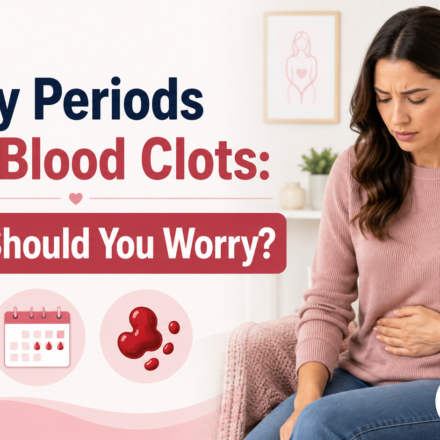
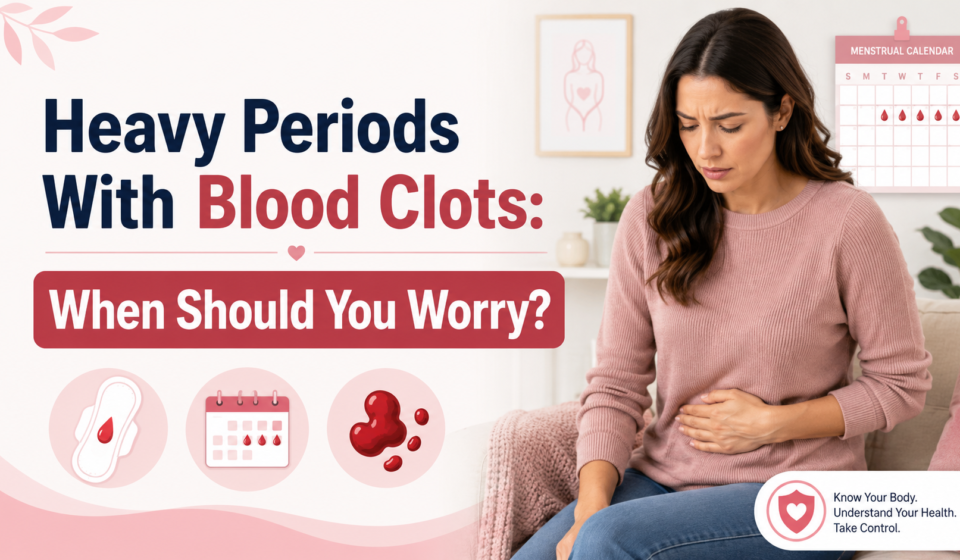
Seeing blood clots during your period can be upsetting. You may wonder whether they are normal or a sign that something is wrong. Small clots can appear on the heaviest days of a period. Repeated large clots, bleeding for more than seven days, or soaking through a pad or tampon every hour may be signs of heavy menstrual bleeding.
Small period clots are not always dangerous. Contact a primary care provider or OB-GYN if you often pass clots the size of a quarter or larger, bleed longer than seven days, or need to change period protection very often. Go to the emergency room if heavy bleeding comes with fainting, chest pain, trouble breathing, severe weakness, severe pelvic pain, or a possible pregnancy.
Table of Contents
- What period clots are
- When bleeding may be too heavy
- Common causes
- Anemia and heavy periods
- Diagnosis and treatment
- Safe steps at home
- Frequently asked questions
- Helpful final thoughts
What Are Period Blood Clots?
During a period, the uterus sheds its inner lining. The fluid leaving your body contains blood and tissue. When the flow is heavy, some blood may stay in the uterus or vagina for a short time before coming out. It can thicken into a soft, jelly-like clot. Clots may look dark red, bright red, or brown. A few small clots may not be a problem. Their size, frequency, and the amount of bleeding matter most.
When Are Heavy Periods With Blood Clots a Concern?
Your period may be too heavy if you:
- Bleed for more than seven days
- Soak through a pad or tampon every hour for several hours
- Need a pad and tampon together
- Wake at night to change period protection
- Regularly pass clots the size of a quarter or larger
- Miss work, exercise, sleep, or social activities because of bleeding
These are recognized signs of heavy menstrual bleeding. Bleeding may also be too heavy if it regularly disrupts work, sleep, exercise, or daily life. You should also see a doctor if your periods suddenly become much heavier, you bleed between periods or after sex, or you have any bleeding after menopause.
When to Get Urgent Help
Call your doctor or visit urgent care for same-day advice if you are soaking through a pad or tampon every hour for several hours but still feel stable. Go to an emergency room or call 911 if heavy bleeding happens with fainting, trouble breathing, chest pain, confusion, severe weakness, or severe pelvic pain. Get urgent help if pregnancy is possible and you have heavy bleeding with strong or one-sided pelvic pain, shoulder pain, dizziness, or fainting. Do not drive yourself if you feel faint or very weak.
Common Causes of Heavy Periods with Blood Clots
1. Hormone Changes
Hormones control how the uterine lining grows and sheds. Irregular ovulation can make the lining thicker and lead to heavier bleeding. This may happen during the teenage years, after pregnancy, during perimenopause, or with PCOS or thyroid disease.
For example, a woman going through perimenopause may notice that her periods become less regular. Some months may be lighter, while others may be much heavier and include clots.
2. Fibroids, Polyps, or Adenomyosis
Fibroids are usually noncancerous growths in or around the uterus. Polyps are small growths in the uterine lining. Adenomyosis affects the muscle of the uterus. These conditions may cause heavy bleeding, clots, pressure, or pain.
Not every woman with fibroids or polyps has symptoms. An ultrasound may be needed to find out whether one of these conditions is causing the bleeding.
3. Bleeding Disorders
Heavy periods may sometimes be a sign of a bleeding disorder, such as von Willebrand disease.
Tell your doctor if you have had very heavy periods since your teenage years, bruise easily, often have nosebleeds, or bleed for a long time after dental work, surgery, or childbirth.
A family history of unusual or long-lasting bleeding is also important.
4. Birth Control and Medicines
A copper IUD may make periods heavier, especially during the first year. Blood thinners and aspirin may also increase menstrual bleeding. Never stop prescribed medicine without speaking with the clinician who prescribed it. Some hormonal birth control methods may cause irregular spotting at first. However, certain hormonal methods can also make periods lighter over time.
5. Pregnancy-Related Bleeding
An early miscarriage may sometimes look like a late, very heavy period with clots. An ectopic pregnancy may cause bleeding with serious pelvic pain.
Take a pregnancy test if your period is late or pregnancy is possible. Contact an OB-GYN promptly if the result is positive and you are bleeding. Heavy bleeding during pregnancy should not be treated as a normal period.
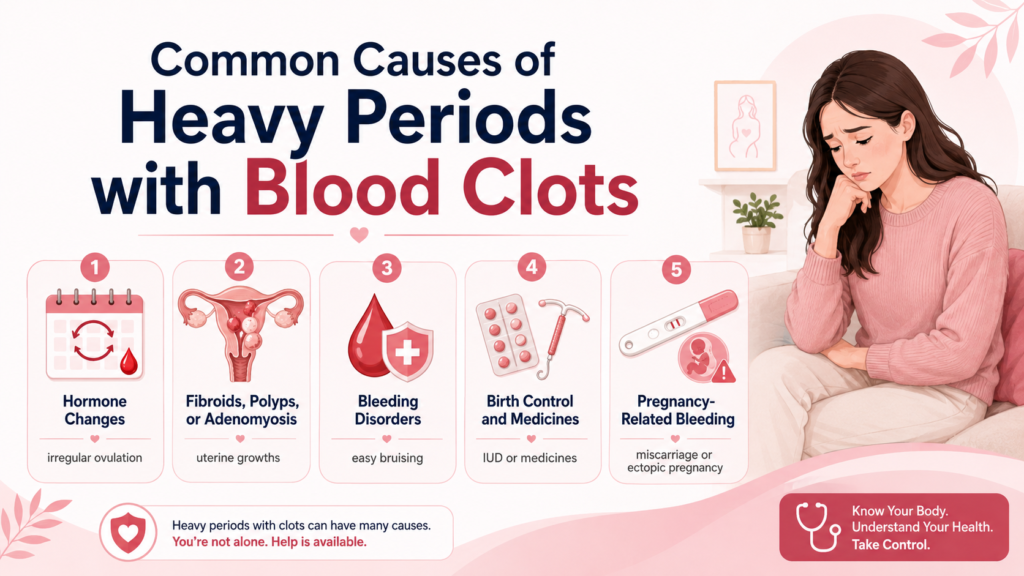
Common causes of heavy periods with blood clots in women.
Can Heavy Periods Cause Anemia?
Yes. Repeated heavy bleeding can lower your iron and lead to iron-deficiency anemia. Iron helps your body make healthy red blood cells. These cells carry oxygen around your body. When your iron becomes too low, you may begin to feel tired or weak.
Possible symptoms include:
- Ongoing tiredness
- Weakness or dizziness
- Frequent headaches
- Pale skin
- Shortness of breath
- A fast heartbeat
- Trouble concentrating
More serious iron-deficiency anemia may cause extreme tiredness, breathing difficulty, or chest discomfort.
Ongoing exhaustion should not be ignored. Your provider may order a complete blood count and an iron test such as ferritin.
How Doctors Find the Cause?
Your provider may ask about the length of your period, how often you change products, clot size, pain, medicines, and easy bruising. Try to answer as clearly as possible. For example, tell your doctor if you need to change a completely soaked pad every hour rather than simply saying your period is “very heavy.”,
Tests may include a pregnancy test, blood tests, a pelvic exam, or an ultrasound. Some women may also need a sample from the uterine lining, depending on age and symptoms. Not every woman needs every test. Your provider will choose tests based on your symptoms, age, health history, and pregnancy plans.
Treatment Options
Treatment depends on the cause, the amount of bleeding, your health, and whether you want a future pregnancy.
1. Medicines
Tranexamic acid may reduce bleeding during a period. It is a prescription medicine and is not suitable for every woman. Ibuprofen or naproxen may help some women with bleeding and cramps, but they are not safe for everyone. Ask a clinician before using them if you have kidney disease, stomach ulcers, a bleeding disorder, take blood thinners, or may be pregnant.
Avoid using aspirin for period pain unless a healthcare professional has specifically told you to take it.
2. Hormonal Treatment
Hormonal birth control pills, progestin treatment, or a levonorgestrel-releasing IUD may make periods lighter. Your provider can help you choose an option that suits your health, preferences, and pregnancy plans.
Hormonal treatment may not be suitable for every woman, so do not use another person’s medicine or birth control.
3. Iron Supplements
If tests show iron deficiency, your doctor may recommend iron supplements. Do not take high-dose iron without medical advice. Too much iron can be harmful and may cause constipation, nausea, or stomach pain.
4. Medical Procedures
A procedure may be needed if fibroids, polyps, or another uterine problem is causing the bleeding.
For example, a doctor may remove a polyp or certain fibroids. Endometrial ablation or hysterectomy may be considered in selected cases when other treatments are not suitable.
Medicine is often tried first when appropriate.
Safe and Practical Steps
- Keep a period diary. Record how long bleeding lasts, how often you change products, clot size, pain, dizziness, and shortness of breath.
- You can use a notebook or a period-tracking app. Take this information to your medical appointment.
- Eat iron-rich foods such as beans, lentils, lean meat, eggs, tofu, fortified cereal, and dark green vegetables.
- A heating pad may ease cramps. Rest, fluids, and gentle walking may also help you feel more comfortable.
- These steps may help symptoms, but they do not treat the cause of very heavy bleeding.
- Avoid vaginal steaming, herbal “cleanses,” and products that promise to stop bleeding quickly. They may cause harm or delay proper medical care.
- There is no safe home remedy that can guarantee an immediate cure for heavy periods with blood clots.
Frequently Asked Questions (FAQs)
1. Are small blood clots during a period normal?
They can be. Small clots may appear during the heaviest days. Regular clots the size of a quarter or larger should be discussed with a doctor.
2. Why has my period suddenly become heavier?
Possible causes include hormone changes, fibroids, thyroid problems, a copper IUD, medicines, or pregnancy-related bleeding. See a doctor if the change continues, becomes severe, or affects your daily routine.
3. Can stress cause heavy periods?
Stress can affect the timing or flow of a period. However, very heavy bleeding should not automatically be blamed on stress. A healthcare professional may need to check for another cause.
4. Can fibroids cause large clots?
Yes. Fibroids may increase menstrual bleeding, making clots more likely. An ultrasound can help a doctor check for fibroids and other changes in the uterus.
5. Can birth control help with heavy periods?
Some hormonal birth control methods can make periods lighter and less painful. The best choice depends on your health, symptoms, age, and whether you plan to become pregnant.
Final Thoughts
Heavy periods with blood clots are not always a sign of a serious condition. Still, you should not ignore bleeding that is new, keeps getting heavier, lasts more than seven days, or includes repeated large clots.
Contact a primary care provider or OB-GYN if your period affects your sleep, work, family responsibilities, or daily life.
Use urgent care for unusually heavy bleeding when you need same-day advice but otherwise feel stable.
Go to the emergency room for heavy bleeding with fainting, breathing trouble, chest pain, severe weakness, severe pelvic pain, or possible pregnancy complications.
Trusted Resources
- American College of Obstetricians and Gynecologists
- Centers for Disease Control and Prevention
- National Heart, Lung, and Blood Institute
- MedlinePlus
Medical Disclaimer
This article is for educational purposes only. It is not a substitute for medical advice, diagnosis, or treatment. Speak with a qualified healthcare professional about symptoms or treatment decisions. Call 911 or go to the nearest emergency room for severe bleeding, fainting, chest pain, trouble breathing, severe weakness, or severe pelvic pain.