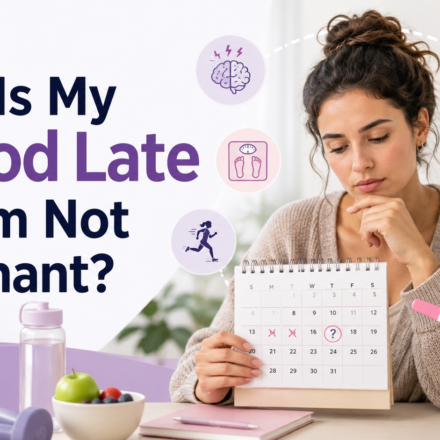
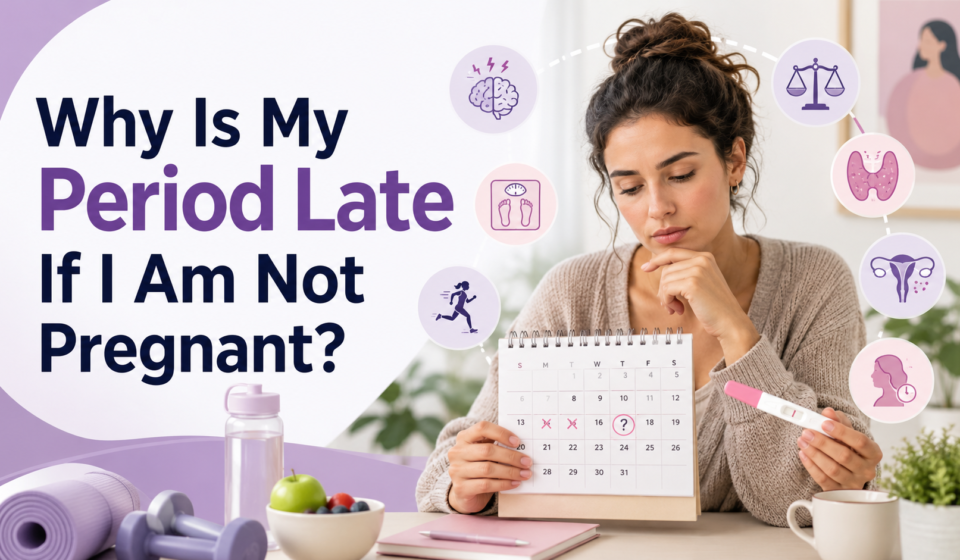

A late period can feel stressful, especially when a pregnancy test is negative. You may wonder whether stress, hormones, or another health issue is affecting your cycle. Pregnancy is only one possible cause. Stress, weight changes, exercise, birth control, breastfeeding, PCOS, thyroid problems, illness, and perimenopause may also delay a period. One late period is often not serious. Repeated missed periods or symptoms such as severe pelvic pain, fainting, or heavy bleeding should be checked by a healthcare professional.
Take a home pregnancy test if pregnancy is possible. If it is negative and your period still does not start, repeat it after a few days. Review recent changes in stress, sleep, weight, exercise, medications, or birth control. Track your periods and symptoms. Contact your primary care provider or ob-gyn if your periods stop for three months, repeatedly become irregular, or come with concerning symptoms.
Table of Contents
- What counts as a late period?
- Why Is My Period Late If I Am Not Pregnant?
- What Should You Do When Your Period Is Late?
- Safe Ways to Support a Healthy Cycle
- How Are Late Periods Diagnosed and Treated?
- When Should You See a Doctor?
- Frequently asked questions (FAQs)
- Final Thoughts
- Trusted Resources
- Medical Disclaimer
What Counts as a Late Period?
Your menstrual cycle is counted from the first day of one period to the first day of the next. A 28-day cycle is often used as an example, but many healthy women have shorter or longer cycles. A few days of variation can be normal.
A period is late when it does not begin around the time you normally expect it. What matters most is whether the delay is unusual for your normal pattern. The medical term for absent periods is amenorrhea. Periods that stop for more than three months without a clear reason should be evaluated.
Why Is My Period Late If I Am Not Pregnant?
Your period usually starts after ovulation if pregnancy has not occurred. Anything that delays ovulation may also delay your period.
1. Stress
Emotional or physical stress can affect the hormone signals that control ovulation. Stress may come from work, family problems, poor sleep, travel, illness, grief, or another major life change. Some women notice that their period arrives late during a particularly stressful month. Others may not notice any change.
2. Weight or Eating Changes
Rapid weight loss, strict dieting, eating too few calories, or an eating disorder may interfere with ovulation. Weight gain may also affect menstrual regularity. Avoid crash diets and extreme fasting. Try to eat regular meals that include vegetables, fruit, whole grains, healthy fats, and a source of protein.
3. Intense Exercise
Regular exercise is healthy, but very intense training may delay or stop periods in some women. This may happen when heavy exercise is combined with low calorie intake, low body weight, or inadequate rest. You may need more food, better recovery, or a less demanding workout schedule rather than stopping physical activity completely.
4. Polycystic Ovary Syndrome
Polycystic ovary syndrome, commonly called PCOS, is a hormonal condition that can cause late, unpredictable, or absent periods.
Other possible signs include:
- Acne
- Increased facial or body hair
- Thinning scalp hair
- Weight gain
- Difficulty becoming pregnant
Not every woman with PCOS has all these symptoms. A healthcare professional can determine whether further testing is needed.
5. Thyroid or Other Hormone Problems
Both an underactive and overactive thyroid can affect menstrual periods. Symptoms may include tiredness, weight changes, constipation, anxiety, or feeling unusually hot or cold.
High prolactin levels or problems affecting the pituitary gland or ovaries can also stop periods. Milky nipple discharge when you are not breastfeeding, frequent headaches, or vision changes should be discussed with a healthcare professional.
6. Hormonal Birth Control
Birth control pills, injections, implants, hormonal intrauterine devices, patches, and vaginal rings may change your bleeding pattern. Periods may become lighter, irregular, or stop. Pregnancy is still possible if the method was not used correctly.
For example, pregnancy may be possible if you missed several birth control pills or received an injection later than recommended.
Take a pregnancy test if there is any chance you could be pregnant.
7. Breastfeeding and the Postpartum Period
Periods may remain irregular or absent after childbirth, especially during breastfeeding. The hormone prolactin supports breast milk production and can delay ovulation.
However, ovulation may happen before your first postpartum period. This means pregnancy is still possible even if your periods have not returned. Ask your healthcare professional about reliable postpartum birth control options.
8. Perimenopause
- Perimenopause is the transition before menopause and often begins during a woman’s 40s.
- Periods may become earlier, later, heavier, lighter, or less predictable. Hot flashes and sleep problems may also occur.
- Pregnancy remains possible during perimenopause because ovulation may still happen.
- Menopause is reached after 12 consecutive months without a menstrual period.
9. Illness or Medications
A recent infection, surgery, or chronic illness may temporarily delay ovulation. Certain medicines may also affect periods. These may include some medicines used for seizures, mental health conditions, hormone disorders, or cancer treatment.
Do not stop prescribed medication on your own. Ask the prescribing healthcare professional whether it could be affecting your cycle.
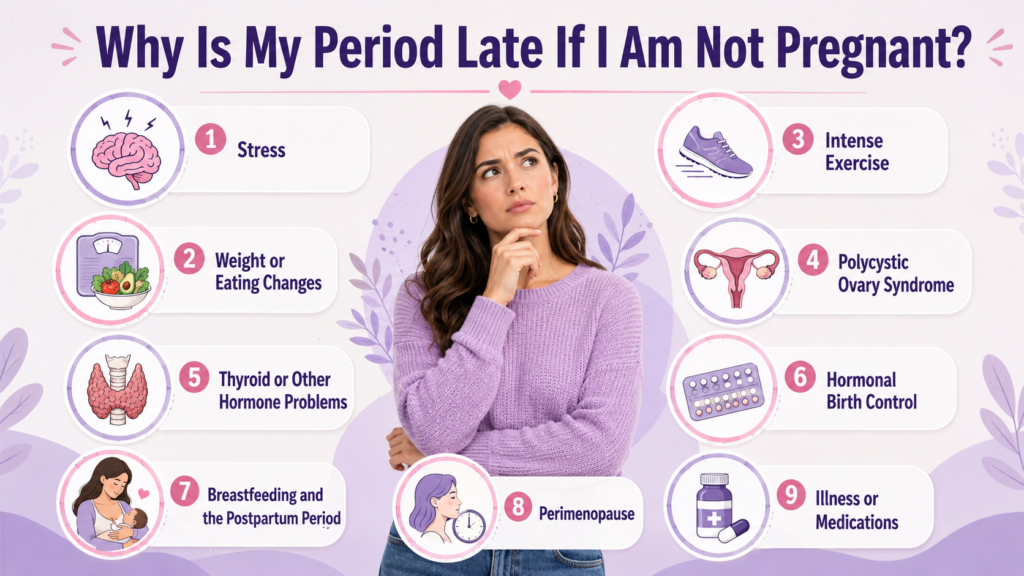
Woman surrounded by icons showing nine common causes of a late period besides pregnancy.
What Should You Do When Your Period Is Late?
Take a home pregnancy test if pregnancy is possible. Testing too early can produce a false-negative result because the pregnancy hormone HCG may not yet be high enough to detect. If the result is negative and your period still does not start, repeat the test after several days. Using your first urine in the morning may improve the chance of detecting an early pregnancy. Track the first day of each period and any symptoms to discuss with your clinician.
You may also want to note recent changes in:
- Stress and sleep
- Weight and eating habits
- Exercise
- Illness
- Medications
- Birth control
A menstrual tracking app or a simple calendar can help you notice changes in your normal pattern.
Safe Ways to Support a Healthy Cycle
There is no safe home remedy that can guarantee your period will start. Eat balanced meals, sleep regularly, exercise reasonably, and allow time for recovery. Gentle activities such as walking, stretching, breathing exercises, or relaxing before bed may help you manage stress. Avoid high-dose herbs, hormones, or someone else’s medication to force a period to begin.
Some products marketed as natural period remedies may cause side effects or interact with your medications. They may also delay the diagnosis of an underlying health problem.
How Are Late Periods Diagnosed and Treated?
Your clinician may ask about your cycle, pregnancy possibility, birth control, medications, and symptoms. A pregnancy test is often the first step. Blood tests may be used to check thyroid function, prolactin, or other hormone levels. An ultrasound may be recommended when needed.
Treatment depends on the cause. Lifestyle changes may help when stress, low calorie intake, or excessive exercise is involved. Thyroid disease or PCOS may require prescription treatment.
If hormonal birth control is making your periods lighter or absent, treatment may not be needed unless the change is unexpected or bothersome. Hormonal medication should not be used simply to make bleeding start without first understanding why your period is late.
When Should You See a Doctor?
Schedule an appointment with your primary care provider or ob-gyn if:
- You have missed three periods without a known reason.
- Your periods repeatedly arrive very late.
- Your cycle suddenly changes from its normal pattern.
- You have pelvic pain or unusual vaginal discharge.
- You experience major unexplained weight changes.
- You have possible signs of PCOS or thyroid disease.
- You are trying to become pregnant and your periods are irregular.
Go to an emergency room or call 911 for sudden severe pelvic or abdominal pain, shoulder pain, fainting, severe dizziness, unusual weakness, or heavy bleeding. These symptoms may occur with an ectopic pregnancy, even if an early home pregnancy test was negative.
An ectopic pregnancy develops outside the uterus and can cause dangerous internal bleeding. Urgent care may be appropriate for symptoms that require same-day attention but are not severe or life-threatening.
Frequently Asked Questions (FAQs)
1. Can stress make my period late?
Yes. Stress can delay ovulation, causing your period to arrive later than expected.
2. Can I be pregnant with a negative pregnancy test?
Yes. You may have tested too early. Repeat the test after a few days if your period has not started.
3. How many days late is considered normal?
There is no exact number for every woman. A few days of variation may be normal. What matters most is whether the delay is unusual for your cycle.
4. Can birth control stop my period?
Yes. Some hormonal birth control methods can make periods very light or stop them.
Take a pregnancy test and contact your healthcare professional if the change is unexpected or you have not used the method correctly.
5. Should I take medicine to start my period?
Do not take hormones, herbal products, or another person’s medicine without medical advice.
The appropriate treatment depends on why your period is late.
6. Can late periods affect fertility?
One late period does not usually mean infertility. Repeated irregular periods may indicate irregular ovulation.
Talk with an ob-gyn if you are trying to become pregnant and your periods are often irregular or absent.
Final Thoughts
- If you are asking, “Why is my period late if I am not pregnant?” remember that many common factors can affect ovulation.
- Take a pregnancy test if pregnancy is possible, track your cycle, and avoid unsupported remedies.
- Contact your primary care provider or ob-gyn if your periods remain absent for three months, repeatedly become irregular, or come with unusual symptoms.
- Understanding the reason for a late period is safer than trying to force menstrual bleeding to start.
Trusted Resources
- American College of Obstetricians and Gynecologists
- U.S. Food and Drug Administration
- Office on Women’s Health
- Eunice Kennedy Shriver National Institute of Child Health and Human Development
Medical Disclaimer
This article is for educational purposes only and is not a substitute for professional medical advice, diagnosis, or treatment. Contact your primary care provider or ob-gyn with questions about a late or missed period. Call 911 or go to the nearest emergency room for severe pain, fainting, heavy bleeding, or other life-threatening symptoms.