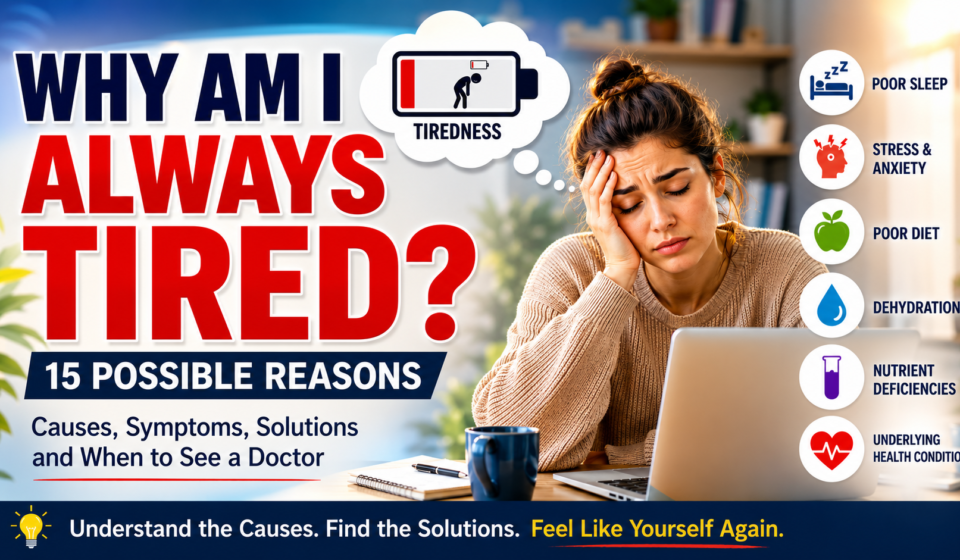

Feeling exhausted every day can make work, family life, and daily tasks much harder. If you’ve been asking yourself, “Why am I always tired?”, you’re not alone.
Occasional tiredness is normal after a busy day or a poor night’s sleep. However, ongoing fatigue may be related to lifestyle habits, stress, poor nutrition, or an underlying health condition. Understanding the possible causes can help you take the right steps toward feeling better.
Quick Summary
Constant tiredness is often linked to poor sleep, stress, unhealthy habits, or medical conditions. This guide explains 15 possible reasons why you are always tired, common symptoms, treatment options, prevention tips, and when it’s important to see a healthcare provider.
Disclaimer: This article is for educational purposes only and should not replace professional medical advice, diagnosis, or treatment. If your fatigue is severe, long-lasting, or accompanied by concerning symptoms, consult a qualified healthcare professional.
Table of Contents
- What Is Fatigue?
- Symptoms of Ongoing Fatigue
- Why Am I Always Tired? 15 Possible Reasons
- Treatment Options
- Prevention Tips
- When to See a Doctor
- Conclusion
- Frequently Asked Questions
- Trusted Resources
What is Fatigue?
Fatigue is more than simply feeling sleepy. It is a lasting sense of physical or mental exhaustion that doesn’t always improve after resting. It may affect your concentration, mood, energy levels, and daily activities.
Common symptoms include:
- Feeling tired even after sleeping
- Low energy throughout the day
- Difficulty concentrating
- Lack of motivation
- Muscle weakness
- Feeling mentally “foggy”
Why Am I Always Tired? 15 Possible Reasons
1. Poor Sleep Quality
Getting enough hours of sleep doesn’t always mean you’re getting good-quality sleep. Waking up several times during the night, sleeping in a noisy environment, or using electronic devices before bed can interrupt deep sleep. As a result, your body doesn’t fully recover, and you may wake up feeling tired. Improving your bedtime routine and creating a quiet, comfortable sleep environment may help improve sleep quality.
2. Not Getting Enough Sleep
Adults generally need about 7 to 9 hours of sleep each night for good health. Consistently sleeping less than this can affect your energy, concentration, mood, and immune system. Busy work schedules, staying up late, or irregular sleeping habits are common reasons people don’t get enough rest. Making sleep a priority can often improve daytime energy.
3. Stress
Ongoing stress can leave both your mind and body feeling exhausted. When you’re constantly worried about work, finances, relationships, or other responsibilities, your body stays in a heightened state of alertness. This can interfere with sleep and drain your energy over time. Finding healthy ways to manage stress, such as exercise, meditation, or talking with someone you trust, may help reduce fatigue.
4. Anxiety or Depression
Mental health conditions can have a significant impact on your energy levels. People with anxiety may struggle to relax or sleep well, while depression often causes persistent tiredness and a loss of motivation. You may also notice changes in appetite, mood, or concentration. If these symptoms continue, it’s important to speak with a healthcare provider or mental health professional.
5. Poor Diet
Your body relies on nutritious foods to produce energy throughout the day. Skipping meals or eating mostly processed foods high in sugar and unhealthy fats can cause energy crashes. A balanced diet that includes vegetables, fruits, whole grains, lean proteins, and healthy fats helps support steady energy levels. Eating regular meals can also help prevent fatigue.
6. Dehydration
Even mild dehydration can make you feel sluggish and less alert. Your body needs enough fluids to support normal circulation, digestion, and temperature regulation. If you don’t drink enough water, you may experience headaches, dizziness, dry mouth, and tiredness. Drinking water regularly throughout the day is a simple way to help maintain your energy.
7. Lack of Physical Activity
It may seem surprising, but spending most of the day sitting can actually make you feel more tired. Regular physical activity improves blood circulation, supports better sleep, and increases overall energy levels. Even a daily 20- to 30-minute walk can make a noticeable difference. Starting with small amounts of exercise is often easier than trying intense workouts.
8. Too Much Physical Activity
Exercising is healthy, but overtraining without enough rest can leave your body feeling exhausted. Intense workouts every day may lead to muscle soreness, slower recovery, and ongoing fatigue. Your body needs time to repair itself after physical activity. Including rest days and staying well hydrated can help prevent exercise-related tiredness.
9. Iron Deficiency
Iron helps your body produce healthy red blood cells that carry oxygen throughout the body. When iron levels are low, your muscles and organs may not receive enough oxygen, leading to weakness and fatigue. Other symptoms may include pale skin, shortness of breath during activity, dizziness, or headaches. A healthcare provider can diagnose iron deficiency with a simple blood test.
10. Vitamin Deficiencies
Low levels of certain vitamins, especially vitamin B12, vitamin D, and folate, may contribute to ongoing fatigue. These nutrients play important roles in energy production, nerve function, and healthy blood cells. People with restrictive diets, digestive disorders, or limited sun exposure may be at greater risk. Blood tests can help determine whether a deficiency is present.
11. Sleep Apnea
Sleep apnea is a condition in which breathing repeatedly stops and starts during sleep. Because sleep is interrupted many times throughout the night, people often wake up feeling tired even after spending enough time in bed. Loud snoring, gasping during sleep, and morning headaches are common signs. Sleep apnea should be evaluated and treated by a healthcare professional.
12. Thyroid Problems
An underactive thyroid, also known as hypothyroidism, slows many processes in the body and often causes persistent fatigue. Other symptoms may include weight gain, dry skin, constipation, feeling unusually cold, and slow thinking. A simple blood test can check thyroid hormone levels. Treatment is available and can help improve symptoms.
13. Diabetes
High blood sugar levels can prevent your body’s cells from using glucose efficiently for energy. As a result, people with diabetes may feel tired even after getting enough sleep. Increased thirst, frequent urination, blurred vision, and unexplained weight changes may also occur. Early diagnosis and proper management can help reduce fatigue and prevent complications.
14. Certain Medications
Some prescription and over-the-counter medications list tiredness or drowsiness as common side effects. Allergy medications, certain blood pressure medicines, sleep aids, and some antidepressants are examples. If you think your medication is making you unusually tired, don’t stop taking it on your own. Instead, talk with your healthcare provider about possible alternatives or dosage adjustments.
15. Chronic Medical Conditions
Long-lasting health conditions such as heart disease, kidney disease, autoimmune disorders, chronic infections, or chronic fatigue syndrome can all contribute to ongoing tiredness. In these cases, fatigue often develops gradually and may not improve with extra sleep. Managing the underlying medical condition is usually the best way to improve energy levels. Regular follow-up with your healthcare provider is important for long-term health.
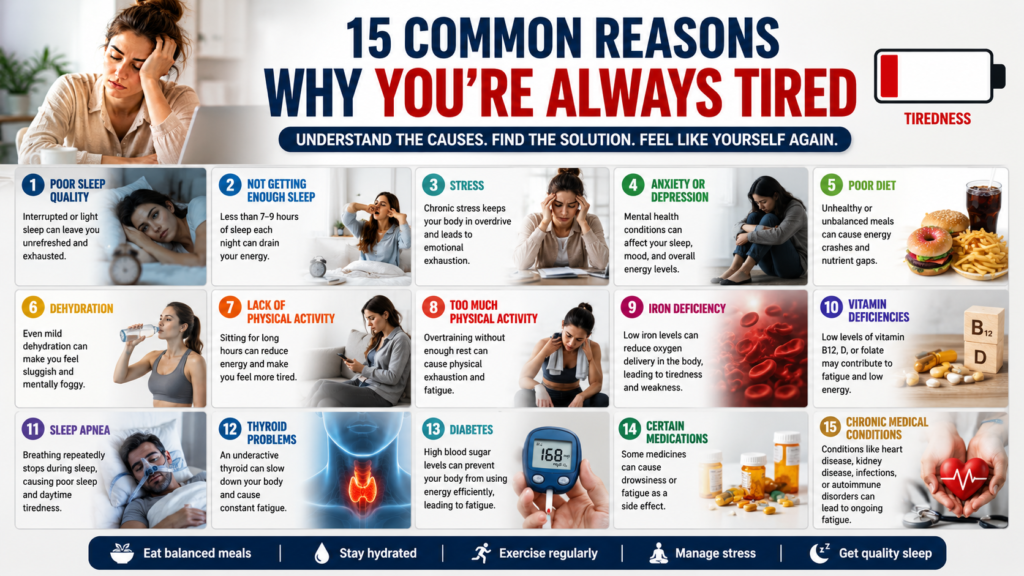
Infographic showing 15 common reasons why you are always tired, including poor sleep, stress, dehydration, vitamin deficiencies, sleep apnea, thyroid problems, diabetes, medications, and chronic health conditions.
Treatment Options
Treatment depends on the underlying cause of your fatigue. Your healthcare provider may recommend:
- Improving sleep habits
- Managing stress through relaxation techniques
- Eating a balanced diet
- Drinking enough water
- Regular physical activity
- Treating vitamin or iron deficiencies if confirmed by testing
- Managing medical conditions with appropriate treatment
- Reviewing medications that may contribute to tiredness
Never start supplements or medications without professional guidance.
Prevention Tips
Many cases of fatigue can be improved by healthy daily habits.
Try these simple steps:
- Aim for 7–9 hours of sleep every night.
- Eat balanced meals with fruits, vegetables, lean protein, and whole grains.
- Stay well hydrated throughout the day.
- Exercise regularly, even a daily walk can help.
- Limit excessive caffeine late in the day.
- Reduce screen time before bedtime.
- Manage stress through relaxation, hobbies, or mindfulness.
- Keep regular sleep and wake times, even on weekends.
Small lifestyle changes often make a noticeable difference over time.
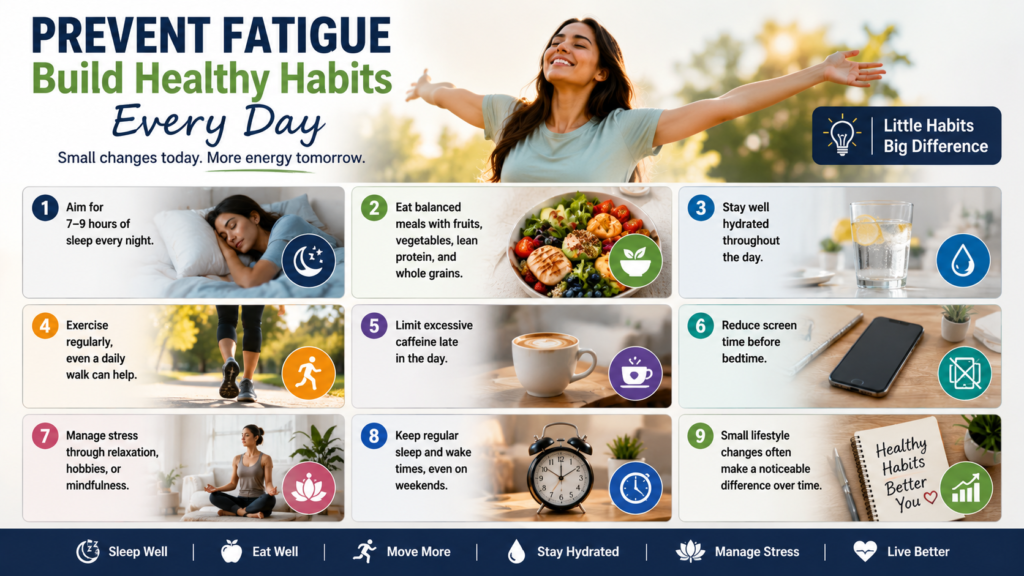
Infographic showing practical fatigue prevention tips, including 7–9 hours of sleep, balanced meals, hydration, regular exercise, less caffeine, reduced screen time, stress management, and consistent sleep schedule.
When Should You See A Doctor ?
Occasional tiredness is common, but you should seek medical advice if:
- Fatigue lasts longer than two weeks.
- Rest does not improve your symptoms.
- You have unexplained weight loss.
- You experience chest pain, shortness of breath, or fainting.
- You notice severe depression or anxiety symptoms.
- Fatigue interferes with your work or daily activities.
- You have persistent fever or other unexplained symptoms.
A healthcare professional may recommend a physical examination, blood tests, or other evaluations to identify the cause.
Conclusion
If you’ve been wondering, “Why am I always tired?”, the answer isn’t always simple. Fatigue can result from poor sleep, stress, unhealthy habits, nutritional deficiencies, or medical conditions. The good news is that many causes can be identified and managed with healthy lifestyle changes and proper medical care.
Listen to your body. If your tiredness continues despite getting enough rest or is accompanied by other concerning symptoms, schedule an appointment with your healthcare provider. Early evaluation can help identify the cause and guide appropriate treatment.
Frequently Asked Questions (FAQs)
1. Why am I always tired even after sleeping?
Poor sleep quality, sleep apnea, stress, depression, thyroid problems, or other medical conditions may cause fatigue despite getting enough sleep.
2. Can dehydration make me feel tired?
Yes. Even mild dehydration can reduce energy levels, affect concentration, and make you feel fatigued.
3. Which vitamin deficiency causes tiredness?
Low levels of vitamin B12, vitamin D, folate, or iron deficiency may contribute to fatigue. Your healthcare provider can recommend appropriate testing.
4. Is feeling tired every day normal?
Feeling tired occasionally is normal. However, ongoing daily fatigue should not be ignored and may require medical evaluation.
5. What should I do if I always feel tired?
Start with healthy sleep habits, balanced nutrition, hydration, and regular exercise. If fatigue continues for more than two weeks or worsens, consult a healthcare professional.
Trusted Resources
- Centers for Disease Control and Prevention (CDC)
- National Institutes of Health (NIH)
- MedlinePlus (U.S. National Library of Medicine)
- Mayo Clinic
- Cleveland Clinic