
Your body usually gives warning signs when something is not right. Sometimes these signs are mild and go away on their own. But in some cases, symptoms like chest pain, breathing difficulty, sudden weakness, unusual bleeding, unexplained weight loss, or pain that does not improve may need medical attention.
This article explains 10 early signs your body needs medical attention, what they may mean, when to take them seriously, and when to speak with a doctor.
Disclaimer: This article is for educational purposes only. It is not medical advice and should not replace diagnosis or treatment from a qualified healthcare provider. If you have severe symptoms or think you may be having a medical emergency, call 911 right away.
Table of Content
- Chest Pain or Chest Pressure
- Trouble Breathing
- Sudden Weakness, Numbness, or Trouble Speaking
- Unexplained Weight Loss
- Feeling Tired All the Time
- Fever That Does Not Go Away
- Severe or Unusual Headache
- Unusual Bleeding
- Changes in Urination or Bowel Habits
- Pain That Keeps Coming Back or Gets Worse
- Simple Prevention Tips
- Possible Treatment Options
- When to See a Doctor
- Conclusion
- FAQs
- Trusted Resources
1. Chest Pain or Chest Pressure
Chest pain is one of the most important symptoms you should never ignore. It may feel like tightness, pressure, burning, heaviness, or squeezing in the chest. Some people also feel discomfort in the arm, shoulder, neck, jaw, back, or upper stomach.
Not every chest pain is a heart attack. Sometimes it may be linked to acid reflux, muscle strain, anxiety, or other causes. Still, it is better to be careful, especially if the pain is new, strong, or different from anything you have felt before.
You should call 911 if chest pain comes with shortness of breath, sweating, nausea, dizziness, fainting, or pain spreading to the arm or jaw. These can be warning signs of a heart-related emergency.
2. Trouble Breathing
Feeling short of breath means you feel like you cannot get enough air. It may happen suddenly, or it may slowly become worse over time. Some people feel breathless while walking, climbing stairs, lying down, or even resting.
Shortness of breath can have many causes. It may happen because of asthma, allergies, lung infection, heart problems, anxiety, or other health conditions. Mild breathlessness after exercise can be normal, but breathing trouble during simple daily activities should be checked. Get emergency help if breathing difficulty is sudden, severe, or happens with chest pain, confusion, blue lips, extreme weakness, or fainting.
3. Sudden Weakness, Numbness, or Trouble Speaking
Sudden weakness or numbness, especially on one side of the body, can be a serious warning sign. It may be linked to a stroke or another urgent medical problem.
Other possible warning signs include face drooping, trouble speaking, confusion, vision problems, loss of balance, or sudden dizziness. If someone cannot smile normally, raise both arms, or speak clearly, do not wait. A stroke needs fast medical care. Even if the symptoms improve after a few minutes, the person should still be checked by a doctor. Call 911 immediately instead of trying to drive to the hospital yourself.
4. Unexplained Weight Loss
Losing weight without trying may seem harmless, but it can sometimes point to an underlying health issue. If you have not changed your diet, exercise routine, or lifestyle, and your weight is still going down, it is worth paying attention.
Unexplained weight loss may be linked to thyroid problems, diabetes, digestive issues, infections, depression, medication side effects, or other medical conditions. It does not always mean something serious, but it should not be ignored.
A simple example is when your clothes suddenly feel loose, your appetite has changed, or people around you notice weight loss before you do. In that case, it is better to book a checkup and discuss it with a healthcare provider.
5. Feeling Tired All The Time
Everyone feels tired sometimes. A busy schedule, poor sleep, stress, dehydration, or not eating well can make you feel low on energy. Usually, this type of tiredness improves with rest and better daily habits.
But if you feel tired for many days or weeks, even after sleeping and resting, your body may be asking for attention. Ongoing tiredness may be linked to anemia, thyroid issues, diabetes, depression, sleep apnea, infection, heart problems, or medication side effects.
You should speak with a doctor if tiredness is new, getting worse, or comes with symptoms like weight loss, fever, chest pain, shortness of breath, fainting, or unusual bleeding.
6. Fever That Does Not Go Away
Fever is often a sign that your body is fighting an infection. In many cases, a mild fever with a cold or flu-like illness improves with rest, fluids, and time.
However, a fever that stays for several days, keeps coming back, or becomes very high should be taken seriously. It may be linked to infection, inflammation, or another health condition that needs proper care.
Contact a healthcare provider if fever comes with breathing problems, chest pain, stiff neck, confusion, severe headache, rash, dehydration, or symptoms that are getting worse. Children, older adults, pregnant women, and people with weak immune systems may need medical care sooner.
7. Severe or Unusual Headache
Headaches are common and often happen because of stress, dehydration, lack of sleep, eye strain, or sinus problems. Most headaches are not dangerous.
But some headaches need medical attention. A headache that starts suddenly, feels extremely severe, or feels different from your usual headaches should not be ignored.
Get medical help if a headache comes with fever, stiff neck, confusion, weakness, vomiting, vision changes, trouble speaking, or happens after a head injury. You should also talk to a doctor if your headaches are becoming more frequent or harder to control.
8. Unusual Bleeding
Bleeding that happens without a clear reason should be checked. This includes blood in urine, blood in stool, coughing up blood, vomiting blood, very heavy periods, bleeding after menopause, or bleeding that does not stop after a cut.
Sometimes the cause may be minor, such as hemorrhoids or irritation. But bleeding can also be related to infection, ulcers, kidney problems, digestive conditions, medication side effects, or other health concerns.
Seek urgent medical care if bleeding is heavy, does not stop, or comes with dizziness, weakness, fainting, or black stool.
9. Changes in Urination or Bowel Habits
Changes in bathroom habits may seem small, but they can give important clues about your health. Pain while urinating, frequent urination, blood in urine, very dark urine, or difficulty urinating may be linked to infection, dehydration, kidney stones, diabetes, or prostate problems.
Bowel changes are also important. Long-lasting diarrhea, ongoing constipation, blood in stool, black stool, or a sudden change in bowel habits that continues for weeks should be discussed with a healthcare provider.
A mild stomach upset may go away on its own. But symptoms with fever, weight loss, dehydration, bleeding, or severe pain need medical attention.
10. Pain That Keeps Coming Back or Gets Worse
Pain is one way your body tells you that something may be wrong. Mild pain after exercise or a long day can be normal. But pain that keeps coming back, gets worse, or affects your daily routine should not be ignored.
This may include stomach pain, back pain, joint pain with swelling, tooth pain, pelvic pain, or pain after an injury. Pain that wakes you up at night or stops you from doing normal activities also deserves attention.
Painkillers may help for a short time, but they do not always treat the real cause. If pain continues, it is better to get checked instead of only covering it with medicine.
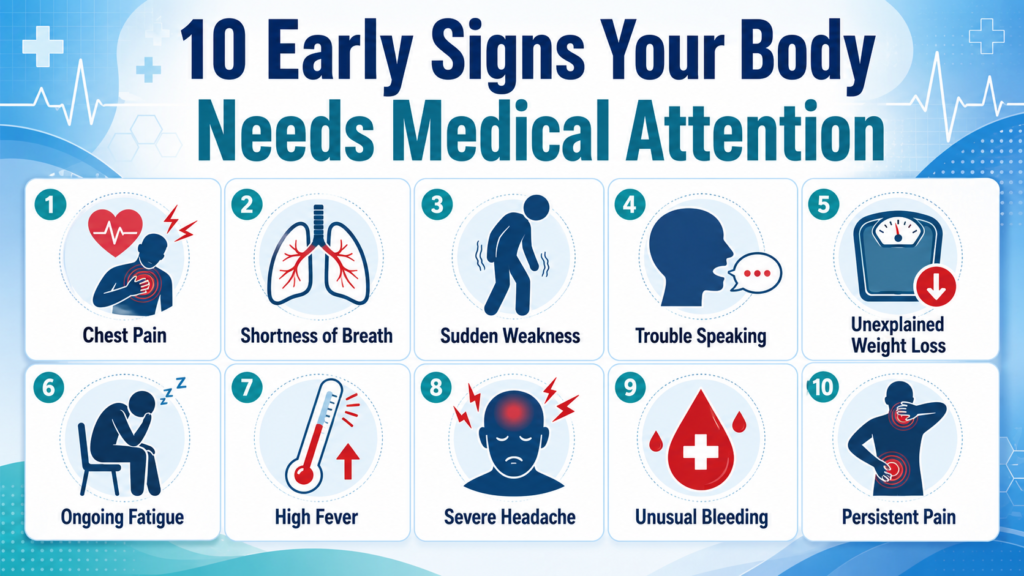
Infographic showing 10 early warning signs that may need medical attention, including chest pain, breathing problems, sudden weakness, trouble speaking, unexplained weight loss, tiredness, fever, headache, unusual bleeding, and ongoing pain.
Simple Prevention Tips
You cannot prevent every health problem, but you can take small steps to protect your health and notice changes early.
Try to build these habits into your routine:
- Get regular checkups and recommended screenings.
- Pay attention to new or unusual symptoms.
- Eat balanced meals with fruits, vegetables, lean protein, and whole grains.
- Stay active according to your age, health, and ability.
- Sleep well and give your body enough rest.
- Avoid smoking and limit alcohol.
- Manage stress in healthy ways.
- Take medicines only as directed by your doctor.
These steps support your overall health, but they do not replace medical care when symptoms are serious.
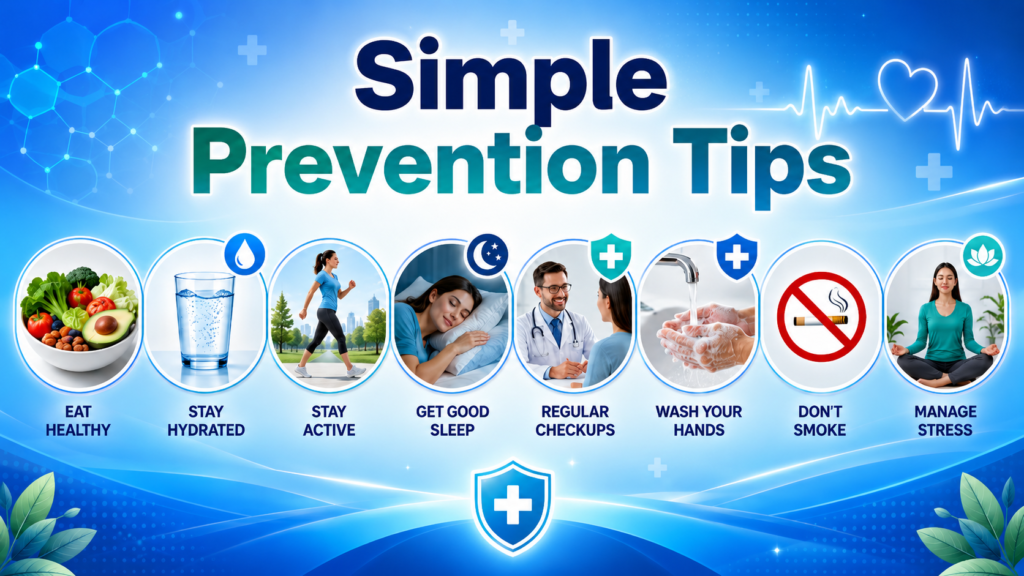
Simple prevention tips health infographic showing healthy eating, hydration, exercise, good sleep, regular checkups, handwashing, no smoking, and stress management.
Possible Treatment Options
Treatment depends on what is causing your symptoms. A doctor may ask about your medical history, examine you, and suggest tests if needed.
Depending on your symptoms, treatment may include lifestyle changes, blood tests, urine tests, imaging tests, medicines, therapy, or referral to a specialist.
For example, ongoing tiredness may require blood tests to check for anemia, thyroid problems, or diabetes. Chest pain may need heart-related tests. Breathing problems may need lung or heart evaluation.
The best approach is not to guess. A proper diagnosis helps you get the right treatment at the right time.
When To See A Doctor
You should see a doctor if a symptom is new, unusual, keeps coming back, gets worse, or affects your daily life. It is always better to ask a healthcare provider than to ignore something that feels wrong.
Seek urgent medical care or call 911 if you have:
- Chest pain with shortness of breath
- Sudden weakness or numbness on one side
- Trouble speaking
- Severe breathing difficulty
- Fainting
- Heavy bleeding
- Signs of a heart attack or stroke
If you are unsure whether your symptom is serious, contact your doctor’s office, urgent care, or emergency services for guidance.
Conclusion: Pay Attention to the Early Signs Your Body Needs Medical Attention
Knowing the 10 early signs your body needs medical attention can help you make better and safer health decisions. Symptoms like chest pain, breathing difficulty, sudden weakness, unexplained weight loss, ongoing tiredness, fever, severe headache, unusual bleeding, bathroom changes, and long-lasting pain should not be ignored.
Many symptoms have simple causes, but some may need quick care. Listen to your body, notice changes, and speak with a healthcare provider when something does not feel normal. If symptoms are sudden or severe, call 911 immediately.
Frequently Asked Questions (FAQs)
1. What symptoms should never be ignored?
Chest pain, severe breathing trouble, sudden weakness on one side, trouble speaking, fainting, heavy bleeding, and signs of a stroke or heart attack should never be ignored. These symptoms may need emergency medical care.
2. Is tiredness always a sign of a serious problem?
No. Tiredness is often caused by poor sleep, stress, dehydration, or a busy routine. But if tiredness lasts for weeks or comes with weight loss, fever, chest pain, or breathing problems, it is better to see a doctor.
3. When should I worry about unexplained weight loss ?
You should speak with a healthcare provider if you are losing weight without trying, especially if your appetite, energy, digestion, or overall health has changed.
4. Can stress cause physical symptoms?
Yes. Stress can cause headaches, stomach upset, muscle tension, poor sleep, tiredness, and a fast heartbeat. However, serious symptoms like chest pain, fainting, breathing trouble, or sudden weakness should not be blamed on stress without medical advice.
5. Should I go to urgent care or the emergency room?
Urgent care may be helpful for non-life-threatening problems like mild infections, minor injuries, or moderate symptoms. The emergency room is better for serious symptoms such as chest pain, stroke signs, severe breathing trouble, heavy bleeding, or loss of consciousness.
Trusted Resources
- American Heart Association — Heart Attack and Stroke Symptoms
- Centers for Disease Control and Prevention — Emergency Warning Signs
- Mayo Clinic — Unexplained Weight Loss
- MedlinePlus — General Symptoms and Health Information
- CDC — Heart Attack Symptoms and When to Call 911