
Inflammation is something your body uses to protect you. When you get a small injury, catch an infection, or your body needs to repair damaged tissue, inflammation helps start the healing process. In this way, inflammation is not always bad. It is actually a normal and important part of your immune system.
The problem starts when inflammation does not settle down. When it continues for weeks, months, or longer, it may put extra stress on the body. Long-term inflammation may be linked with health problems such as joint pain, heart disease, diabetes, digestive issues, and other chronic conditions.
The good news is that daily food choices can make a difference. Food is not a magic cure, and it should never replace medical care, but eating more whole, nutrient-rich foods may help your body handle inflammation in a healthier way.
In this guide, we will discuss the best foods to reduce inflammation naturally, simple meal ideas, foods to limit, prevention tips, treatment options, and when it is time to talk to a doctor.
Disclaimer
This article is for educational and general information purposes only. It is not medical advice and should not be used as a replacement for diagnosis, treatment, or guidance from a healthcare professional. If you have ongoing symptoms, a medical condition, food allergies, or take medication, speak with your doctor before making major diet or supplement changes.
Quick Summary
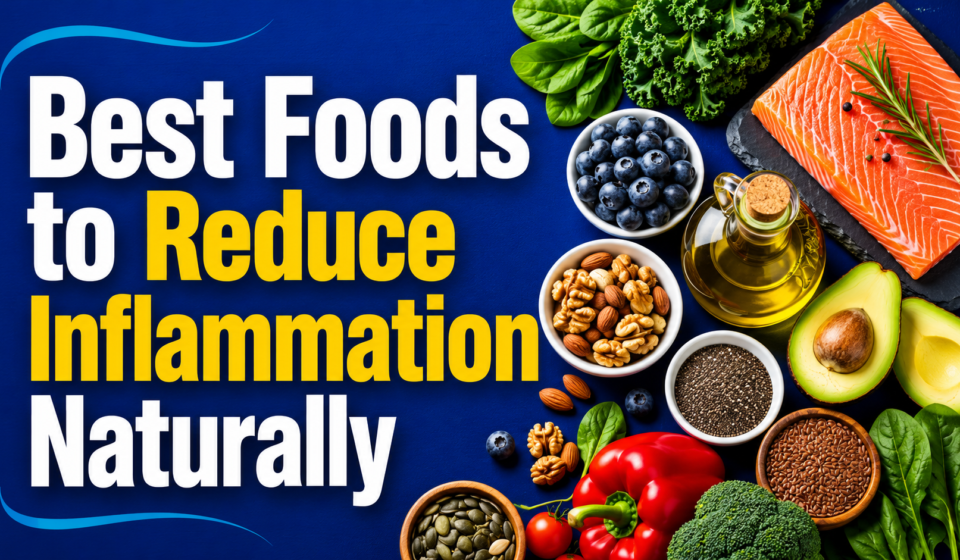
The best foods to reduce inflammation naturally are mostly whole foods. These include fruits, vegetables, fatty fish, olive oil, nuts, seeds, beans, lentils, whole grains, herbs, spices, and low-sugar fermented foods.
A Mediterranean-style eating pattern is often a good example because it focuses on plant foods, healthy fats, fish, and fewer highly processed foods. Instead of depending on one “superfood,” it is better to build a healthy routine you can follow most days.
Good sleep, regular movement, stress management, and avoiding smoking also matter.
Table of Content
- What Is Inflammation?
- Common Symptoms of Chronic Inflammation
- What Causes Inflammation?
- Best Foods to Reduce Inflammation Naturally
- Foods That May Increase Inflammation
- Simple Anti-Inflammatory Meal Ideas
- Prevention and Lifestyle Tips
- Treatment Options and Medical Care
- When to See a Doctor
- Conclusion
- FAQs
- Trusted Resources
What is Inflammation?
Inflammation is the body’s natural way of responding to harm. It helps protect you from infections, injuries, and other things that may damage the body.
There are two main types of inflammation.
Acute inflammation happens quickly and usually does not last long. For example, if you cut your finger or twist your ankle, the area may become red, swollen, warm, or painful. This is your body working to heal.
Chronic inflammation is different. It may continue for a long time and may not always cause clear signs at first. In some people, it can happen quietly inside the body.
Many things can affect chronic inflammation, including diet, sleep, stress, smoking, alcohol, body weight, physical activity, infections, and certain medical conditions.
This is why food can help, but it is only one part of the bigger picture.
Common Symptoms of Chronic Inflammation
Chronic inflammation does not look the same in everyone. Some people may feel symptoms every day, while others may not notice anything until another health problem appears.
Possible signs may include:
- Feeling tired even after rest
- Joint pain or stiffness
- Body aches
- Digestive discomfort
- Skin flare-ups
- Frequent headaches
- Low energy
- Brain fog
- Unexplained weight changes
These symptoms do not always mean you have chronic inflammation. They can also happen because of many other health issues. If symptoms continue, become worse, or interfere with daily life, it is better to get medical advice.
What Causes Inflammation?
Inflammation can be caused by many different things. Sometimes it is short-term and related to an injury or infection. Other times, it may continue because of lifestyle habits or an underlying health condition.
Common triggers may include:
- Infections or injuries
- Autoimmune diseases
- Poor sleep
- Long-term stress
- Smoking
- Excess alcohol
- Lack of exercise
- High intake of added sugar
- Frequent use of ultra-processed foods
- Excess body weight, especially around the belly
Food does not cause every type of inflammation, but eating too many processed foods and not enough nutrient-rich foods may make it harder for the body to stay balanced.
Best Foods to Reduce Inflammation Naturally
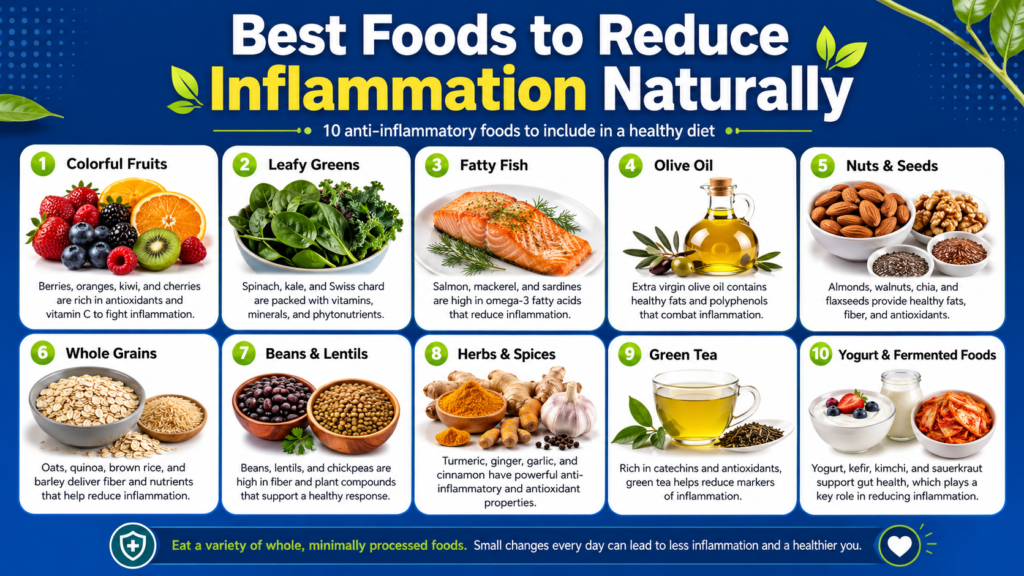
1. Colorful Fruits
Fruits are a simple and tasty way to add more antioxidants, fiber, vitamins, and minerals to your diet. Antioxidants help protect your cells from oxidative stress, which is connected with inflammation.
Good choices include blueberries, strawberries, blackberries, cherries, oranges, apples, and grapes.
Berries are especially helpful in an anti-inflammatory eating pattern because they contain natural plant compounds that give them their rich color.
A simple way to use them is to add a handful of berries to oatmeal, yogurt, smoothies, or a fresh salad. You can also keep frozen berries at home for quick use.
2. Leafy Green Vegetables
Leafy greens are one of the easiest foods to add to daily meals. They are rich in fiber, vitamins, minerals, and natural plant nutrients.
Good options include spinach, kale, romaine lettuce, collard greens, and Swiss chard.
These vegetables are also low in calories and can fit into many meals. For example, you can add spinach to eggs in the morning, use romaine in a lunch salad, or mix greens into soups and pasta.
You do not have to eat a huge salad every day. Even adding a small serving of greens to one meal is a good start.
3. Fatty Fish
Fatty fish is often included in anti-inflammatory diets because it provides omega-3 fatty acids. These healthy fats support heart health and may help the body maintain a healthier inflammatory response.
Examples include salmon, sardines, mackerel, trout, herring, and tuna.
A simple dinner idea is baked salmon with brown rice and steamed vegetables. Canned salmon or sardines can also be useful if you want a budget-friendly option.
If you do not eat fish, talk to your doctor before using omega-3 supplements. This is especially important if you take blood thinners, have a bleeding disorder, or manage a chronic medical condition.
4. Extra Virgin Olive Oil
Extra virgin olive oil is a key part of the Mediterranean diet. It contains healthy monounsaturated fats and natural compounds that support overall wellness.
You can use olive oil in place of butter, creamy dressings, or less healthy cooking oils. It works well in salads, roasted vegetables, beans, and whole-grain dishes.
For a quick dressing, mix olive oil with lemon juice, black pepper, and herbs. It is simple, flavorful, and much better than many bottled dressings that are high in added sugar or unhealthy fats.
5. Nuts and Seeds
Nuts and seeds are small foods with a lot of nutrition. They provide healthy fats, fiber, protein, magnesium, and antioxidants. They also help you feel full, which can support better eating habits.
Good choices include walnuts, almonds, pistachios, chia seeds, flaxseeds, and pumpkin seeds.
Walnuts and flaxseeds are especially known for plant-based omega-3 fats.
A practical tip is to add ground flaxseed to oatmeal or smoothies. You can also keep a small portion of nuts as a snack. Since nuts are calorie-dense, a small handful is usually enough.
6. Whole Grains
Whole grains are better than refined grains because they keep more fiber and nutrients. Fiber supports digestion, gut health, fullness, and healthy blood sugar levels.
Healthy choices include oats, brown rice, quinoa, barley, whole wheat bread, and whole grain pasta.
For example, oatmeal with fruit and nuts can make a balanced breakfast. Brown rice or quinoa can be used with beans, chicken, fish, or vegetables for lunch or dinner.
Try to limit refined grains such as white bread, pastries, and sugary cereals. You do not need to remove them completely, but they should not be your main daily choices.
7. Beans and Lentils
Beans and lentils are filling, affordable, and easy to use in many meals. They contain plant-based protein, fiber, and minerals.
Good options include black beans, kidney beans, chickpeas, lentils, and split peas.
They are common in heart-healthy eating plans and Mediterranean-style meals. You can add beans to soups, tacos, rice bowls, salads, or stews.
If beans cause gas or bloating, start with small portions and increase slowly. Rinsing canned beans may also help.
8. Herbs and Spices
Herbs and spices make food taste better without needing too much salt, sugar, or unhealthy fat. Some also contain natural plant compounds that may support health.
Helpful choices include turmeric, ginger, garlic, cinnamon, rosemary, and oregano.
Turmeric is often discussed because it contains curcumin, a compound studied for its possible role in inflammation. However, turmeric is not a cure and should not replace medical treatment.
Using turmeric, ginger, or garlic in cooking is usually safe for many people. But high-dose supplements may not be safe for everyone. Speak with a doctor first if you take blood thinners, diabetes medicine, or have gallbladder problems.
9. Green Tea
Green tea contains antioxidants called polyphenols. It can be a smart drink choice, especially if it replaces soda, sweet tea, or other sugary drinks.
You can drink it hot or iced. Try to keep it unsweetened or lightly sweetened.
If caffeine affects your sleep, choose decaffeinated green tea or drink it earlier in the day.
10. Yogurt and Fermented Seeds
Gut health and immune health are closely connected. Some fermented foods contain beneficial bacteria, depending on how they are made and stored.
Examples include plain yogurt with live cultures, kefir, sauerkraut, kimchi, and miso.
Plain Greek yogurt with berries and nuts can be a simple breakfast or snack. When buying yogurt, check the label and choose low-sugar options when possible.
Not everyone tolerates fermented foods well. If they cause stomach discomfort, start with a small amount or ask a healthcare professional for guidance.
Foods that may increase inflammation infographic showing 10 foods to limit, including sugary drinks, candy and desserts, fried fast foods, processed meats, white bread, pastries, packaged snacks, foods with trans fats, alcohol, and highly processed meals.
Foods That May Increase Inflammation
You do not need to be perfect with your diet. Having dessert sometimes or eating fast food occasionally does not mean you have failed. The main concern is what you eat most of the time.
Foods to limit include:
- Sugary drinks
- Candy and desserts
- Fried fast foods
- Processed meats
- White bread and pastries
- Packaged snacks
- Foods with trans fats
- Too much alcohol
A helpful rule is to choose more foods that look close to their natural form. For example, choose an apple more often than apple-flavored candy, or choose oats more often than sugary cereal.
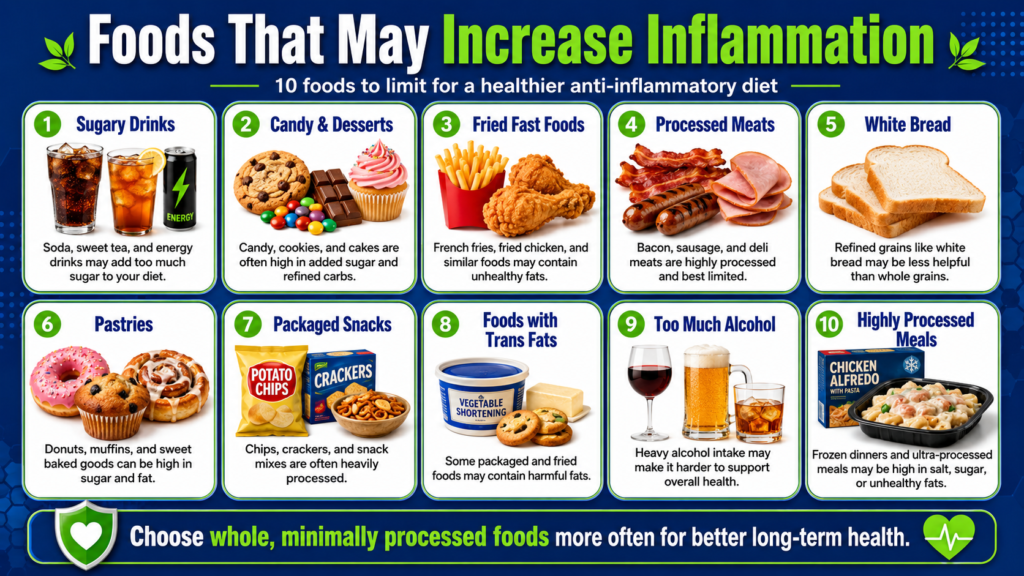
Foods that may increase inflammation, featuring common items to limit such as soda, sweets, fried foods, processed meats, refined bread, pastries, packaged snacks, trans fat products, alcohol, and ultra-processed meals.
Simple Anti-Inflammatory Meal Ideas
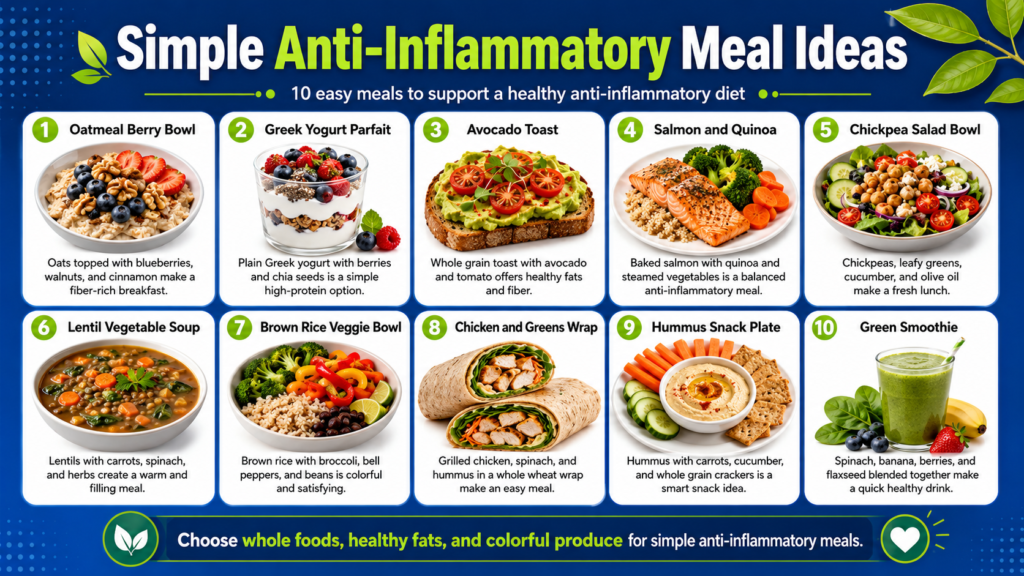
You do not need complicated recipes to eat in a healthier way. Here are a few easy ideas:
Breakfast: Oatmeal with blueberries, walnuts, and cinnamon.
Lunch: A salad with leafy greens, grilled chicken or chickpeas, avocado, and olive oil dressing.
Dinner: Baked salmon with quinoa and roasted vegetables.
Snack: Apple slices with almond butter.
Drink: Water, sparkling water without sugar, or unsweetened green tea.
Start with one meal at a time. For example, improve your breakfast first, then work on lunch or dinner later.
Infographic about foods that may increase inflammation, highlighting 10 commonly limited items such as sugary drinks, sweets, fried foods, processed meats, white bread, pastries, packaged snacks, trans fats, alcohol, and processed meals.
Prevention and Lifestyle Tips
A healthy diet is helpful, but it works best with other daily habits.
Try to:
- Move your body regularly
- Get enough sleep
- Manage stress in a healthy way
- Avoid smoking
- Limit alcohol
- Keep a healthy weight
- Treat infections and health problems early
- Visit your doctor for regular checkups
Stress management does not have to be complicated. A short walk, deep breathing, prayer, stretching, or spending time away from screens can help many people feel calmer.
Treatment Options and Medical Care
If inflammation is related to a medical condition, food alone may not be enough. Conditions such as arthritis, autoimmune disease, infections, digestive disorders, or injuries may need proper medical treatment.
Depending on your symptoms, a doctor may recommend blood tests, imaging, medicine, physical therapy, nutrition counseling, or lifestyle changes.
Do not stop prescribed medicine on your own. If you want to change your diet or try supplements, discuss it with your healthcare provider first.
When to See a Doctor
You should contact a doctor if you have symptoms that do not go away or continue to get worse.
Seek medical advice if you notice:
- Ongoing joint pain or swelling
- Unexplained fever
- Constant fatigue
- Sudden weight loss
- Chest pain
- Shortness of breath
- Severe stomach pain
- Blood in stool
- Symptoms that affect daily life
- A diagnosed condition that is not improving
It is also important to talk to a doctor before taking supplements if you are pregnant, breastfeeding, using prescription medicine, or living with a chronic condition.
Conclusion: Best Foods to Reduce Inflammation Naturally
The best foods to reduce inflammation naturally are everyday foods that support overall health. These include fruits, vegetables, fatty fish, extra virgin olive oil, nuts, seeds, whole grains, beans, lentils, herbs, spices, and low-sugar fermented foods.
You do not need an extreme diet or expensive products. Small changes can be powerful when they become part of your routine. Add more vegetables, choose water instead of soda, use olive oil, eat more fiber-rich foods, and include fish if it fits your diet and health needs.
Most importantly, remember that food is only one part of health. If you have ongoing pain, swelling, fatigue, digestive issues, or any concerning symptoms, speak with a qualified healthcare provider for proper diagnosis and treatment.
Frequently Asked Questions (FAQs)
1. What are the best food to reduce inflammation naturally?
Some of the best choices include fruits, vegetables, fatty fish, nuts, seeds, whole grains, beans, olive oil, herbs, and spices. It is better to focus on a healthy eating pattern instead of relying on one single food.
2. Can anti-inflammatory foods cure inflammation?
No food can guarantee a cure. Anti-inflammatory foods may support your body and improve overall health, but chronic inflammation may need medical evaluation and treatment.
3. Is the mediterranean diet good for inflammation?
Yes, a Mediterranean-style diet is often considered a healthy option because it includes vegetables, fruits, whole grains, fish, olive oil, nuts, and beans. It also limits many highly processed foods.
4. Are dairy foods inflammatory?
Dairy affects people differently. Plain yogurt with live cultures may be a healthy choice for many people. However, if you are lactose intolerant or dairy worsens your symptoms, talk to your doctor or a registered dietitian.
5. How quickly can diet changes help inflammation?
There is no fixed time. Some people may feel better within a few weeks, while others may take longer. Results depend on your overall diet, health condition, sleep, stress, activity level, and medical care.
6. Should I avoid all sugar to reduce inflammation?
You do not have to avoid every bit of sugar forever. The main goal is to reduce added sugar from soda, candy, desserts, and sweetened drinks. Natural sugar in whole fruits comes with fiber and nutrients, so it is usually a better choice.
Trusted Resources
- Harvard Health Publishing — Foods that fight inflammation.
- Mayo Clinic Health System — Groceries to ease chronic inflammation.
- Cleveland Clinic — Anti-inflammatory diet foods list and benefits.
- Johns Hopkins Medicine — Anti-inflammatory diet and healthy eating tips.
- Mayo Clinic Diet — Mediterranean diet and inflammation.