
Quick Summay
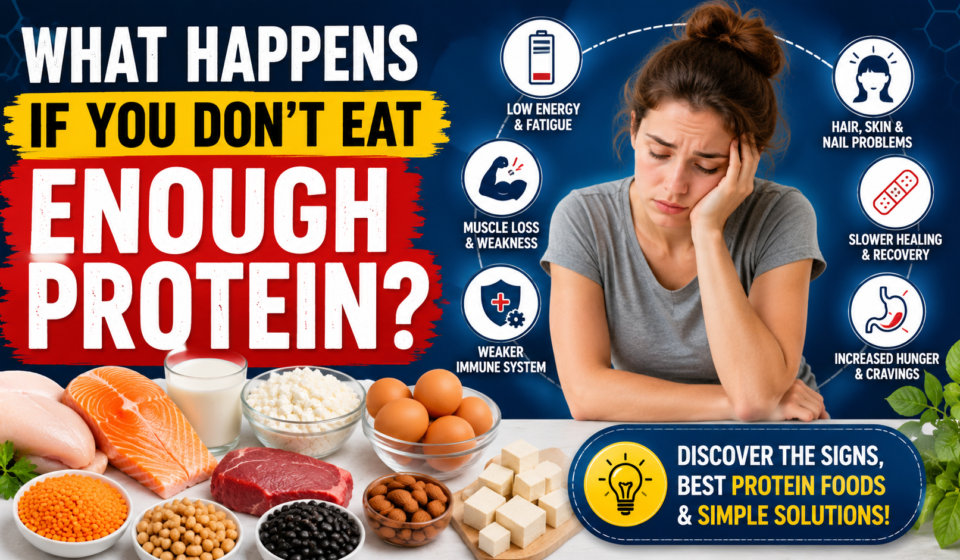
Protein is one of the most important nutrients your body needs every day. If you don’t eat enough protein, you may feel tired, lose muscle, stay hungry more often, recover slowly, and experience changes in your hair, skin, or nails. Most healthy adults can meet their protein needs by eating a balanced diet that includes lean meats, fish, eggs, dairy products, beans, lentils, soy foods, nuts, and seeds. If you suspect a protein deficiency or have a medical condition affecting nutrition, speak with your doctor or a registered dietitian.
Table of Content
- Why Protein Matters
- What Happens If You Don’t Eat Enough Protein?
- Common Signs and Symptoms
- What Causes Low Protein Intake?
- Who Is Most at Risk?
- How Much Protein Do You Need?
- Best Protein-Rich Foods
- Practical Tips to Eat More Protein
- When to See a Doctor
- Conclusion
- Frequently Asked Questions
- Trusted Resources
Why Protein Matters?
Protein is a building block for almost every part of your body. It helps build and repair muscles, supports healthy skin, hair, nails, organs, and bones, and plays an important role in making enzymes, hormones, and antibodies that help your immune system work properly.
Unlike some nutrients, your body does not store large amounts of protein for future use. That means you need a regular supply from the foods you eat.
If you’re wondering what happens if you don’t eat enough protein, the answer depends on how little protein you’re getting and for how long. Mild shortages may cause subtle symptoms, while long-term low protein intake can affect overall health.
What Happens If You Don’t Eat Enough Protein?
Your body tries to adapt when protein intake is too low, but over time it may begin to prioritize essential functions while sacrificing others. This can lead to noticeable physical changes and reduced overall well-being.
Some of the most common effects include:
- Muscle loss
- Fatigue
- Increased hunger
- Slower healing
- Weakness
- Hair thinning
- Brittle nails
- Reduced immune function
Many of these symptoms can also have other causes, so they do not automatically mean you have a protein deficiency. A healthcare provider can help identify the real reason.
Common Signs and Symptoms
1. You Feel Tired More Often
Protein helps support muscles and many important body processes. If your diet lacks enough protein, you may notice lower energy levels or feel weaker during everyday activities.
For example, climbing stairs or carrying groceries may seem more difficult than usual.
2. You Lose Muscle Mass
Your body uses protein to maintain muscle tissue. If you consistently eat too little protein, especially while losing weight or aging, your body may break down muscle for essential needs.
This can make you feel less strong and reduce physical performance.
3. You Stay Hungry After Meals
Protein is one of the most filling nutrients. Meals that contain enough protein often help people stay satisfied longer.
For example:
- Oatmeal alone may leave you hungry quickly.
- Oatmeal with Greek yogurt and nuts is usually more filling.
4. Your Hair, Skin or Nails Change
Hair and nails are made largely of protein.
Over time, low protein intake may contribute to:
- Hair thinning
- Brittle nails
- Dry or unhealthy-looking skin
These changes usually develop gradually rather than overnight.
5. Cut and Injuries Heal More Slowly
Protein supports tissue repair.
If you don’t eat enough protein, your body may take longer to recover from minor injuries, surgery, or intense exercise.
6. You Get Sick More Often
Protein helps your body make antibodies that fight infections.
While many factors affect immunity, consistently eating too little protein may make it harder for your immune system to function at its best.
7. Swelling in Severe Cases
Very severe protein deficiency—which is uncommon in most healthy adults in the United States—can lead to fluid buildup (edema), especially in the legs or feet.
This usually occurs alongside significant malnutrition and requires prompt medical evaluation.
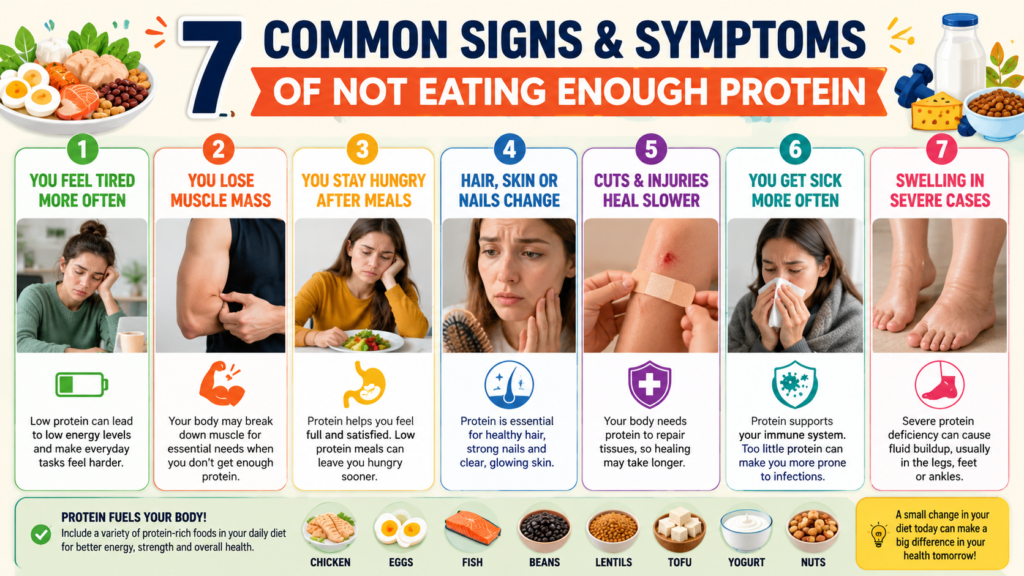
Infographic showing 7 common signs and symptoms of not eating enough protein, including fatigue, muscle loss, increased hunger, hair and nail changes, slower healing, weakened immunity, and swelling, with healthy protein-rich food examples.
What Causes Low Protein Intake?
Several factors can make it difficult to get enough protein.
Common causes include:
- Following a very restrictive diet
- Skipping meals regularly
- Eating mostly highly processed snack foods
- Poor appetite
- Medical conditions that affect digestion or nutrient absorption
- Certain eating disorders
- Older age with reduced food intake
Vegetarian and vegan diets can absolutely provide enough protein, but they require thoughtful meal planning.
Who is Most at Risk?
Although anyone can eat too little protein, some groups have a higher risk.
These include:
- Older adults
- People recovering from illness or surgery
- Athletes with higher protein needs
- People following highly restrictive diets
- Individuals with digestive disorders
- People with reduced appetite
- Adults trying to lose weight while eating too few calories
If you belong to one of these groups, paying attention to daily protein intake is especially important.
How Much Protein Do You Need?
Protein needs vary depending on age, activity level, body size, and overall health.
For most healthy adults, the Recommended Dietary Allowance (RDA) is 0.8 grams of protein per kilogram of body weight per day.
For example:
- A person weighing 150 pounds (68 kg) needs about 54 grams of protein daily.
Some people—including athletes, older adults, and people recovering from illness—may benefit from higher amounts under professional guidance.
Best Protein-Rich Food
Fortunately, getting enough protein is easier than many people think.
Animal Protein Sources
- Chicken breast
- Turkey
- Fish such as salmon or tuna
- Eggs
- Greek yogurt
- Cottage cheese
- Lean beef
Plant Protein Sources
- Lentils
- Black beans
- Chickpeas
- Edamame
- Tofu
- Tempeh
- Quinoa
- Peanut butter
- Almonds
- Pumpkin seeds
A balanced diet can include either animal proteins, plant proteins, or a combination of both.
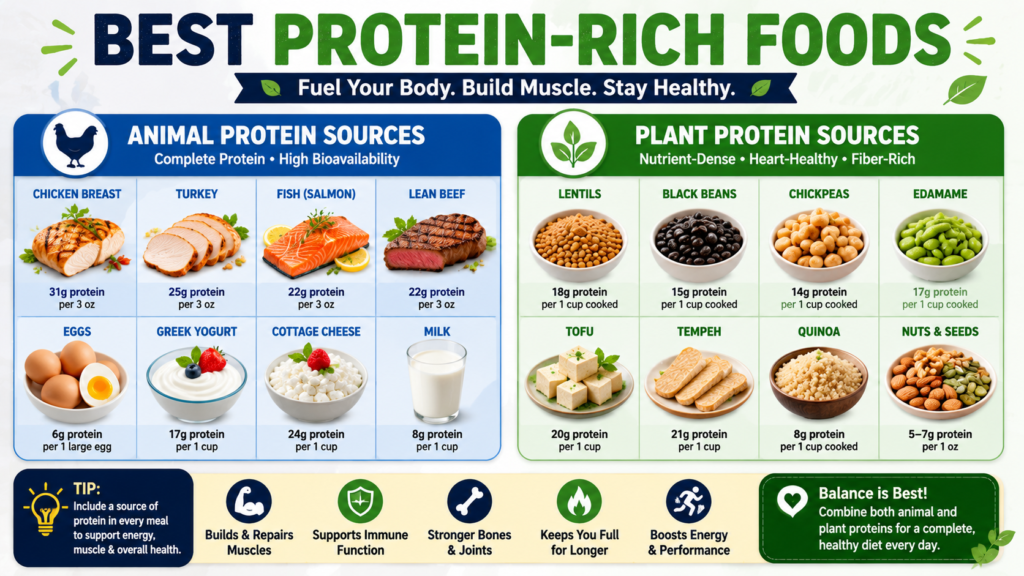
Best protein-rich foods infographic comparing animal protein sources like chicken, turkey, fish, eggs, Greek yogurt, and milk with plant protein sources like lentils, black beans, chickpeas, tofu, quinoa, nuts, and seeds.
Practical Tips to Eat More Protein
Making small changes can help you meet your daily protein goals without making your meals complicated.
Try these simple ideas:
- Add Greek yogurt to breakfast.
- Include eggs with whole-grain toast.
- Snack on cottage cheese or roasted chickpeas.
- Add beans to soups, salads, or tacos.
- Include grilled chicken or tofu with lunch.
- Sprinkle nuts or seeds on oatmeal.
- Choose milk or fortified soy milk instead of sugary drinks.
- Include a protein source at every meal.
Example One Day Meal Plan
Breakfast: Greek yogurt with berries and almonds
Lunch: Grilled chicken salad with mixed vegetables
Snack: Apple with peanut butter
Dinner: Baked salmon, brown rice, and broccoli
This type of meal pattern provides protein throughout the day while also supplying fiber, vitamins, and healthy fats.
Can You Eat Too Much Protein?
More protein is not always better.
For most healthy people, eating a moderate amount of protein as part of a balanced diet is safe. However, extremely high-protein diets may not be appropriate for everyone, especially individuals with certain kidney conditions.
If you’re considering major dietary changes or high-protein supplements, it’s a good idea to discuss them with your healthcare provider.
When it’s Time to Talk to Your Doctor
You should talk to a healthcare professional if you:
- Continue losing weight without trying
- Notice ongoing muscle weakness
- Feel constantly tired despite adequate sleep
- Have persistent swelling
- Experience poor wound healing
- Have digestive conditions that affect nutrient absorption
- Are unsure whether you’re meeting your nutritional needs
A doctor or registered dietitian can evaluate your symptoms and recommend the best approach for your situation.
Final Thoughts
What happens if you don’t eat enough protein? Over time, your body may respond with muscle loss, fatigue, increased hunger, slower healing, and changes to your hair, skin, and nails. Fortunately, most people can prevent these problems by eating a balanced diet that includes healthy protein sources throughout the day.
Simple foods like eggs, Greek yogurt, beans, lentils, fish, chicken, tofu, nuts, and seeds can help you meet your daily protein needs. If you have ongoing symptoms, unexplained weight loss, or a medical condition affecting nutrition, schedule an appointment with your doctor or a registered dietitian for personalized advice.
Frequently Asked Question (FAQs)
1. What are the first signs of not eating enough protein?
Early signs may include increased hunger, tiredness, muscle weakness, and reduced strength. These symptoms can have many causes, so it’s important to seek medical advice if they continue.
2. Can you survive without enough protein?
Your body needs protein to function properly. Long-term inadequate protein intake can lead to health problems, although severe protein deficiency is uncommon in most healthy adults in the United States.
3. Can low protein cause hair loss?
Low protein intake may contribute to hair thinning over time because hair is primarily made of protein. However, hair loss can also result from genetics, stress, hormonal changes, or medical conditions.
4. What foods are highest in protein?
Excellent choices include chicken, fish, eggs, Greek yogurt, cottage cheese, lentils, beans, tofu, tempeh, quinoa, nuts, and seeds.
5. Do older adults need more protein?
Many experts suggest that older adults may benefit from somewhat higher protein intake to help maintain muscle mass and support healthy aging. Individual needs vary, so it’s best to discuss this with a healthcare provider.
Disclaimer
This article is for educational purposes only and is not a substitute for professional medical advice, diagnosis, or treatment. If you have ongoing symptoms or concerns about your health, consult a qualified healthcare provider.
Trusted Resources
- Harvard T.H. Chan School of Public Health – The Nutrition Source: Protein
- Academy of Nutrition and Dietetics – Healthy Eating Resources
- National Institutes of Health (NIH) – Nutrition Information
- MedlinePlus – Protein in Diet
- U.S. Department of Agriculture (USDA) – MyPlate