
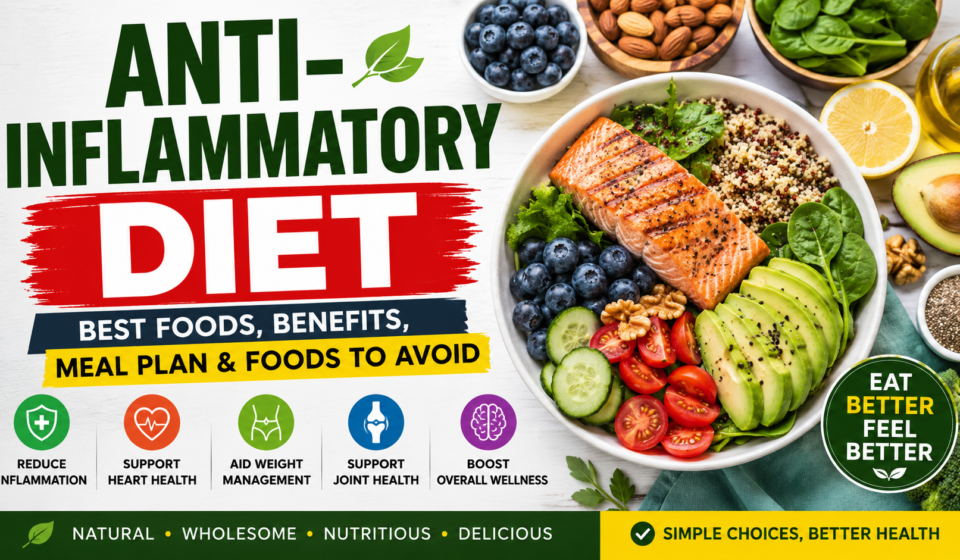
Anti Inflammatory Diet: Best Foods, Benefits, Meal Plan & Foods to Avoid

Quick Summary
An anti-inflammatory diet focuses on whole, nutrient-rich foods that may help support your body’s natural response to inflammation. It includes vegetables, fruits, whole grains, healthy fats, beans, fish, nuts, and seeds while limiting highly processed foods, sugary drinks, and excessive saturated fats. Although no diet can cure diseases, healthy eating may support heart health, joint health, brain function, weight management, and overall wellness.
Disclaimer
This article is for educational purposes only and is not a substitute for professional medical advice, diagnosis, or treatment. Always consult your healthcare provider before making significant dietary changes, especially if you have a medical condition, are pregnant, or take prescription medications.
Table of Content
- What Is an Anti-Inflammatory Diet?
- What Is Inflammation?
- Benefits of an Anti-Inflammatory Diet
- Best Foods to Eat
- Foods to Limit or Avoid
- Who May Benefit?
- Sample 1-Day Meal Plan
- Practical Tips for Success
- When to See a Doctor
- Conclusion
- Frequently Asked Questions (FAQs)
- Trusted Resources
What is an Anti-Inflammatory Diet?
An anti-inflammatory diet is a way of eating that emphasizes natural, minimally processed foods rich in vitamins, minerals, fiber, and healthy fats. These foods provide nutrients that support overall health and may help reduce chronic, low-grade inflammation over time.
Unlike strict fad diets, this approach is flexible and can fit many eating styles. Most experts recommend focusing on balanced meals instead of eliminating entire food groups unless medically necessary.
For many nationals, simple changes—like replacing soda with water or adding vegetables to dinner—can make healthy eating easier without feeling restrictive.
What is an Inflammation?
Inflammation is your body’s natural defense system. When you get a cut or catch a virus, inflammation helps your body heal.
However, long-term or chronic inflammation may contribute to certain health conditions such as:
- Heart disease
- Type 2 diabetes
- Obesity
- Arthritis
- Some digestive disorders
Many factors can influence chronic inflammation, including poor diet, smoking, lack of exercise, chronic stress, poor sleep, and excess body weight.
An anti-inflammatory diet supports your overall health, but it is only one part of a healthy lifestyle.
Benefits of an Anti-Inflammatory Diet
Research suggests that following an anti-inflammatory eating pattern may provide several health benefits.
1. May Support Heart Health
Foods like salmon, walnuts, olive oil, oats, and beans contain nutrients that support healthy cholesterol levels and overall cardiovascular health.
2. May Help Maintain a Healthy Weight
Whole foods are generally more filling than highly processed snacks. They can help you stay satisfied longer, making healthy weight management easier.
3. May Support Joint Health
Many people with joint discomfort choose anti-inflammatory eating patterns because they include foods rich in omega-3 fats and antioxidants.
4. May Help Stabilize Blood Sugar
High-fiber foods such as lentils, oats, vegetables, and berries digest more slowly and may help maintain steadier blood sugar levels when included as part of a balanced diet.
5. May Support Brain Health
Colorful fruits, leafy greens, nuts, and fish provide nutrients associated with healthy brain function.
6. May Improve Overall Wellness
Many people report having more energy and feeling healthier after replacing processed foods with nutritious whole foods.
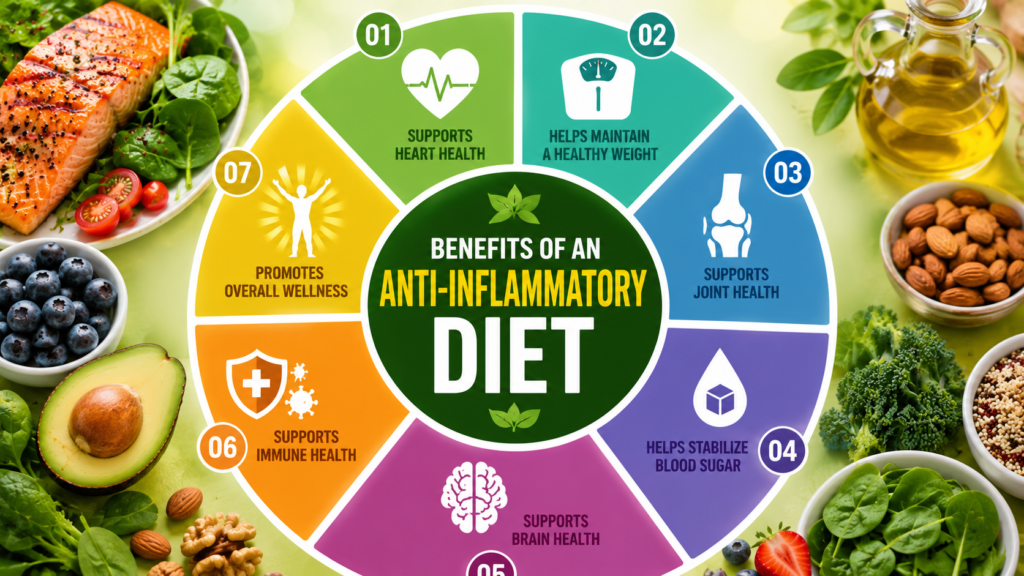
Colorful infographic showing the benefits of an anti-inflammatory diet with healthy foods like salmon, avocado, blueberries, spinach, broccoli, olive oil, nuts, and quinoa surrounding a central diagram highlighting heart health, healthy weight, joint health, blood sugar balance, brain health, immune support, and overall wellness.
Best Foods for an Anti-Inflammatory Diet
A successful anti-inflammatory diet includes a variety of colorful, nutrient-rich foods.
Vegetables
Aim to fill at least half of your plate with vegetables.
Good choices include:
- Spinach
- Kale
- Broccoli
- Bell peppers
- Brussels sprouts
- Carrots
- Tomatoes
Example: Add spinach to scrambled eggs or include roasted broccoli with grilled chicken.
Fruits
Fruits provide fiber and antioxidants.
Excellent options include:
- Blueberries
- Strawberries
- Cherries
- Oranges
- Apples
- Grapes
Example: Enjoy fresh berries with plain Greek yogurt for breakfast.
Whole Grains
Replace refined grains with whole grains whenever possible.
Healthy options include:
- Oatmeal
- Brown rice
- Quinoa
- Whole wheat bread
- Barley
Example: Choose oatmeal instead of sugary breakfast cereal.
Healthy Protein
Lean protein helps build and repair tissues.
Good choices include:
- Salmon
- Sardines
- Tuna
- Skinless chicken
- Turkey
- Eggs
- Beans
- Lentils
- Chickpeas
Example: A grilled salmon dinner with vegetables makes a balanced anti-inflammatory meal.
Healthy Fats
Healthy fats are an important part of this eating pattern.
Choose:
- Extra virgin olive oil
- Avocados
- Walnuts
- Almonds
- Pistachios
- Chia seeds
- Flaxseeds
Instead of butter, drizzle olive oil over roasted vegetables.
Herbs and Spices
Many herbs and spices add flavor without extra sodium.
Popular choices include:
- Turmeric
- Ginger
- Garlic
- Cinnamon
- Rosemary
- Basil
Adding fresh herbs to homemade meals is an easy way to boost flavor naturally.
Foods to Limit or Avoid
No food needs to be completely banned, but limiting certain items may support better overall health.
Try to reduce:
- Sugary drinks
- Candy
- Pastries
- White bread
- Processed meats
- Deep-fried foods
- Fast food
- Excess alcohol
- Highly processed snack foods
For example, swap potato chips for a handful of unsalted nuts or fresh fruit.
Small, consistent changes often work better than making drastic changes overnight.
Who May Benefit from an Anti-Inflammatory Diet?
Many adults can benefit from healthier eating habits.
People who may especially find this eating pattern helpful include those who:
- Want to improve overall health
- Are trying to lose weight
- Have a family history of heart disease
- Want to eat more whole foods
- Are looking for healthier long-term eating habits
If you have diabetes, kidney disease, inflammatory bowel disease, food allergies, or another chronic medical condition, ask your healthcare provider or a registered dietitian for personalized advice.
Simple 1-Day Anti-Inflammatory Meal Plan
Here’s an easy example using foods commonly available in U.S. grocery stores.
Breakfast
Oatmeal topped with blueberries, walnuts, and cinnamon.
Morning Snack
An apple with natural peanut butter.
Lunch
Grilled chicken salad with spinach, tomatoes, cucumbers, avocado, olive oil, and lemon dressing.
Afternoon Snack
Plain Greek yogurt with strawberries.
Dinner
Baked salmon with roasted broccoli and quinoa.
Evening Snack
A small handful of almonds or a kiwi.
Drink water throughout the day and limit sugary beverages.
Practical Tips to Follow an Anti-Inflammatory Diet
Healthy eating doesn’t have to be complicated.
Try these simple habits:
- Cook more meals at home.
- Read food labels before buying packaged foods.
- Fill half your plate with vegetables.
- Choose water instead of soda.
- Eat fish one or two times each week.
- Replace refined grains with whole grains.
- Keep healthy snacks available.
- Get regular physical activity.
- Aim for 7–9 hours of sleep each night.
- Manage stress through walking, meditation, or hobbies.
Small improvements practiced consistently often produce better long-term results than trying to be perfect.
When it’s Time to Talk to Your Doctor
Diet alone cannot diagnose or treat medical conditions.
Schedule an appointment with your healthcare provider if you have:
- Persistent joint pain or swelling
- Unexplained fatigue
- Ongoing digestive symptoms
- High blood sugar
- High blood pressure
- Unintentional weight loss
- Symptoms that continue despite lifestyle changes
A doctor can evaluate your symptoms and recommend appropriate treatment if needed.
Final Thoughts
An anti-inflammatory diet is not a temporary trend—it is a balanced, sustainable way of eating that emphasizes vegetables, fruits, whole grains, healthy fats, lean proteins, nuts, seeds, and minimally processed foods. Making simple food swaps over time may support heart health, healthy weight management, steady energy levels, and overall well-being.
Remember that food is only one part of a healthy lifestyle. Regular exercise, quality sleep, stress management, and routine medical care also play important roles in long-term health.
If you have ongoing symptoms or a chronic health condition, consult your doctor or a registered dietitian before making major dietary changes.
Frequently Asked Questions (FAQs)
1. What foods reduce inflammation the most?
There is no single “best” food, but vegetables, berries, fatty fish, olive oil, nuts, beans, and whole grains are commonly included in anti-inflammatory eating patterns.
2. Can an anti-inflammatory diet help with weight loss?
It may support healthy weight management because it emphasizes filling, nutrient-dense foods. However, weight loss depends on many factors, including overall calorie intake and physical activity.
3. Is coffee allowed on an anti-inflammatory diet?
Yes. Plain coffee can fit into a balanced diet for many people. Try to limit added sugar and high-calorie creamers.
4. How long does it take to notice benefits?
Everyone is different. Some people notice improvements in their eating habits or energy within weeks, while other health changes may take longer. Consistency is more important than quick results.
5. Is the Mediterranean diet considered anti-inflammatory?
Yes. Many healthcare professionals consider the Mediterranean diet one of the best examples of an anti-inflammatory eating pattern because it emphasizes fruits, vegetables, whole grains, olive oil, fish, legumes, and nuts.
Trusted Resources
- Harvard T.H. Chan School of Public Health – The Nutrition Source
- American Heart Association – Healthy Eating
- Academy of Nutrition and Dietetics
- National Institutes of Health (NIH) – Office of Dietary Supplements
- Centers for Disease Control and Prevention (CDC) – Healthy Weight & Nutrition