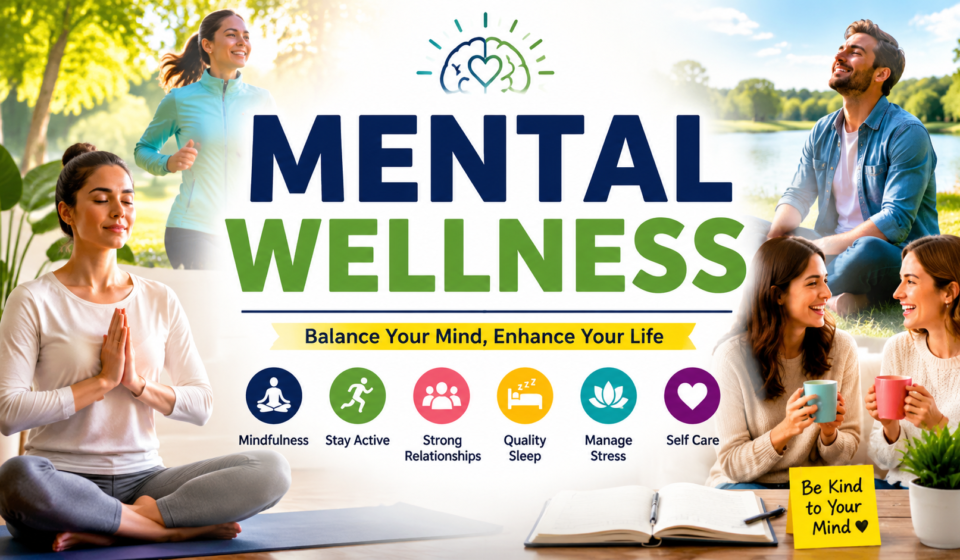
Mental Wellness: Complete Guide to Improving Your Mental Health and Emotional Well-Being

Life can become overwhelming sometimes. Work responsibilities, family commitments, financial pressures, relationship challenges, and constant digital distractions can leave many people feeling mentally exhausted.
While most people understand the importance of physical health, mental wellness often receives less attention. However, the way we think, feel, and respond to daily situations has a major impact on our overall health and happiness.
Mental wellness does not mean that you will never feel stressed, worried, or sad. These emotions are a normal part of life. Instead, mental wellness means having the ability to understand your emotions, handle challenges, recover from difficult experiences, and continue moving forward.
The good news is that mental wellness can be improved through small and consistent lifestyle changes. Simple actions, when practiced regularly, can help you feel more balanced, focused, and emotionally stronger.
Quick Summary
Mental wellness is about taking care of your emotional, psychological, and social well-being. It affects how you think, handle stress, make decisions, and connect with other people.
You do not need a perfect life to have good mental wellness. Everyone faces stress, setbacks, and difficult emotions. The goal is to develop healthy ways to manage challenges and maintain emotional balance.
Simple habits like getting enough sleep, staying active, building supportive relationships, practicing mindfulness, and asking for help when needed can support better mental health and overall quality of life.
Table of Content
- Understanding Mental Wellness
- Why Mental Wellness Is Important
- Signs That Your Mental Health May Need Attention
- What Can Affect Your Mental Wellness?
- Simple Ways to Improve Mental Wellness
- When to Talk to a Mental Health Professional
- Frequently Asked Questions
- Final Thoughts
- Trusted Resources
- Medical Disclaimer
Understanding Mental Wellness
Mental wellness refers to a healthy state of emotional and psychological well-being. It influences how you manage stress, interact with others, make choices, and respond to everyday challenges.
A person with good mental wellness is not someone who feels happy all the time. Instead, it is someone who understands that life includes both positive and difficult moments and has healthy strategies to deal with them.
Good mental wellness may help you:
- Understand and manage your emotions
- Deal with everyday stress more effectively
- Maintain healthy relationships
- Make thoughtful decisions
- Develop confidence and resilience
Think of mental wellness as a skill that can be strengthened over time. Just like exercising improves physical strength, practicing healthy mental habits can improve emotional strength.
Why Mental Wellness is Importent
Mental wellness plays an important role in every stage of life. It affects how we work, learn, communicate, and maintain relationships.
When your mental health is supported, you may find it easier to:
- Stay focused on daily tasks
- Handle problems calmly
- Maintain positive relationships
- Adapt to changes
- Enjoy everyday activities
On the other hand, ongoing emotional stress can affect sleep, energy levels, motivation, and the ability to complete daily responsibilities.
Taking care of your mental wellness is not selfish or unnecessary. It is a basic part of maintaining a healthy and balanced life.
Signs That Your Mental Health May Need Attention
Everyone experiences stress or emotional ups and downs. However, certain changes may indicate that your mental health needs additional care.
Some common signs include:
- Feeling overwhelmed most of the time
- Persistent sadness or low mood
- Constant worry or excessive fear
- Difficulty sleeping or sleeping too much
- Losing interest in activities you normally enjoy
- Trouble concentrating
- Feeling disconnected from others
- Increased anger or irritability
- Changes in appetite or energy
For example, feeling tired after a stressful week is normal. However, if feelings of sadness, anxiety, or exhaustion continue for weeks and affect your daily life, it may be helpful to seek professional guidance.

Recognizing changes in mood, sleep, behavior, and emotions can be an important step toward improving mental wellness and seeking support when needed.
What Can Affect Your Mental Wellness?
Mental wellness is influenced by many different aspects of life. Understanding these factors can help you make healthier choices.
1. Daily Stress and Life Challenges
Stress from work, studies, finances, family responsibilities, or major life changes can affect emotional well-being.
Learning healthy ways to manage stress can prevent it from becoming overwhelming.
2. Sleep and Lifestyle Habits
Sleep, nutrition, and physical activity are closely connected with mental health.
For example, poor sleep may make it harder to manage emotions, while regular movement and balanced meals can support better energy and mood.
3. Social Connections
Humans need connection. Supportive relationships with family, friends, and communities can provide comfort and encouragement during difficult times.
4. Personal Experiences
Past experiences, difficult situations, loss, or major changes can influence how people respond to stress and emotions.
Everyone’s mental health journey is different, which is why personal care and support are important.
Simple Ways to Improve Mental Wellness
Improving mental wellness does not require changing your entire life overnight. Small steps practiced consistently can create meaningful improvements.
1. Make Sleep a Priority
Sleep is one of the foundations of good health. A lack of quality sleep can affect mood, concentration, and stress levels.
Try to create healthier sleep habits by:
- Going to bed and waking up at similar times
- Creating a relaxing bedtime routine
- Reducing screen time before sleeping
- Keeping your bedroom comfortable and quiet
A good night’s sleep can help your mind recover and prepare for the next day.
2. Stay Physically Active
Physical activity is not only good for your body; it also supports emotional health.
You do not need expensive equipment or intense workouts. Simple activities such as walking, stretching, swimming, or cycling can become part of a healthy routine.
For example, a short walk after dinner can provide both physical movement and a chance to clear your mind.
3. Practice Mindfulness
Mindfulness means paying attention to the present moment instead of constantly worrying about the past or future.
Simple mindfulness activities include:
- Deep breathing
- Short meditation
- Quiet reflection
- Writing down things you are grateful for
These practices may help you become more aware of your thoughts and emotions.
4. Maintain Healthy Relationships
Positive relationships are an important part of mental wellness.
Talking with someone you trust can reduce feelings of loneliness and provide emotional support.
Make time to:
- Connect with family and friends
- Participate in positive social activities
- Share your feelings when needed
You do not have to handle every challenge alone.
5. Create a Balanced Routine
A balanced daily routine can bring structure and reduce feelings of stress.
Try including:
- Regular meals
- Work and rest periods
- Physical activity
- Personal interests
- Relaxation time
Even small routines, such as taking a few minutes each morning to plan your day, can create a sense of control.
6. Learn Healthy Stress Management
Stress is a normal part of life, but managing it effectively is important.
Helpful strategies include:
- Breaking large tasks into smaller steps
- Setting realistic goals
- Taking regular breaks
- Spending time in nature
- Practicing positive self-talk
Avoid unhealthy coping methods that may create additional problems over time.
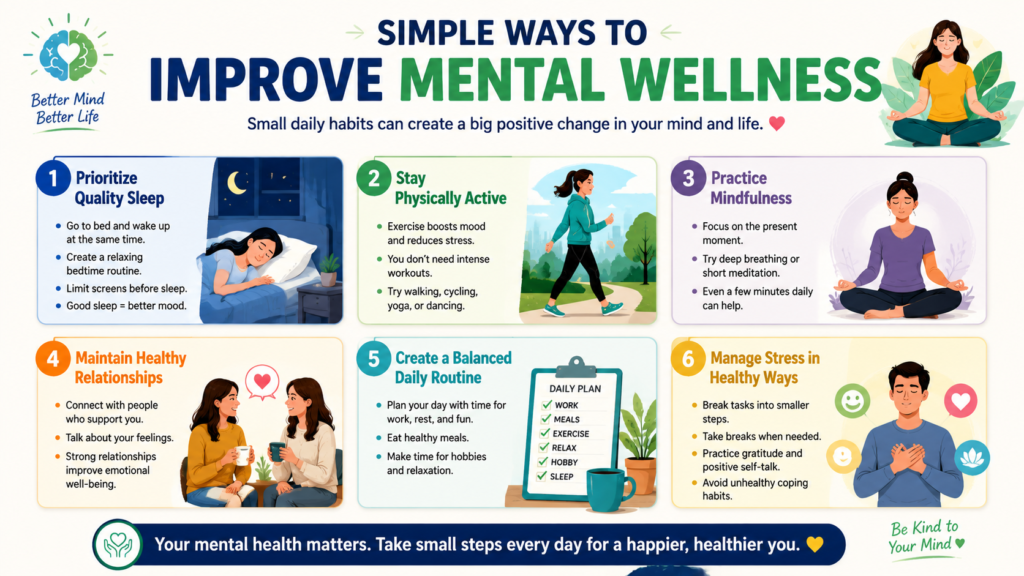
Small daily habits such as better sleep, regular activity, mindfulness, healthy relationships, and stress management can support improved mental wellness and emotional balance.
When to Talk to a Mental Health Professional?
Sometimes lifestyle changes are helpful, but professional support may also be needed.
Consider talking with a mental health professional if:
- Your emotions feel difficult to control
- Problems continue for a long time
- Daily activities become challenging
- Relationships or work are affected
- You feel unable to cope
Counselors, psychologists, and psychiatrists can provide support, guidance, and appropriate treatment options.
Seeking help is a positive step toward better health, not a sign of weakness.
If you or someone you know is experiencing thoughts of self-harm or suicide, seek immediate help from emergency services or a crisis support resource.
Frequently Asked Questions (FAQs)
1. What is mental wellness in simple words?
Mental wellness means taking care of your thoughts, emotions, and relationships so you can handle life’s challenges in healthier ways.
2. Can I improve my mental wellness without medication?
Many people improve their mental wellness through lifestyle changes, self-care, and support. However, some individuals may benefit from professional treatment, depending on their situation.
3. How does exercise help mental wellness?
Regular physical activity may support better mood, reduce everyday stress, and improve overall well-being.
4. Is feeling stressed a sign of poor mental health?
Not always. Stress is a normal human experience. The concern is when stress becomes constant, overwhelming, or begins affecting daily life.
5. When should I seek professional mental health support?
You should consider professional support when emotional difficulties continue, interfere with your life, or feel too difficult to manage alone.
Final Thoughts: Small Steps Can Create Better Mental Wellness
Mental wellness is an ongoing journey, not something that happens overnight. Taking care of your emotional health through healthy habits, supportive relationships, stress management, and self-awareness can help you build a more balanced life.
Remember that everyone experiences difficult moments. What matters is learning healthy ways to handle challenges and reaching out for support when needed.
If you are experiencing ongoing mental health concerns or symptoms affecting your daily life, consult a qualified healthcare professional for personalized advice.
Your mental wellness deserves attention, care, and support — just like your physical health.
Medical Disclaimer
The information in this article is provided for educational purposes only and should not be considered medical advice. It does not replace consultation with a qualified healthcare provider, psychologist, or mental health professional. Always seek professional guidance for diagnosis, treatment, or concerns related to your personal health.
Trusted Resources
- National Institute of Mental Health (NIMH)
- Centers for Disease Control and Prevention (CDC) – Mental Health
- American Psychological Association (APA) – Mental Health Resources
- World Health Organization (WHO) – Mental Health
- National Alliance on Mental Illness (NAMI)