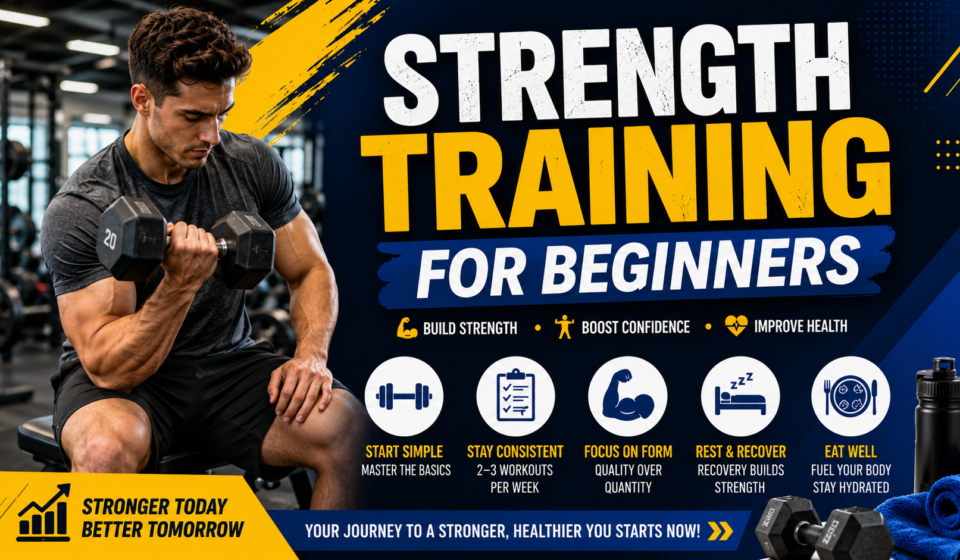

Whether your goal is to get stronger, improve your health, lose weight, or simply feel more confident, strength training for beginners is one of the best places to start. You don’t need an expensive gym membership or years of experience. With the right approach, anyone can begin safely and make steady progress.
This guide explains everything in simple language so you can confidently begin your strength training journey.
Quick Summary
Strength training is one of the most effective ways to build muscle strength, improve overall fitness, and support long-term health. If you are just getting started, your main priority should be learning proper exercise form and technique rather than lifting heavy weights. Developing good movement habits early helps reduce the risk of injury and creates a strong foundation for future progress. For most beginners, performing two to three strength training sessions per week is enough to see steady improvements while allowing the body adequate time to recover. It’s also important to remember that exercise is only one part of the process—getting enough rest, eating a balanced diet with sufficient protein, and staying consistent with your routine are equally important for achieving lasting results. If you have any existing medical conditions, chronic health concerns, or previous injuries, consult a qualified healthcare professional before starting a new strength training program to ensure it is safe and appropriate for your individual needs.
Table of Contents
- What Is Strength Training?
- Benefits of Strength Training for Beginners
- Who Can Start Strength Training?
- What Equipment Do You Need?
- How to Prepare Before Your First Workout
- Beginner Step-by-Step Workout Guide
- Common Beginner Mistakes
- Recovery Tips
- When to See a Doctor
- FAQs
- Conclusion
- Disclaimer
- Trusted Resources
What is Strength Training?
Strength training is a type of exercise that makes your muscles work against resistance. This resistance can come from:
- Dumbbells
- Resistance bands
- Body weight
- Weight machines
- Kettlebells
When muscles work against resistance, they gradually become stronger over time. The key is to increase the challenge slowly while using proper technique.
For beginners, bodyweight exercises and light dumbbells are often enough to build a solid foundation.
Benefits of Strength Training for Beginners
Starting strength training offers many health benefits beyond building muscles.
1. Improves Muscle Strength
Daily activities like carrying groceries, climbing stairs, and lifting objects become easier as your muscles grow stronger.
2. Supports Healthy Weight Management
Strength training helps maintain muscle while supporting calorie burning when combined with healthy eating habits.
3. Builds Stronger Bones
Regular resistance exercise can help support bone health as part of a healthy lifestyle.
4. Improves Balance and Stability
Many strength exercises train your core muscles, helping improve posture and balance.
5. Boosts Confidence
Many beginners notice increased confidence as they become stronger and more comfortable with exercise.
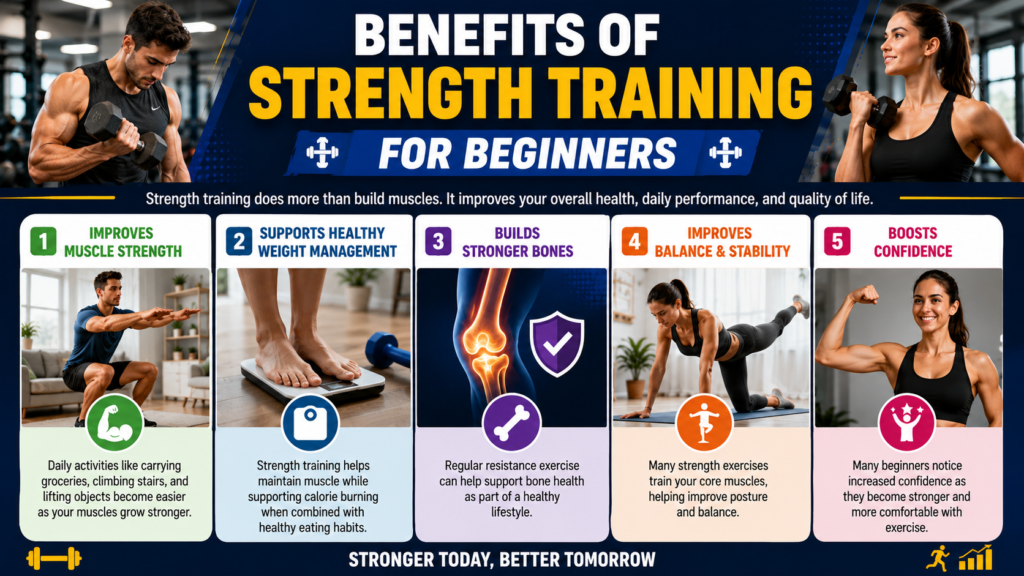
Infographic showing the five key benefits of strength training for beginners, including improved muscle strength, healthy weight management, stronger bones, better balance, and increased confidence.
Who Can Start Strength Training?
Most healthy adults can safely begin strength training.
It may be especially helpful for:
- Adults wanting to improve overall fitness
- People beginning a weight-loss journey
- Older adults looking to maintain muscle strength
- Individuals returning to exercise after a long break
If you have heart disease, uncontrolled high blood pressure, recent surgery, severe joint problems, or another medical condition, speak with your healthcare provider before beginning a new exercise routine.
What Equipment Do You Need?
One of the biggest myths is that strength training requires expensive equipment.
In reality, beginners only need a few basic items.
1. Body Weight
Exercises like squats, push-ups, and lunges require no equipment at all.
2. Resistance Bands
These are affordable, portable, and perfect for learning movement patterns.
3. Light Dumbbells
A pair of light dumbbells allows you to perform many beginner-friendly exercises.
4. Exercise Mat
A comfortable mat provides support for floor exercises and stretching.
Remember, consistency matters much more than having expensive equipment.
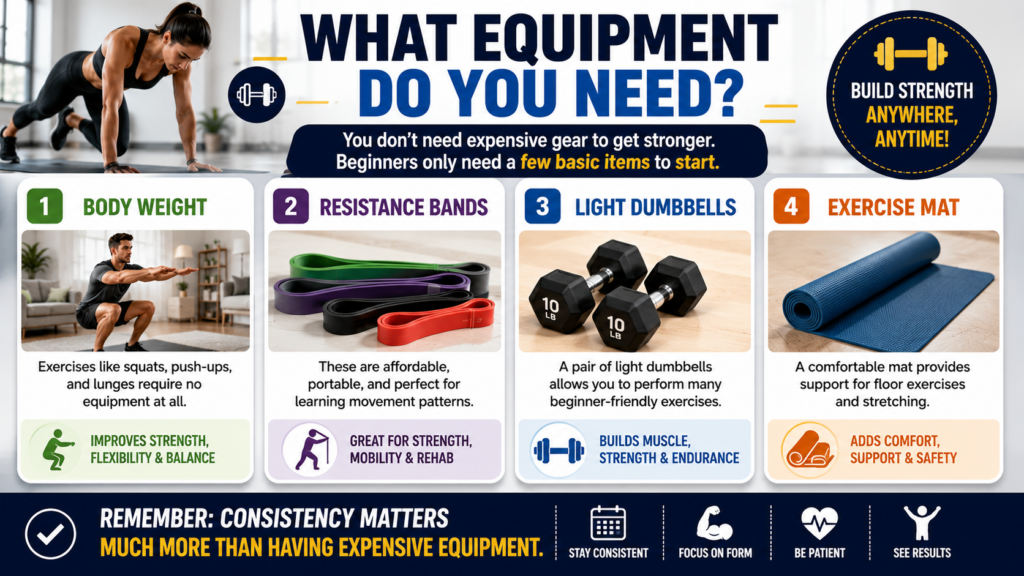
Infographic showing the basic equipment needed for beginner strength training, including bodyweight exercises, resistance bands, light dumbbells, and an exercise mat.
How to Prepare Before Your First Workout
Preparation helps reduce injury risk and makes workouts more enjoyable.
1. Start with a Warm-Up
Spend about five to ten minutes warming up.
Simple options include:
- Brisk walking
- Marching in place
- Arm circles
- Leg swings
The goal is to increase blood flow and prepare your muscles for movement.
2. Wear Comfortable Clothing
Choose supportive athletic shoes and clothing that allows free movement.
3. Stay Hydrated
Drink water before, during, and after your workout.
4. Focus on Form
Good technique is much more important than lifting heavy weights.
If you’re unsure about an exercise, start without weights or ask a certified fitness professional for guidance.
Beginner Step-by-Step Workout Guide
A simple full-body routine is ideal for beginners because it trains all major muscle groups.
Aim to perform this workout 2–3 days per week, leaving at least one rest day between sessions.
Step 1: Bodyweight Squats
Squats strengthen your legs and hips.
Stand with your feet about shoulder-width apart, lower your body as if sitting into a chair, then return to standing.
Start with 8–12 repetitions.
Step 2: Wall Push-Ups or Knee Push-Ups
These exercises strengthen your chest, shoulders, and arms while being easier than standard push-ups.
Perform 8–12 repetitions with slow, controlled movements.
Step 3: Dumbbell Row
Using a light dumbbell, pull the weight toward your body while keeping your back straight.
This exercise helps strengthen the upper back and improves posture.
Perform 8–12 repetitions on each side.
Step 4: Glute Bridge
The Glute Bridge strengthens your hips, glutes, and lower back.
Lie on your back with your knees bent and feet flat on the floor. Press through your heels and lift your hips until your body forms a straight line from your shoulders to your knees. Lower slowly.
Complete 8–12 repetitions.
Step 5: Plank
The plank is one of the best beginner exercises for building core stability.
Place your forearms on the floor with your body in a straight line from head to heels. Keep your stomach muscles engaged and avoid letting your hips sag.
Hold the position for 15–30 seconds. As you become stronger, gradually increase the time.
Step 6: Cool Down
After finishing your workout, spend five to ten minutes cooling down.
Walk slowly for a few minutes and stretch your major muscle groups, including your legs, chest, shoulders, and back. Gentle stretching may help improve flexibility and reduce post-workout stiffness.
Sample Weekly Beginner Strength Training Schedule
A simple schedule can help you stay consistent without overtraining.
| Monday | Full-body strength workout |
| Tuesday | Light walking or stretching |
| Wednesday | Full-body strength workout |
| Thursday | Rest or gentle mobility exercises |
| Friday | Full-body strength workout |
| Saturday | Walking, cycling, or another enjoyable activity |
| Sunday | Rest and recovery |
Consistency is more important than exercising every day. Giving your muscles time to recover is an important part of getting stronger.
Common Beginner Mistakes to Avoid
Many people feel excited when they first begin strength training, but avoiding a few common mistakes can help prevent injuries and frustration.
1. Lifting Too Much Weight
It is tempting to use heavier weights right away, but this often leads to poor technique. Choose a weight that allows you to complete each repetition with good form.
2. Skipping the Warm-Up
Cold muscles are more prone to strains. Even a short warm-up prepares your body for exercise.
3. Ignoring Proper Form
Quality always matters more than quantity. Performing fewer repetitions correctly is better than doing many with poor technique.
4. Training Every Day
Your muscles grow and recover during rest. Beginners usually benefit from at least one rest day between strength-training sessions.
5. Comparing Yourself to Others
Everyone progresses at a different pace. Focus on your own improvement rather than comparing yourself to people at the gym or on social media.
Recovery Tips for Better Results
Exercise is only one part of a healthy fitness routine. Recovery plays a major role in helping your body adapt to training.
1. Eat Balanced Meals
Include lean protein, whole grains, fruits, vegetables, and healthy fats as part of a balanced diet. Protein supports muscle repair after exercise.
2. Stay Hydrated
Drink enough water throughout the day, especially after workouts.
3. Get Enough Sleep
Aim for 7–9 hours of sleep each night. Quality sleep supports recovery and overall health.
4. Increase Gradually
As exercises become easier, slowly increase the resistance, repetitions, or number of sets. Small, steady improvements are safer than sudden changes.
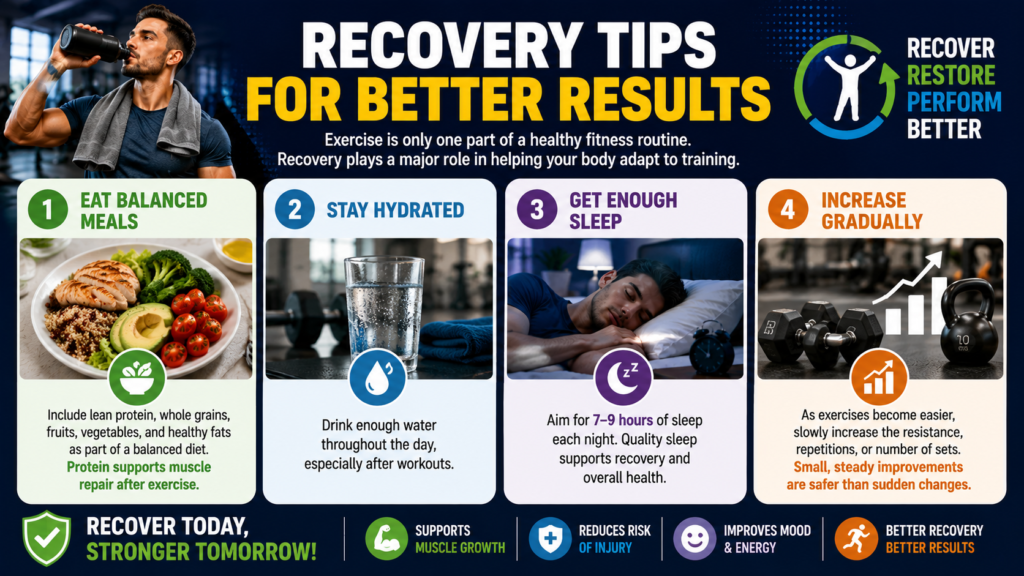
Infographic showing recovery tips for better fitness results, including balanced meals, staying hydrated, getting enough sleep, and gradually increasing workout intensity.
When to See a Doctor
Exercise is generally safe for most healthy adults, but there are situations where medical advice is important.
Speak with your healthcare provider before starting a strength training program if you:
- Have heart disease or uncontrolled high blood pressure.
- Have recently had surgery.
- Experience ongoing joint or severe back pain.
- Have a chronic medical condition that affects exercise.
- Are pregnant and unsure which exercises are appropriate.
Stop exercising and seek medical attention if you experience chest pain, severe dizziness, difficulty breathing, or sudden intense pain during a workout.
Frequently Asked Questions (FAQs)
1. How many days a week should beginners do strength training?
Most beginners should aim for two to three full-body sessions per week, allowing at least one rest day between workouts.
2. Can I build strength without going to a gym?
Yes. Bodyweight exercises, resistance bands, and a pair of light dumbbells are enough for many beginners to develop strength at home.
3. How long should a beginner workout last?
A beginner strength-training session usually lasts 30–45 minutes, including the warm-up and cool-down.
4. Will strength training make me bulky?
For most people, especially beginners, strength training helps build lean muscle and improve overall fitness. Significant muscle growth typically requires specific training and nutrition over an extended period.
5. Should I do cardio along with strength training?
Yes. Combining strength training with activities such as walking, cycling, or swimming supports overall cardiovascular health and fitness.
Final Thoughts
Starting strength training for beginners does not have to be complicated. By learning proper form, beginning with simple exercises, and following a consistent routine, you can gradually build strength, improve balance, and support your overall health.
Remember that progress takes time. Focus on small improvements, allow your body to recover, and celebrate each milestone along the way. Consistency is far more important than perfection.
If you have a medical condition, persistent pain, or concerns about exercising safely, consult your doctor or another qualified healthcare professional before beginning or changing your exercise program.
Disclaimer
This article is for educational and informational purposes only and should not be considered medical advice. It is not intended to diagnose, treat, cure, or prevent any disease. Always consult your physician or another qualified healthcare provider before starting a new exercise program, especially if you have an existing medical condition, recent injury, or other health concerns.
Trusted Resources
- American College of Sports Medicine (ACSM). Strength Training Guidelines.
- Centers for Disease Control and Prevention (CDC). Physical Activity Basics.
- U.S. Department of Health and Human Services. Physical Activity Guidelines for Americans.
- MedlinePlus. Exercise and Physical Fitness.
- National Institute on Aging (NIA). Strength Exercises for Older Adults.