
Quick Summary
Walking is one of the easiest ways to become more active, and it can play an important role in weight loss. While the popular goal of 10,000 steps a day has motivated many people, research suggests there’s no single number that’s right for everyone. Your current activity level, eating habits, walking pace, and overall lifestyle all influence your results. The key isn’t chasing a perfect step count—it’s building a routine you can maintain over time.
Table of Contents
- Quick Summary
- Table of Contents
- You’ve Probably Heard About the 10,000-Step Rule—But Is It Really True?
- Why Walking Is One of the Best Ways to Lose Weight
- Do You Really Need 10,000 Steps a Day?
- So, How Many Steps Should You Aim For?
- What Actually Makes Walking Effective for Weight Loss?
- How to Build a Walking Routine That You Can Stick With
- Healthy Habits That Support Walking for Weight Loss
- Common Mistakes That Can Slow Your Progress
- When Should You See a Doctor?
- Final Thoughts
- Frequently Asked Questions (FAQs)
- Disclaimer
- Trusted Resources
You’ve Probably Heard About the 10,000-Step Rule—But Is It Really True?
Take a look at any fitness tracker, and chances are you’ll see a daily goal of 10,000 steps. It’s become one of the most recognized fitness targets in the world. But if you’ve ever finished the day with 7,500 or 8,000 steps, you may have wondered whether those steps “count.”
The good news is they absolutely do.
Many people believe weight loss begins only after reaching 10,000 steps, but that’s a common misconception. The human body doesn’t work that way. Weight loss depends on many factors working together, including how active you are throughout the day, what you eat, how well you sleep, and how consistently you stay active over time.
Instead of worrying about hitting a specific number every day, think about whether you’re moving more than you were a few weeks ago. That simple change in mindset can make healthy habits feel much more achievable.
For someone who spends most of the day sitting, adding a 20-minute walk after dinner can be a meaningful improvement. Small changes may not seem exciting at first, but they often lead to lasting results.
Why Walking Is One of the Best Ways to Lose Weight
Not everyone enjoys high-intensity workouts, and that’s perfectly okay. Walking is popular because it’s simple, affordable, and accessible for most adults.
You don’t need expensive equipment or a gym membership. A comfortable pair of walking shoes and a safe place to walk are usually enough to get started.
Another advantage is that walking fits naturally into everyday life. You might walk during your lunch break, take your dog outside, park farther from the entrance at the grocery store, or enjoy an evening walk with family. Those moments may seem small on their own, but together they can significantly increase your daily activity.
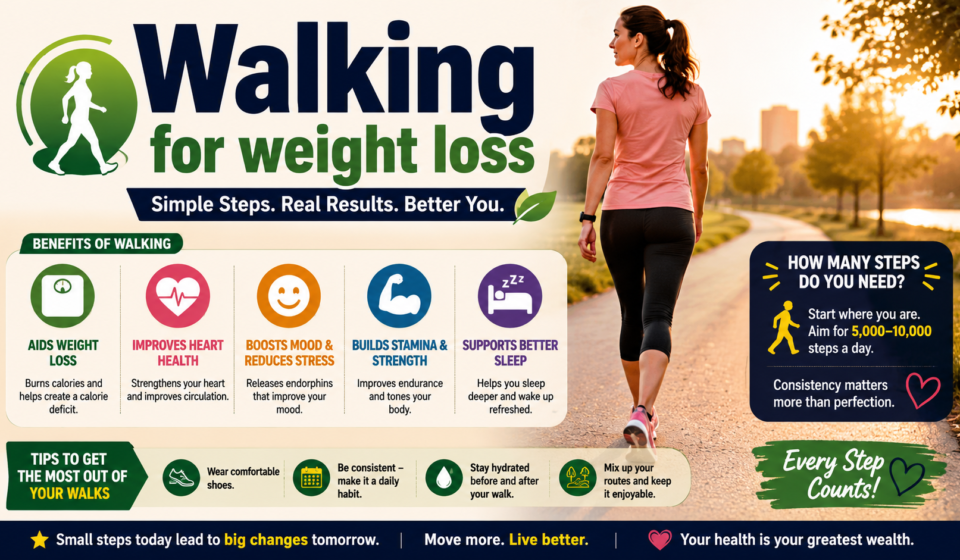
Walking also offers benefits beyond weight loss. Regular walks can support heart health, improve mood, reduce stress, and help you stay physically active as you get older. Many people even find that a short walk helps them clear their mind after a busy day.
Perhaps the biggest benefit is sustainability. A fitness routine only works if you can continue doing it, and walking is one of the easiest forms of exercise to make part of your daily life.
Do You Really Need 10,000 Steps a Day?
The short answer is no.
Although 10,000 steps is a popular goal, it isn’t a medical requirement for losing weight. In fact, many health experts now encourage people to focus on becoming more active rather than aiming for one specific number.
Imagine two people.
The first person currently averages about 3,000 steps each day. The second already walks around 9,000 steps daily.
For the first person, increasing to 5,000 or 6,000 steps is a significant improvement. For the second person, adding a few hundred extra steps may not make much difference. Their bodies are starting from very different places.
That’s why comparing your step count with someone else’s isn’t particularly helpful.
The best goal is one that encourages steady progress without feeling overwhelming.
So, How Many Steps Should You Aim For?
There’s no universal answer because everyone’s lifestyle is different.
A teacher who spends hours on their feet during the day naturally takes more steps than someone who works at a desk. Likewise, someone recovering from an injury shouldn’t expect to match the activity level of an experienced runner.
A practical approach is to first learn your average daily step count. Many smartphones and smartwatches already track this information automatically.
Once you know your baseline, try increasing it gradually. Adding 500 to 1,000 extra steps each day is often more realistic than immediately doubling your activity.
As your fitness improves, you can continue increasing your goal at a pace that feels comfortable.
Remember, consistency matters much more than having one exceptionally active day followed by several inactive ones.
What Actually Makes Walking Effective for Weight Loss?
Walking isn’t just about the number of steps you take. Several everyday habits influence how much benefit you get from your walks.
One of the biggest factors is walking pace. A relaxed stroll is still good for your health, but walking at a brisk pace generally challenges your heart and muscles a little more. An easy way to judge your pace is the “talk test.” You should still be able to hold a conversation, but singing would probably feel difficult.
Your overall routine also matters. Someone who walks for 30 minutes most days of the week is often better off than someone who takes one long walk every weekend and stays inactive the rest of the time.
Finally, don’t overlook your eating habits. Walking can help create the calorie deficit needed for weight loss, but it’s difficult to outwalk an unhealthy diet. Pairing regular walks with balanced meals, proper hydration, and adequate sleep gives you a much better chance of seeing steady progress.
The good news is that you don’t need to be perfect. A few smart choices repeated consistently usually produce better long-term results than trying to change everything overnight.
How to Build a Walking Routine That You Can Stick With
The best walking plan isn’t the one with the highest step goal—it’s the one you’ll still be following months from now.
If you’re new to exercise, start small. A 15- to 20-minute walk a few days a week is a great beginning. As walking becomes part of your routine, gradually increase either your time or your daily steps.
It’s also helpful to choose a time that naturally fits your schedule. Some people enjoy a morning walk before work, while others prefer an evening walk to relax after a busy day. There isn’t a perfect time to walk. The best time is the one you can stick with consistently.
If you find walking boring, make it more enjoyable. Listen to your favorite podcast, explore a new trail, invite a friend, or take your dog along. When walking becomes something you look forward to, it’s much easier to stay consistent.
Healthy Habits That Support Walking for Weight Loss
Walking is only one part of a healthy lifestyle. A few additional habits can make your efforts more effective.
The first is eating a balanced diet. You don’t need to follow a restrictive eating plan, but choosing more whole foods, lean proteins, vegetables, fruits, and whole grains can support your weight-loss goals. Try to limit highly processed snacks and sugary drinks, which can add calories without keeping you full for long.
Sleep is another important piece of the puzzle. When you’re tired, you’re often less active and may be more likely to overeat. Getting enough quality sleep helps your body recover and supports healthy daily habits.
If your schedule allows, consider adding strength-training exercises a couple of times each week. Building muscle supports overall fitness and complements your walking routine. Even simple bodyweight exercises at home can make a difference.
Finally, don’t forget to stay hydrated, especially during warmer months or longer walks. Drinking enough water helps your body function properly and can help you feel your best while exercising.
Common Mistakes That Can Slow Your Progress
Many people become discouraged because they expect results too quickly. Healthy weight loss usually happens gradually, not overnight.
Another common mistake is doing too much too soon. Walking several miles every day during your first week may leave you sore and unmotivated. Building your routine step by step is usually a better approach.
Some people also rely only on their daily walk while remaining inactive for the rest of the day. Remember that overall movement matters. Taking the stairs, stretching during work breaks, or walking while talking on the phone can all contribute to a more active lifestyle.
Finally, avoid comparing yourself with friends, coworkers, or people on social media. Everyone’s body, health, and starting point are different. Focus on your own progress rather than someone else’s results.
When Should You See a Doctor?
Walking is safe for most adults, but it’s important to know when medical advice is appropriate.
Talk to your healthcare provider before starting a new exercise program if you have heart disease, uncontrolled high blood pressure, severe arthritis, or another chronic medical condition that affects physical activity.
You should also stop exercising and seek medical attention if you experience symptoms such as chest pain, severe shortness of breath, dizziness, fainting, or pain that doesn’t improve with rest.
If you’re unsure about how much activity is right for you, your doctor can help you create a safe exercise plan based on your health and fitness level.
Final Thoughts
Walking for Weight Loss isn’t about reaching a magic number of steps every day. It’s about moving your body more consistently than you did before and making physical activity part of your everyday life.
Whether you start with 4,000 steps or already average 9,000, every step contributes to better health. Pair regular walking with balanced nutrition, quality sleep, and realistic goals, and you’ll be building habits that are easier to maintain for the long term.
Most importantly, be patient with yourself. Lasting weight loss rarely happens overnight, but steady progress is often the kind that lasts. And if you have any medical concerns or underlying health conditions, talk with your healthcare provider before making significant changes to your exercise routine.
Frequently Asked Questions (FAQs)
1. Is walking every day enough to lose weight?
Walking every day can support weight loss when combined with a healthy eating plan and consistent lifestyle habits. Results vary from person to person.
2. Should I walk faster or longer?
Both can help. If you’re short on time, increasing your walking pace may be beneficial. If you have extra time, extending your walk is another good option.
3. Can walking help reduce belly fat?
Walking may help reduce overall body fat when combined with a calorie-controlled, balanced diet. However, it’s not possible to target fat loss from one specific area of the body.
4. What’s the best time of day to walk?
The best time is whenever you can do it consistently. Morning, afternoon, and evening walks can all provide health benefits.
5. What if I miss a few days?
Don’t worry. Simply return to your routine as soon as you can. Long-term consistency matters much more than having a perfect schedule.
6. Do I need a fitness tracker?
No. A fitness tracker can help monitor your activity, but it’s not necessary. Comfortable shoes and a regular walking routine are enough for most people.
Disclaimer
This article is for educational and informational purposes only. It is not intended to replace professional medical advice, diagnosis, or treatment. Always consult your physician or another qualified healthcare provider before starting a new exercise or weight-loss program, especially if you have a chronic medical condition, are pregnant, take prescription medications, or experience unusual symptoms during physical activity.
Trusted Resources
- Centers for Disease Control and Prevention (CDC) – Physical Activity Basics
- American Heart Association – Walking for Heart Health
- U.S. Department of Health and Human Services – Physical Activity Guidelines for Americans
- Mayo Clinic – Walking: Trim Your Waistline, Improve Your Health
- National Heart, Lung, and Blood Institute (NHLBI) – Aim for a Healthy Weight