
Quick Summary
Stress is a normal part of life, but chronic stress can affect your mind and body in many ways. The good news is that you don’t always need complicated solutions. This guide explains 15 science-based stress relief techniques that can help you feel calmer naturally. You’ll also learn the common signs of stress, why it happens, and when it’s time to seek professional help.
Table of Contents
- What Is Stress?
- Signs and Symptoms of Stress
- What Causes Stress?
- Why Learning How to Reduce Stress Naturally Matters
- 15 Science-Based Stress Relief Techniques
- When to See a Doctor
- Final Thoughts
- FAQs
- Trusted Resources
- Medical Disclaimer
What is Stress?
Stress is your body’s natural response to challenges or demands. It activates your “fight-or-flight” response, releasing hormones such as cortisol and adrenaline to help you react quickly.
Short-term stress can sometimes be helpful. For example, it may improve your focus before an important presentation or help you react quickly in an emergency.
However, when stress continues for weeks or months without enough recovery time, it becomes chronic stress. Chronic stress can affect both physical and mental health, making it important to learn how to reduce stress naturally before it starts affecting your daily life.
Signs and Symptoms of Stress
Everyone experiences stress differently, but some symptoms are common.
1. Physical Symptoms
- Frequent headaches
- Muscle tension or neck pain
- Fatigue
- Trouble sleeping
- Upset stomach
- Fast heartbeat
2. Emotional Symptoms
- Feeling overwhelmed
- Irritability
- Anxiety
- Mood swings
- Difficulty relaxing
3. Mental Symptoms
- Trouble concentrating
- Forgetfulness
- Racing thoughts
- Constant worrying
4. Behavioral Symptoms
- Eating too much or too little
- Avoiding responsibilities
- Increased alcohol or tobacco use
- Spending excessive time on social media
If these symptoms continue for several weeks or interfere with work, relationships, or daily activities, professional support may be helpful.
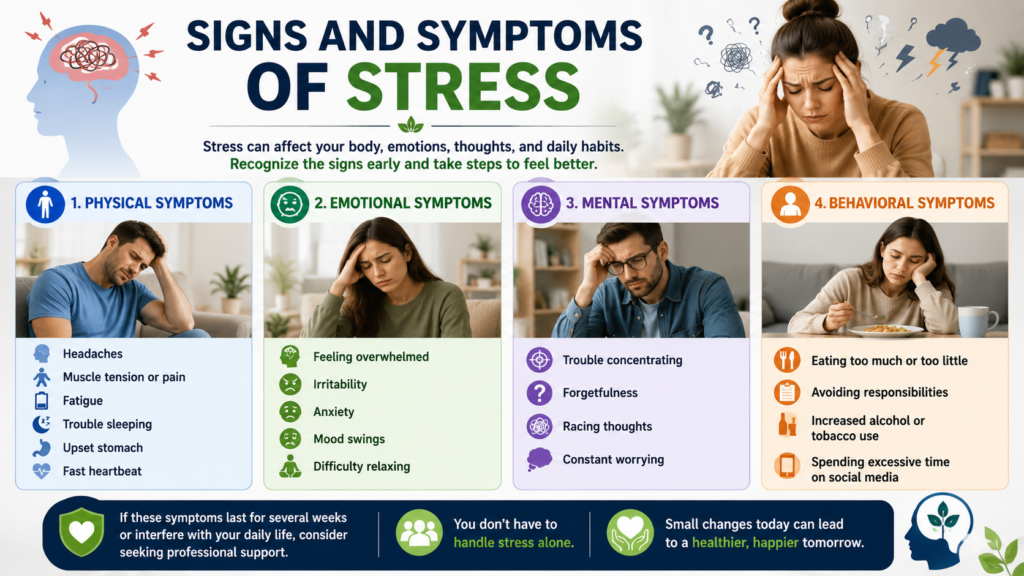
Infographic showing the four main signs and symptoms of stress: physical, emotional, mental, and behavioral symptoms, with simple examples to help identify chronic stress early.
What Causes Stress?
Stress can come from many different areas of life. Sometimes it’s caused by one major event, while other times it’s the result of many small pressures building up over time.
Common causes include:
- Work deadlines
- Financial concerns
- Family responsibilities
- Relationship problems
- Health issues
- Major life changes
- Poor sleep
- Information overload and constant notifications
For example, someone balancing a full-time job, parenting responsibilities, and financial challenges may feel stressed even if no single problem seems overwhelming.
Understanding your personal stress triggers is the first step toward managing them effectively.
Why Learning How to Reduce Stress Naturally Matters
Many people look for quick fixes when stress becomes overwhelming. While medication may be appropriate in some situations, healthy daily habits often play an important role in reducing everyday stress.
Natural stress management may help:
- Improve sleep quality
- Increase energy
- Support emotional well-being
- Improve focus and productivity
- Lower muscle tension
- Promote healthier relationships
- Support overall heart and immune health
Small improvements practiced consistently often have a greater long-term impact than dramatic lifestyle changes that are difficult to maintain.
15 Science-Based Stress Relief Techniques
1. Practice Deep Breathing
One of the fastest ways to calm your body’s stress response is through slow, controlled breathing.
Deep breathing activates the parasympathetic nervous system, which helps your body shift into a more relaxed state.
Try this simple exercise:
- Breathe in slowly through your nose for four seconds.
- Hold your breath for four seconds.
- Exhale gently through your mouth for six seconds.
- Repeat for three to five minutes.
Many people notice they feel calmer after just a few minutes of focused breathing, especially during busy workdays or stressful situations.
2. Get Regular Physical Activity
Exercise is one of the most effective natural ways to manage stress.
Physical activity helps reduce stress hormones while increasing endorphins, often called the body’s natural “feel-good” chemicals.
You don’t need an intense workout to benefit.
Good options include:
- A 30-minute walk
- Cycling around your neighborhood
- Swimming
- Yoga
- Dancing at home
For example, taking a brisk walk during your lunch break can help clear your mind before returning to work.
3. Improve Your Sleep Routine
Poor sleep and stress often create a frustrating cycle.
Stress makes it harder to sleep, while lack of sleep increases stress the next day.
Simple habits that support better sleep include:
- Going to bed at the same time every night.
- Keeping your bedroom cool and quiet.
- Avoiding large meals right before bedtime.
- Limiting phone or tablet use during the hour before sleep.
- Creating a relaxing bedtime routine, such as reading or stretching.
Even small improvements in sleep quality can make it easier to handle everyday challenges.
4. Practice Mindfulness Meditation
Mindfulness means paying attention to the present moment without judging your thoughts or feelings.
Research has shown that regular mindfulness practice may help reduce stress, improve emotional regulation, and support overall mental well-being.
You don’t have to meditate for an hour.
Start with just five minutes each day by sitting quietly and focusing on your breathing. When your mind wanders, gently bring your attention back to your breath without criticizing yourself.
Many beginners find guided meditation apps or short online recordings helpful when getting started.
5. Spend Time in Nature
Nature has a calming effect on both the mind and body. Studies suggest that spending time outdoors may help lower stress levels, improve mood, and reduce mental fatigue.
You don’t need to plan a weekend camping trip to enjoy these benefits. Simple activities can make a difference, such as:
- Walking through a local park
- Sitting under a tree during your lunch break
- Gardening
- Hiking on a nearby trail
- Watching a sunrise or sunset
For example, replacing 20 minutes of scrolling on your phone with a walk outside may leave you feeling more refreshed and focused.
If you live in a busy city, even green spaces with trees and plants can provide a relaxing environment.
6. Stay Connected with Family and Friends
Humans are naturally social. Having supportive relationships can make stressful situations feel more manageable.
Talking with someone you trust doesn’t always solve the problem, but it often helps you process your thoughts and feel less alone.
Healthy ways to stay connected include:
- Calling a family member
- Meeting a friend for coffee
- Joining a community group
- Attending religious or volunteer activities
- Participating in a local fitness class
Remember, asking for emotional support is a sign of strength—not weakness.
7. Eat a Balanced Diet
The foods you eat can influence your energy levels, mood, and ability to handle stress.
A balanced eating pattern supports overall health and gives your body the nutrients it needs to function well during challenging times.
Try to include:
- Fresh fruits and vegetables
- Whole grains
- Lean proteins
- Beans and legumes
- Healthy fats such as nuts, seeds, and olive oil
Drinking enough water throughout the day is also important because even mild dehydration can contribute to fatigue and difficulty concentrating.
Instead of aiming for a “perfect” diet, focus on making small, consistent improvements over time.
8. Limit Caffeine and Alcohol
Many people reach for coffee when they’re stressed or enjoy alcohol to unwind in the evening. While these habits may provide temporary relief, too much caffeine or alcohol can sometimes make stress symptoms worse.
High caffeine intake may contribute to:
- Jitters
- Increased heart rate
- Difficulty sleeping
- Anxiety in sensitive individuals
Alcohol may temporarily help you relax, but it can interfere with sleep quality and emotional recovery.
If you notice these drinks affecting your mood or sleep, consider gradually reducing your intake rather than stopping suddenly.
9. Listen to Relaxing Music
Music can be a simple yet effective way to create a calmer environment.
Many people find that slow, gentle music helps them relax after a busy day. Others prefer nature sounds, instrumental music, or soft acoustic playlists.
Consider listening while:
- Driving home from work
- Preparing dinner
- Reading
- Taking a warm bath
- Practicing deep breathing
The goal isn’t choosing the “perfect” playlist—its finding sounds that help you feel more peaceful.
10. Keep a Gratitude Journal
When stress builds up, it’s easy to focus only on problems.
A gratitude journal encourages you to notice positive moments that might otherwise go unnoticed.
Each evening, write down three things you appreciated that day.
They don’t have to be big achievements.
For example:
- A kind conversation with a coworker
- A delicious homemade meal
- A sunny afternoon walk
- Finishing an important task
Over time, this simple habit can help shift your attention toward positive experiences without ignoring life’s challenges.
11. Laugh More
Laughter may not eliminate stressful situations, but it often helps reduce tension and improve mood.
Watching a funny movie, spending time with humorous friends, or enjoying lighthearted podcasts can help you relax naturally.
Children laugh hundreds of times each day because they naturally find joy in ordinary moments. Adults can benefit from making room for laughter too.
Finding moments of humor doesn’t mean ignoring serious problems—it simply gives your mind a healthy break.
12. Manage Your Time Wisely
Feeling overwhelmed often comes from having too many tasks competing for your attention.
Good time management helps reduce unnecessary stress by making responsibilities feel more manageable.
Helpful strategies include:
- Prioritize the most important tasks first.
- Break large projects into smaller steps.
- Use a daily planner or calendar.
- Schedule short breaks.
- Learn to say “no” when your schedule is already full.
For example, instead of worrying about an entire project, focus on completing just the next small step.
Progress usually feels less stressful than perfection.
13. Reduce Screen Time
Phones, tablets, and computers are useful tools, but constant notifications and endless scrolling can increase stress without us realizing it.
Too much screen time may contribute to:
- Mental overload
- Sleep problems
- Information fatigue
- Comparison with others on social media
Simple ways to reduce digital stress include:
- Turning off unnecessary notifications
- Creating phone-free meal times
- Avoiding screens before bed
- Taking regular breaks during work
Even setting aside 30 minutes each evening without digital devices can help your mind unwind.
14. Practice Progressive Muscle Relaxation
Progressive Muscle Relaxation (PMR) is a technique that involves gently tensing and then relaxing different muscle groups throughout the body.
Many people carry stress in their shoulders, neck, jaw, or back without noticing it.
A basic PMR session might look like this:
- Tighten the muscles in your feet for five seconds.
- Slowly release the tension.
- Move to your calves.
- Continue upward through your body until reaching your face.
This practice helps increase awareness of physical tension and encourages your muscles to relax more completely.
Many people enjoy doing PMR before bedtime.
15. Know When to Ask for Help
Natural stress management techniques are valuable, but sometimes professional support is the best next step.
If stress continues despite healthy lifestyle changes or begins interfering with your work, relationships, or daily responsibilities, consider talking with a healthcare provider or licensed mental health professional.
Seeking help early may prevent stress from becoming more difficult to manage later.
Support options may include:
- Counseling or psychotherapy
- Stress management programs
- Cognitive Behavioral Therapy (CBT)
- Medical evaluation if another health condition may be contributing to your symptoms
Remember, asking for help is part of taking care of your health—not a sign of failure.
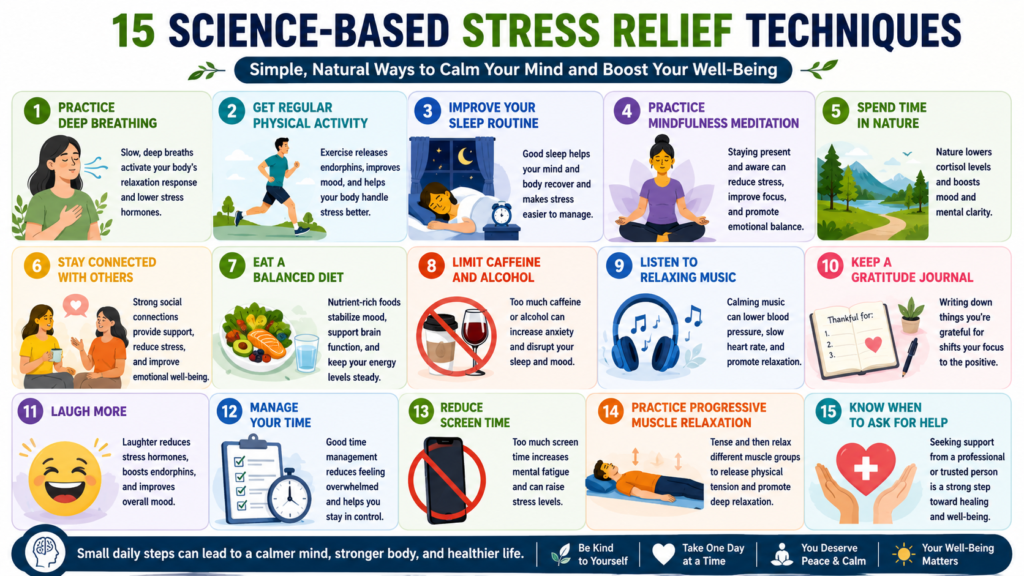
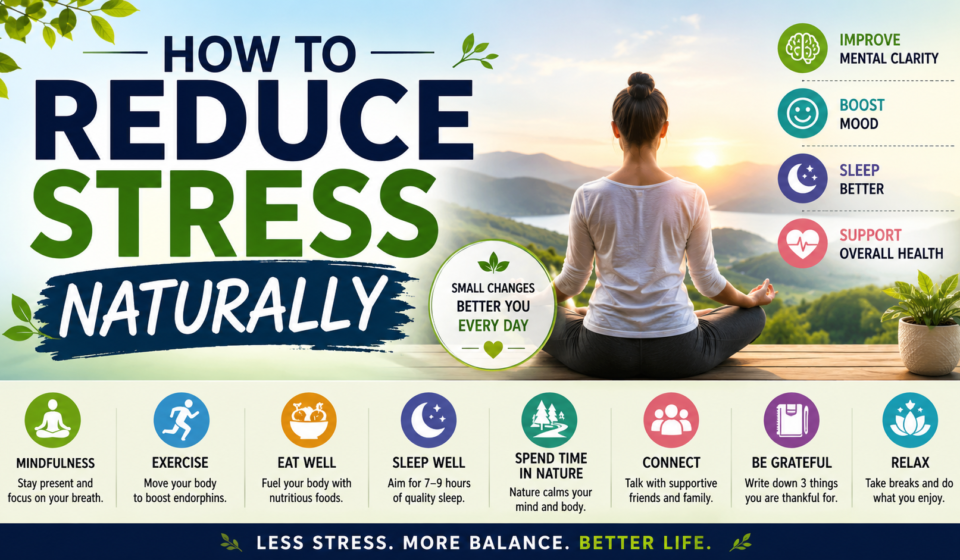
Colorful infographic showing 15 science-based stress relief techniques, including deep breathing, exercise, mindfulness, healthy eating, quality sleep, and other natural ways to improve mental wellness and manage everyday stress.
When to See a Doctor
Learning how to reduce stress naturally can make a meaningful difference for many people. However, stress sometimes becomes more serious and requires professional care.
Schedule an appointment with a healthcare provider if:
- Stress lasts for several weeks or months without improving.
- You feel anxious or overwhelmed most days.
- Stress is affecting your work, school, or relationships.
- You have ongoing trouble sleeping despite healthy sleep habits.
- Physical symptoms such as headaches, chest discomfort, stomach problems, or high blood pressure become frequent.
- You find yourself relying on alcohol, nicotine, or other substances to cope.
Seek immediate medical attention or call emergency services if you have thoughts of harming yourself or someone else, or if you experience severe chest pain, difficulty breathing, or other symptoms that could be a medical emergency.
Early support can make recovery easier and help prevent stress from leading to more serious mental or physical health concerns.
Final Thoughts
Stress is a normal part of life, but it doesn’t have to control your health or happiness. Understanding how to reduce stress naturally begins with recognizing your personal stress triggers and building healthy daily habits.
Simple, science-based practices—such as deep breathing, regular exercise, quality sleep, mindfulness, spending time outdoors, eating a balanced diet, and staying connected with supportive people—can help you become more resilient over time. The key is consistency rather than perfection. Even one or two small changes can have a positive impact when practiced regularly.
If your stress feels overwhelming or doesn’t improve despite trying these strategies, don’t hesitate to speak with your primary care provider or a licensed mental health professional. Getting help early is one of the most important steps you can take for your overall well-being.
Frequently Asked Questions (FAQs)
1. What is the fastest natural way to reduce stress?
Slow, deep breathing is one of the quickest natural stress relief techniques. Even five minutes of controlled breathing can help calm your body’s stress response. A short walk, gentle stretching, or listening to relaxing music may also provide quick relief.
2. Can exercise really help reduce stress?
Yes. Regular physical activity supports the release of endorphins, which help improve mood and reduce stress. You don’t need intense workouts—walking, cycling, swimming, or yoga are all excellent options.
3. Which foods may help support stress management?
A balanced diet that includes fruits, vegetables, whole grains, lean proteins, nuts, seeds, and healthy fats supports overall health and may help your body respond better to everyday stress. Staying hydrated is also important.
4. How long does it take for natural stress relief techniques to work?
Some techniques, such as deep breathing or listening to calming music, may help within minutes. Others, like regular exercise, mindfulness, and healthy sleep habits, often provide greater benefits when practiced consistently over several weeks.
5. Can stress affect physical health?
Yes. Long-term stress may contribute to headaches, muscle tension, digestive issues, poor sleep, fatigue, and difficulty concentrating. Managing stress is an important part of maintaining both mental and physical health.
Trusted Resources
For more evidence-based information about stress and mental well-being, visit these trusted organizations:
- National Institute of Mental Health (NIMH)
- Centers for Disease Control and Prevention (CDC)
- American Psychological Association (APA)
- Mayo Clinic
- National Center for Complementary and Integrative Health (NCCIH)
Medical Disclaimer
This article is for educational and informational purposes only and is not intended to replace professional medical advice, diagnosis, or treatment. Always consult a qualified healthcare provider regarding any medical concerns or before making significant changes to your health routine. If your symptoms are severe, persistent, or worsening, seek medical care promptly.