

The way you spend your first hour after waking up can influence how you feel for the rest of the day. Many people immediately check emails, scroll through social media, or rush into work. While these habits may seem harmless, they can increase stress before the day has even started.
Instead, building morning habits that reduce stress and improve mental health can help create a more peaceful mindset. Healthy morning routines support emotional well-being, improve focus, and make it easier to handle daily challenges. The good news is that you don’t need an expensive wellness program or hours of free time. Even small changes practiced consistently can make a meaningful difference over time.
Quick Summary
Morning Habits That Reduce Stress and Improve Mental Health can help you start each day feeling calmer, more focused, and emotionally balanced. Small actions such as waking up at a consistent time, staying hydrated, practicing mindful breathing, moving your body, eating a healthy breakfast, and limiting early phone use may lower daily stress and support long-term mental wellness. While these habits are not a replacement for medical treatment, they can become an important part of a healthy lifestyle.
Table of Contents
- Quick Summary
- Why Your Morning Routine Matters
- How Stress Affects Mental Health
- Morning Habits That Reduce Stress and Improve Mental Health
- Mistakes That Can Increase Morning Stress
- When to Seek Professional Help
- Conclusion
- Frequently Asked Questions
- Trusted Resources
- Medical Disclaimer
Why Your Morning Routine Matters?
Your brain and body are adjusting from sleep to wakefulness during the morning. This transition affects hormones, energy levels, mood, and concentration.
A calm and structured morning routine may help:
- Reduce feelings of stress and overwhelm
- Improve concentration during the day
- Support better emotional regulation
- Encourage healthier lifestyle choices
- Increase productivity without feeling rushed
Morning routines also create consistency, which many mental health professionals recognize as helpful for managing everyday stress.
How Stress Affects Mental Health
Stress is a normal part of life. However, ongoing stress can affect both your physical and emotional health.
Common signs of stress include:
- Feeling overwhelmed
- Irritability
- Trouble concentrating
- Muscle tension
- Poor sleep
- Fatigue
- Anxiety or excessive worry
If stress continues for a long time, it may increase the risk of anxiety disorders, depression, high blood pressure, and other health concerns. Developing healthy daily routines can help reduce these effects and improve overall well-being.
1. Wake Up at the Same Time Every Day
Your body works best with a consistent sleep schedule.
Waking up at roughly the same time every morning—even on weekends—helps regulate your internal body clock. This may improve sleep quality, mood, and energy levels.
For example, instead of sleeping until noon on weekends, try waking within one hour of your usual weekday schedule.
2. Avoid Checking Your Phone Immediately
Many people reach for their phones before even getting out of bed.
Reading stressful news, work emails, or social media updates first thing in the morning can increase anxiety and information overload.
Instead, spend the first 20 to 30 minutes focusing on yourself before checking notifications.
This simple habit often helps create a calmer start to the day.
3. Drink Water before Coffee
Your body naturally loses fluids while you sleep.
Drinking a glass of water shortly after waking helps replace those fluids and supports normal body functions.
Many people enjoy coffee in the morning, and moderate coffee intake can fit into a healthy lifestyle. However, drinking water first helps you begin the day hydrated.
4. Practice Deep Breathing or Mindfulness
You don’t need to meditate for an hour to experience benefits.
Even five minutes of slow breathing or mindfulness can help calm your nervous system.
A simple exercise is:
- Breathe in through your nose for four seconds.
- Hold for four seconds.
- Exhale slowly for six seconds.
- Repeat for five minutes.
This practice may reduce feelings of tension and improve mental clarity before your day begins.
5. Get Natural Morning Sunlight
Morning sunlight helps regulate your circadian rhythm, which influences sleep, mood, and alertness.
Try spending 10 to 20 minutes outside after waking if possible.
A short walk, sitting on your porch, or simply opening your curtains while enjoying breakfast can all help increase natural light exposure.
6. Move Your Body
Exercise doesn’t have to mean an intense workout.
Gentle movement can reduce stress hormones and improve mood by encouraging the release of feel-good brain chemicals.
Healthy options include:
- A 15-minute walk
- Light stretching
- Yoga
- Cycling
- Bodyweight exercises
The goal is consistency rather than perfection.
7. Eat a Balanced Breakfast
Skipping breakfast may leave some people feeling tired, distracted, or hungry later in the morning.
A balanced breakfast that includes protein, fiber, and healthy fats can help maintain steady energy.
Simple ideas include:
- Greek yogurt with berries
- Oatmeal with nuts
- Eggs and whole-grain toast
- Peanut butter on whole-grain bread
- Fruit with cottage cheese
Choose foods that keep you satisfied without making you feel overly full.
8. Write Down Three Things You’re Grateful For
Gratitude doesn’t eliminate problems, but it can help shift attention toward positive experiences.
Each morning, write down three things you appreciate.
They don’t need to be big accomplishments.
Examples include:
- A supportive friend
- Good health
- A sunny morning
- Your favorite cup of coffee
This habit encourages a more balanced perspective throughout the day.
9. Set One or Two Realistic Priorities
Long to-do lists can feel overwhelming before the day even begins.
Instead of trying to accomplish everything, identify one or two important tasks.
Completing meaningful priorities often creates a sense of achievement while reducing unnecessary stress.
10. Spend a Few Minutes Doing Something You Enjoy
Mental health isn’t only about reducing stress—it’s also about creating positive experiences.
Spend five to ten minutes doing something enjoyable, such as:
- Reading a book
- Listening to calming music
- Journaling
- Caring for houseplants
- Enjoying breakfast without distractions
These small moments help create emotional balance before daily responsibilities begin.
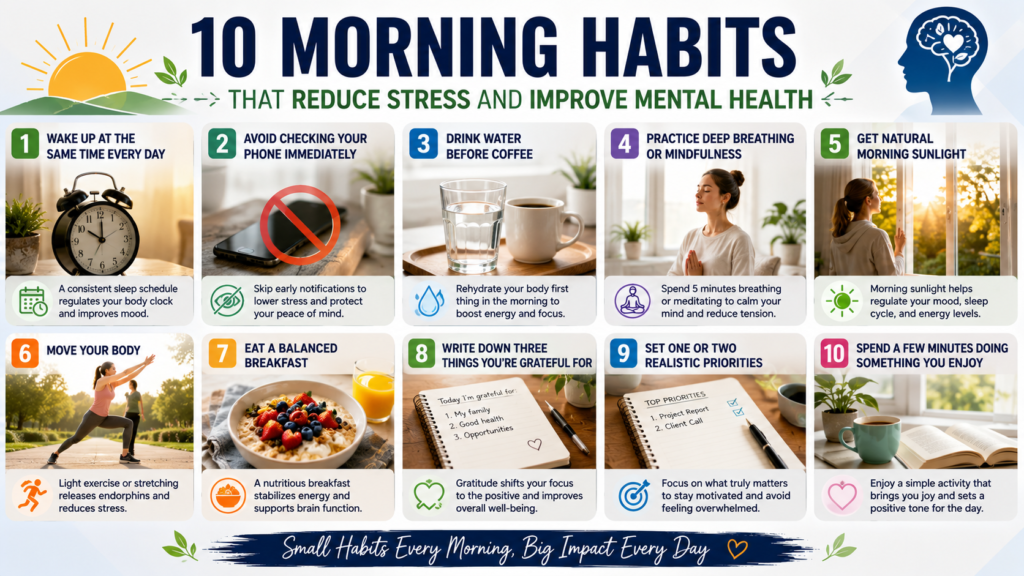
Infographic showing 10 morning habits that reduce stress and improve mental health, including hydration, mindfulness, exercise, healthy breakfast, gratitude, and sunlight.
Mistakes That Can Increase Morning Stress
Sometimes reducing stress means avoiding habits that make mornings more difficult.
Common mistakes include:
- Staying up too late every night
- Snoozing your alarm repeatedly
- Skipping breakfast regularly
- Starting work immediately after waking
- Checking stressful emails in bed
- Rushing because you woke up late
Replacing even one of these habits with a healthier alternative can make mornings feel much calmer.
When to Seek Professional Help
Healthy morning routines can support emotional well-being, but they cannot treat every mental health condition.
Consider speaking with a healthcare provider or licensed mental health professional if you experience:
- Persistent sadness lasting more than two weeks
- Severe anxiety that interferes with daily life
- Panic attacks
- Difficulty sleeping for an extended period
- Loss of interest in activities you once enjoyed
- Thoughts of harming yourself or others
Early support often leads to better outcomes.
Conclusion
Building Morning Habits That Reduce Stress and Improve Mental Health doesn’t require dramatic lifestyle changes. Simple actions like waking up consistently, drinking water, moving your body, practicing mindful breathing, eating a nutritious breakfast, and limiting early phone use can help create a calmer and more productive day.
Remember that everyone is different. Experiment with small habits and keep the ones that fit your lifestyle. If stress, anxiety, or depression continues despite healthy routines, consult your healthcare provider or a qualified mental health professional for personalized advice and treatment.
Frequently Asked Questions (FAQs)
1. What is the best morning habit for reducing stress?
There isn’t one perfect habit for everyone. However, consistent sleep, mindful breathing, light exercise, hydration, and avoiding phone use immediately after waking are among the most helpful.
2. Can a morning routine improve mental health?
A healthy morning routine may support better mood, reduce daily stress, improve focus, and encourage healthier lifestyle choices. It should be viewed as part of overall mental wellness rather than a medical treatment.
3. How long does it take to build a healthy morning routine?
Many people begin noticing improvements after practicing healthy habits consistently for several weeks. The key is consistency rather than perfection.
4. Should I exercise before breakfast?
For most healthy adults, light or moderate exercise before or after breakfast can both be appropriate. Choose the option that feels best for your body, and consult your healthcare provider if you have medical conditions that affect exercise or nutrition.
5. Can drinking coffee increase stress?
Moderate coffee consumption is safe for many people. However, excessive caffeine may increase anxiety, nervousness, or sleep problems in some individuals. If you notice these effects, consider reducing your intake or discussing it with your healthcare provider.
Trusted Resources
- National Institute of Mental Health (NIMH)
- Centers for Disease Control and Prevention (CDC)
- American Psychological Association (APA)
- National Institute on Aging (NIA)
- Mayo Clinic
Medical Disclaimer
This article is for educational and informational purposes only. It is not intended to diagnose, treat, cure, or prevent any medical condition and should not replace professional medical advice. If you have ongoing stress, anxiety, depression, or any mental health concerns, consult a qualified healthcare provider or licensed mental health professional.