

Quick Summary
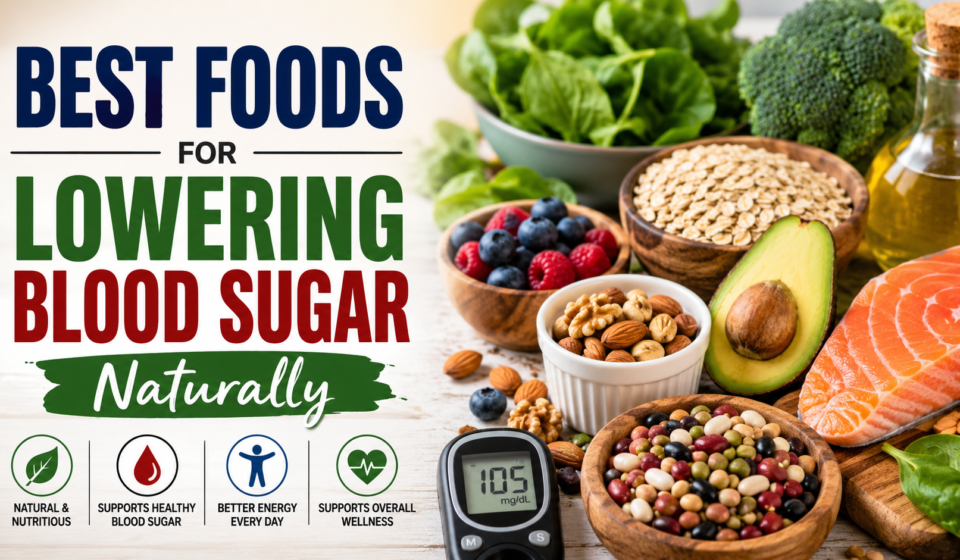
Choosing the right foods every day can help support healthy blood sugar levels naturally. Foods rich in fiber, lean protein, healthy fats, vitamins, and minerals are digested more slowly, helping reduce sudden blood sugar spikes after meals. This guide explains the best foods for lowering blood sugar naturally, why they work, simple meal ideas for U.S. families, healthy nutrition habits, and when it is important to seek medical advice.
Table of Contents
- Why Blood Sugar Matters
- Common Symptoms of High Blood Sugar
- What Causes High Blood Sugar?
- How Nutrition Supports Healthy Blood Sugar
- Best Foods for Lowering Blood Sugar Naturally
- Foods and Drinks to Limit
- Healthy Eating Tips for Better Blood Sugar
- Lifestyle Habits That Work Together with Nutrition
- When to See a Doctor
- Conclusion
- Frequently Asked Questions
- Trusted Resources
Best Foods for Lowering Blood Sugar Naturally
Healthy eating is one of the most effective ways to support stable blood sugar over time. While no single food can cure diabetes or replace prescribed treatment, making smart nutrition choices can help your body process glucose more efficiently and reduce sudden blood sugar fluctuations after meals.
The best foods for lowering blood sugar naturally are generally rich in dietary fiber, vitamins, minerals, antioxidants, healthy fats, and lean protein. These nutrients slow digestion, improve fullness, and help provide a steady release of energy throughout the day. When combined with regular physical activity, quality sleep, and stress management, a balanced diet can play an important role in overall metabolic health.
For many American families, improving blood sugar control does not require expensive superfoods. Simple grocery store staples can become part of a nutritious eating plan that is practical, affordable, and enjoyable.
Why Blood Sugar Matters
Blood sugar, also called blood glucose, is the body’s primary source of energy. After eating carbohydrates, your digestive system breaks them down into glucose. Insulin, a hormone produced by the pancreas, helps move that glucose from your bloodstream into your body’s cells where it can be used for energy.
When insulin is not produced properly or your body becomes less responsive to it, glucose can remain in the bloodstream longer than it should. Over time, consistently high blood sugar may increase the risk of heart disease, kidney disease, nerve damage, and vision problems.
The encouraging news is that everyday nutrition choices can make a meaningful difference. A diet built around whole foods, balanced meals, and appropriate portion sizes helps many people maintain healthier blood sugar levels while supporting long-term wellness.
Common Symptoms of High Blood Sugar
High blood sugar does not always cause immediate symptoms, especially during the early stages of prediabetes. However, as blood glucose levels remain elevated, many people begin noticing changes that should not be ignored.
Some common symptoms include increased thirst, frequent urination, unusual fatigue, blurred vision, increased hunger, dry mouth, and slow-healing cuts or wounds. Some people may also experience recurring infections or unexpected weight changes.
If these symptoms continue or become worse, it is important to schedule an appointment with a healthcare professional for proper evaluation.
What Causes High Blood Sugar?
Several lifestyle and medical factors can contribute to elevated blood sugar.
A diet high in refined carbohydrates, sugary beverages, and highly processed foods is one of the most common causes. Physical inactivity, excess body weight, chronic stress, poor sleep quality, certain medications, hormonal changes, and underlying conditions such as prediabetes or diabetes can also affect blood glucose regulation.
Fortunately, improving your daily nutrition habits is one of the safest and most sustainable ways to support healthy blood sugar management.
How Nutrition Supports Healthy Blood Sugar
Nutrition affects blood sugar every time you eat. Foods rich in dietary fiber slow the digestion of carbohydrates, allowing glucose to enter the bloodstream more gradually. Lean protein and healthy fats also help increase satisfaction after meals while reducing rapid changes in blood sugar.
Instead of focusing on one “magic food,” experts recommend building balanced meals that include vegetables, whole grains, healthy fats, and quality protein sources. This approach provides consistent energy, supports digestive health, and supplies essential nutrients your body needs every day.
Eating regular meals, avoiding excessive added sugar, choosing nutrient-dense foods, and staying hydrated are all important parts of a healthy eating pattern.
Best Foods for Lowering Blood Sugar Naturally
1. Leafy Green Vegetables
Leafy greens such as spinach, kale, romaine lettuce, Swiss chard, and collard greens are among the healthiest foods you can add to your plate. They are naturally low in calories and carbohydrates while providing generous amounts of fiber, vitamin C, vitamin K, folate, magnesium, and antioxidants.
Because these vegetables contain very little digestible carbohydrate, they have minimal impact on blood sugar. Their high nutrient content also supports overall heart health, which is especially important for individuals living with diabetes or prediabetes.
Adding a large salad to lunch or including sautéed spinach with dinner is an easy way to increase vegetable intake.
2. Oats
Plain rolled oats are a nutritious whole grain that contains soluble fiber known as beta-glucan. This special type of fiber slows digestion and may help reduce the rise in blood sugar after meals.
Oats also provide important minerals such as magnesium and iron while keeping you full longer than many sugary breakfast cereals.
Choose unsweetened oatmeal and enhance the flavor naturally with cinnamon, fresh berries, chopped walnuts, or sliced apples instead of brown sugar.
3. Beans and Lentils
Beans, chickpeas, black beans, kidney beans, and lentils are excellent examples of foods that combine plant protein with dietary fiber. This combination supports slower digestion and helps maintain more consistent energy throughout the day.
In addition to supporting healthy blood sugar, legumes are rich in potassium, folate, iron, and several B vitamins that contribute to overall health.
Many American meals can easily include beans in soups, salads, burrito bowls, tacos, or homemade chili.
4. Berries
Berries are naturally sweet yet relatively lower in sugar than many desserts and processed snacks. Blueberries, strawberries, raspberries, and blackberries are packed with antioxidants, vitamin C, and fiber.
Fiber slows the absorption of natural fruit sugars, making berries an excellent option for people looking to enjoy fruit while supporting balanced blood sugar.
Adding fresh berries to oatmeal, plain Greek yogurt, or smoothies is a delicious way to increase nutrient intake.
5. Nuts and Seeds
Almonds, walnuts, pistachios, chia seeds, flaxseeds, and pumpkin seeds provide healthy unsaturated fats, plant protein, fiber, and magnesium.
These nutrients work together to promote fullness and support a more gradual release of energy after meals. Because nuts are calorie-dense, moderate portion sizes are recommended.
A small handful makes an easy afternoon snack that is much more nutritious than chips or candy.
6. Plain Greek Yogurt
Plain Greek yogurt offers high-quality protein, calcium, probiotics, and fewer carbohydrates than many flavored yogurts.
Protein helps slow digestion while probiotics support a healthy digestive system. To avoid unnecessary added sugars, choose plain varieties and add your own fresh fruit or cinnamon for natural sweetness.
7. Fatty Fish
Salmon, trout, sardines, and mackerel are excellent sources of omega-3 fatty acids. These healthy fats support heart health and reduce inflammation as part of an overall healthy dietary pattern.
Because cardiovascular disease is more common among people with diabetes, including fatty fish in weekly meal planning can provide additional nutritional benefits.
8. Avocados
Avocados are rich in monounsaturated fats, fiber, potassium, and several vitamins. Unlike many processed snack foods, they help create satisfying meals without causing rapid increases in blood sugar.
Spread avocado on whole-grain toast, add slices to salads, or include it in sandwiches for extra creaminess and nutrition.
9. Whole Grains
Whole grains such as quinoa, barley, brown rice, farro, and whole wheat contain more fiber and nutrients than refined grains.
Replacing white bread, white rice, or refined pasta with whole-grain alternatives can support healthier blood sugar management while providing longer-lasting energy.
Portion control still matters, even with healthier carbohydrate choices.
10. Cinnamon
Cinnamon has been widely studied for its potential effects on blood sugar. While some research suggests it may provide modest benefits, current evidence remains mixed.
It should be viewed as a flavorful spice rather than a treatment. Enjoy cinnamon sprinkled over oatmeal, baked apples, or plain yogurt as part of a balanced diet.
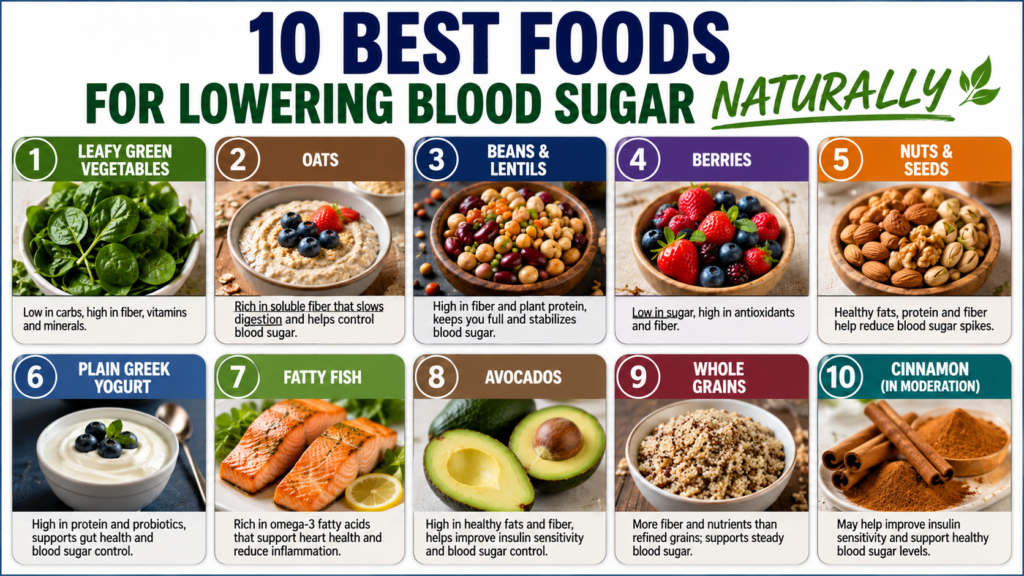
Infographic showing the 10 best foods for lowering blood sugar naturally, including leafy greens, oats, berries, beans, nuts, fish, avocado, and whole grains.
Foods and Drinks to Limit
Supporting healthy blood sugar is not only about adding nutritious foods—it also involves reducing foods that provide large amounts of refined carbohydrates or added sugars.
Regular consumption of sugar-sweetened beverages, candy, pastries, white bread, sugary breakfast cereals, sweetened coffee drinks, and heavily processed snack foods may contribute to rapid blood sugar spikes.
These foods do not have to be completely eliminated, but enjoying them less often while choosing whole-food alternatives is generally a healthier approach.
Healthy Eating Tips for Better Blood Sugar
Healthy nutrition is built through daily habits rather than quick fixes. Eating balanced meals that include vegetables, lean protein, healthy fats, and fiber-rich carbohydrates can help keep energy levels steady throughout the day.
Drinking enough water, reading Nutrition Facts labels, cooking more meals at home, practicing portion control, and avoiding skipping meals are also helpful strategies. These simple habits support both blood sugar management and overall wellness.
Lifestyle Habits That Work Together with Nutrition
Food is only one part of blood sugar management. Regular physical activity helps muscles use glucose more efficiently, while quality sleep and stress management support healthy hormone function.
Walking after meals, maintaining a healthy weight, limiting smoking, staying hydrated, and following your healthcare provider’s recommendations all contribute to better long-term health outcomes.
Small, consistent lifestyle improvements are often more effective than drastic short-term changes.
When to See a Doctor
Healthy nutrition is an important part of blood sugar management, but it should never replace professional medical care.
Contact your healthcare provider if you notice persistent symptoms of high blood sugar, receive abnormal glucose test results, experience unexplained weight loss, develop blurred vision, or have wounds that heal slowly.
People who have already been diagnosed with diabetes should continue taking prescribed medications and attend regular medical checkups. A registered dietitian can also provide personalized nutrition guidance based on your health needs.
Conclusion
The best foods for lowering blood sugar naturally are not difficult to find. Leafy greens, oats, beans, berries, nuts, seeds, plain Greek yogurt, fatty fish, avocados, and whole grains all provide valuable nutrients that support healthier blood sugar levels as part of a balanced diet.
Rather than searching for a miracle food, focus on building nutritious meals with plenty of fiber, lean protein, healthy fats, and minimally processed ingredients. Combined with regular exercise, adequate sleep, and healthy lifestyle habits, these nutrition choices can support long-term wellness.
If you have diabetes, prediabetes, or ongoing symptoms of high blood sugar, always consult your doctor or a registered dietitian before making significant dietary changes. Personalized medical advice is the safest approach for protecting your long-term health.
Frequently Asked Questions (FAQs)
1. Can certain foods really lower blood sugar naturally?
Healthy foods can support better blood sugar control as part of an overall healthy lifestyle, but they are not a cure for diabetes.
2. Which fruit is best for healthy blood sugar?
Berries, apples, pears, and oranges are nutritious choices because they provide fiber along with natural sugars.
3. Is oatmeal good for people with diabetes?
Plain oats are generally considered a healthy whole grain because they contain soluble fiber that supports slower digestion. Portion size is still important.
4. What should I avoid if I want healthier blood sugar?
Limit sugar-sweetened beverages, refined grains, processed desserts, and foods high in added sugars whenever possible.
5. Can nutrition replace diabetes medication?
No. Healthy eating supports medical treatment but should never replace medications prescribed by your healthcare provider.
Medical Disclaimer
This article is for educational purposes only and is not intended to replace professional medical advice, diagnosis, or treatment. Always consult your physician or a registered dietitian regarding questions about your blood sugar, nutrition plan, or diabetes management.
Trusted Resources
- American Diabetes Association (ADA)
- Centers for Disease Control and Prevention (CDC)
- National Institute of Diabetes and Digestive and Kidney Diseases (NIDDK)
- Academy of Nutrition and Dietetics
- Harvard T.H. Chan School of Public Health – The Nutrition Source