
Quick Summary
Stress and anxiety have become common challenges in today’s busy world. While they cannot always be avoided, learning healthy ways to manage them can make everyday life feel more balanced. One of the simplest and most effective self-care habits is practicing breathing exercises. Research suggests that slow, controlled breathing may help calm the nervous system, improve focus, reduce muscle tension, and support emotional well-being. This article explains how breathing exercises help reduce stress and anxiety, the best techniques to try, when they may be useful, and when it is important to seek professional medical advice.
Table of Contents
- What Are Breathing Exercises?
- Understanding Stress and Anxiety
- How Breathing Exercises Help Reduce Stress and Anxiety
- Signs That Stress May Be Affecting Your Health
- Best Breathing Exercises for Beginners
- How to Build a Daily Breathing Routine
- Other Healthy Ways to Manage Stress Naturally
- When Should You See a Doctor?
- Conclusion
- Frequently Asked Questions
- Trusted Resources
- Medical Disclaimer
What Are Breathing Exercises?
Breathing exercises are simple techniques that teach you to breathe slowly, deeply, and with greater awareness. Although breathing happens automatically, the way you breathe changes depending on your emotions. During stressful situations, many people begin taking quick, shallow breaths without even noticing. This can make the body feel even tenser.
Learning controlled breathing helps interrupt this pattern. Instead of allowing stress to control your breathing, you consciously slow it down. This sends calming signals throughout the body and helps you feel more relaxed.
One reason breathing exercises are so popular is that they require no special equipment. Whether you’re at home, at work, traveling, or preparing for an important event, you can practice them almost anywhere.
Understanding Stress and Anxiety
Stress is a normal part of life. It can develop because of work deadlines, financial concerns, family responsibilities, health issues, or unexpected life events. In many situations, stress is temporary and disappears once the challenge has passed.
Anxiety is slightly different. It often involves persistent worry, nervousness, or fear that may continue even after the stressful event is over. Mild anxiety is common, but when it becomes overwhelming or interferes with daily life, professional evaluation is important.
Both stress and anxiety activate the body’s “fight-or-flight” response. Your heart beats faster, muscles tighten, and breathing becomes quicker. This reaction is helpful during emergencies, but if it happens too often, it may affect both physical and emotional health.
This is where breathing exercises for stress relief can become a valuable part of a healthy wellness routine.
How Breathing Exercises Help Reduce Stress and Anxiety
Many people wonder whether breathing exercises really work. While they are not a cure for anxiety disorders, research suggests they may help reduce everyday stress and improve emotional well-being when practiced consistently.
1. They Help Calm the Nervous System
One of the biggest reasons breathing exercises help reduce stress and anxiety is their effect on the nervous system. Slow, deep breathing encourages the body to shift away from a heightened stress response toward a more relaxed state.
As breathing becomes slower and more controlled, your heart rate may gradually decrease, your muscles begin to relax, and your mind often feels less overwhelmed. Even practicing for five to ten minutes can help some people feel calmer during stressful moments.
2. They Encourage Better Oxygen Flow
Shallow breathing often limits how efficiently the body exchanges oxygen and carbon dioxide. Deep breathing encourages fuller breaths using the diaphragm instead of only the upper chest.
This natural breathing pattern may leave you feeling more comfortable, less tense, and mentally refreshed after a stressful situation.
3. They Improve Mental Focus
When anxiety increases, it becomes difficult to concentrate because the mind jumps from one concern to another. Controlled breathing gives your brain something simple to focus on.
Instead of thinking about dozens of worries, you focus on each inhale and exhale. This gentle shift in attention is one reason mindfulness breathing has become widely recommended for managing everyday stress.
4. They Help Relax Tight Muscles
Stress often shows up physically before people even realize they are anxious. Tight shoulders, jaw tension, neck discomfort, and headaches are common examples.
Practicing deep breathing exercises encourages the body to release some of this physical tension. Although breathing exercises are not a treatment for muscle pain, many people notice they feel physically lighter after a few minutes of slow breathing.
5. They May Support Better Sleep
People dealing with stress often find themselves lying awake with racing thoughts. Slow breathing before bedtime helps many individuals transition into a calmer state, making it easier to relax before sleep.
It is not a cure for insomnia, but it can become one healthy part of a consistent bedtime routine.
6. They Build Long-Term Emotional Resilience
The benefits of breathing exercises are not limited to stressful situations. Regular practice teaches your body how to recover from stress more efficiently.
Over time, many people report feeling better prepared to handle busy workdays, family responsibilities, or unexpected challenges because they have developed a simple strategy for calming themselves.
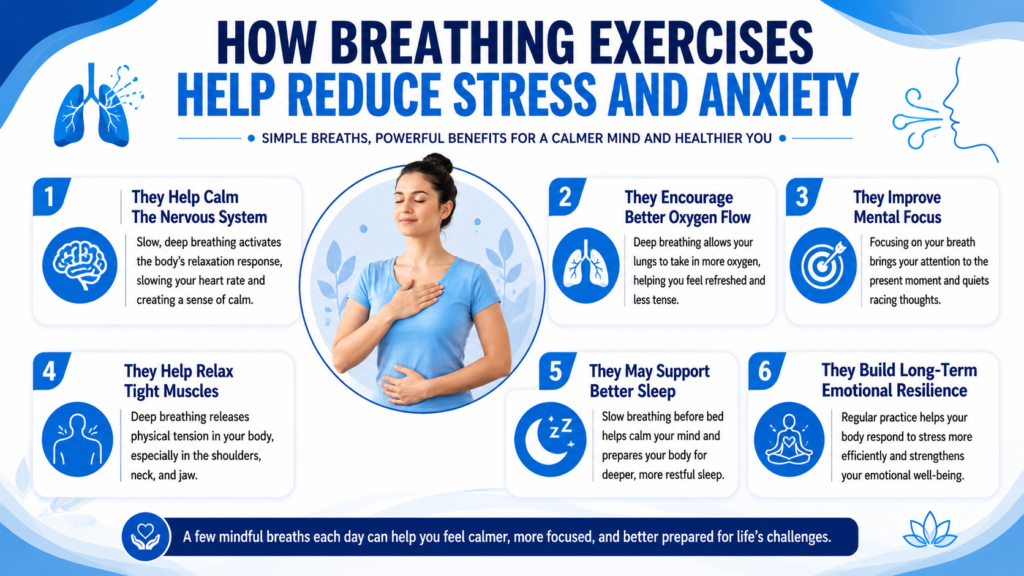
Infographic showing six ways breathing exercises help reduce stress and anxiety.
Signs That Stress May Be Affecting Your Health
Everyone experiences stress differently. Sometimes the signs are emotional, while other times they appear as physical symptoms.
You may notice:
- Feeling overwhelmed more often than usual
- Difficulty concentrating
- Irritability or mood changes
- Muscle tension, especially in the neck and shoulders
- Trouble falling asleep
- Feeling tired despite getting enough rest
- Fast or shallow breathing during stressful situations
These symptoms can have many possible causes. If they become severe, frequent, or continue for several weeks, it is important to speak with a healthcare provider for a proper evaluation.
Best Breathing Exercises for Beginners
The following breathing techniques are simple enough for most healthy adults to practice. Start slowly and stop if you feel dizzy or uncomfortable.
1. Diaphragmatic (Belly) Breathing
Often considered one of the best breathing techniques for anxiety, diaphragmatic breathing encourages the use of your diaphragm instead of shallow chest breathing.
Sit comfortably with one hand on your chest and the other on your stomach. Slowly inhale through your nose so your stomach rises. Then exhale gently through your mouth. Continue for five to ten minutes while keeping your shoulders relaxed.
2. Box Breathing
Box breathing is easy to remember because each step lasts the same amount of time.
Breathe in for four seconds, hold your breath for four seconds, breathe out for four seconds, and pause for another four seconds before repeating. Many people find this exercise helpful before presentations, interviews, or stressful meetings.
3. 4-6 Relaxation Breathing
This technique focuses on making the exhale slightly longer than the inhale. Breathe in slowly through your nose for four seconds, then breathe out gently for six seconds. A longer exhale often helps encourage relaxation and may reduce feelings of tension.
4. Pursed-Lip Breathing
Pursed-lip breathing slows the pace of your breathing and can be practiced almost anywhere.
Simply inhale through your nose, then exhale slowly through slightly pursed lips as though you are gently blowing out a candle. This exercise works well during moments of mild stress.
5. Mindful Breathing
Mindful breathing requires no counting at all. Simply notice each breath as it enters and leaves your body.
When your mind begins to wander, gently bring your attention back to your breathing without judging yourself. This simple practice combines relaxation breathing with mindfulness.
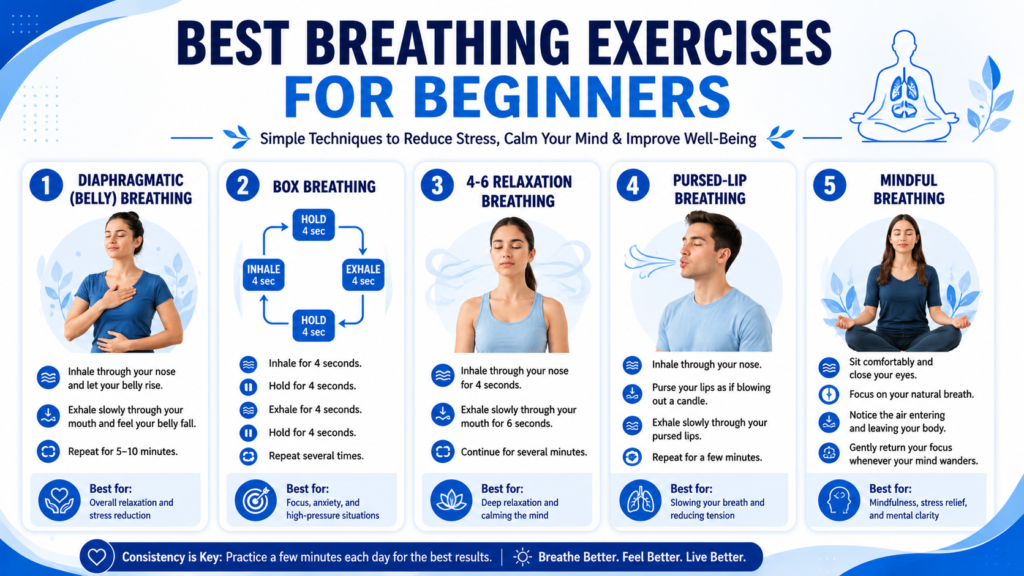
Infographic showing five beginner-friendly breathing exercises for stress relief and relaxation.
How to Build a Daily Breathing Routine
Like exercise or healthy eating, breathing exercises provide the greatest benefit when practiced consistently rather than only during stressful moments.
Choose a quiet place where you can sit comfortably without distractions. Begin with five minutes each day and gradually increase the time if it feels comfortable. Many people enjoy practicing in the morning to prepare for the day or in the evening to unwind before bed.
You can also use breathing exercises during everyday situations, such as waiting in traffic, taking a break at work, or before making an important decision. These small moments of practice help make controlled breathing a natural habit instead of something you only remember during stressful times.
Other Healthy Ways to Manage Stress Naturally
Although breathing exercises are helpful, they work best as part of an overall healthy lifestyle.
Regular physical activity, balanced nutrition, quality sleep, and staying socially connected all play important roles in emotional well-being. Some people also benefit from mindfulness meditation, journaling, spending time outdoors, or talking with a trusted friend.
Limiting excessive caffeine and reducing screen time before bed may also help some individuals feel calmer throughout the day.
Combining these healthy habits with regular breathing practice often provides better results than relying on a single strategy alone.
When Should You See a Doctor?
Breathing exercises can be an excellent tool for managing everyday stress, but they are not meant to replace professional medical care.
Schedule an appointment with your healthcare provider if your anxiety continues for several weeks, interferes with work or relationships, or makes it difficult to complete daily activities. You should also seek medical attention if you experience panic attacks, severe shortness of breath, chest pain, fainting, or symptoms that concern you.
If you ever experience thoughts of harming yourself or feel hopeless, seek immediate help from a qualified healthcare professional or emergency services.
Early treatment often leads to better outcomes, and your doctor can recommend the most appropriate approach based on your individual needs.
Conclusion
Understanding how breathing exercises help reduce stress and anxiety can empower you to take small but meaningful steps toward better emotional health. Slow, controlled breathing is simple, free, and easy to practice almost anywhere. With regular practice, it may help calm your nervous system, improve focus, reduce muscle tension, and support healthier responses to everyday stress.
While breathing exercises can become an important part of your wellness routine, they should not replace professional medical care. If stress or anxiety becomes severe, persistent, or begins affecting your quality of life, consult your doctor or a qualified mental health professional for personalized advice and treatment options.
Frequently Asked Questions (FAQs)
1. Can breathing exercises really reduce stress?
Yes. Research suggests that controlled breathing may activate the body’s relaxation response and help reduce feelings of everyday stress. Results vary from person to person, and breathing exercises work best when practiced regularly.
2. How often should I practice breathing exercises?
Most experts recommend practicing for about five to ten minutes each day. You can also use breathing techniques whenever you begin feeling stressed or anxious.
3. Are breathing exercises enough to treat anxiety?
No. Breathing exercises may help manage symptoms, but they are not a replacement for professional treatment if you have an anxiety disorder. A healthcare provider can recommend the most appropriate treatment plan.
4. Which breathing exercise is easiest for beginners?
Diaphragmatic (belly) breathing is often recommended because it is simple, effective, and easy to learn. Many beginners start with this technique before trying other breathing methods.
5. Can children and older adults practice breathing exercises?
In many cases, yes. Gentle breathing exercises are generally safe for most people, but anyone with significant breathing or heart conditions should speak with their healthcare provider before beginning a new breathing routine.
Trusted Resources
- National Institute of Mental Health (NIMH)
- American Psychological Association (APA)
- National Center for Complementary and Integrative Health (NCCIH)
- American Heart Association (AHA)
- MedlinePlus (U.S. National Library of Medicine)
Medical Disclaimer
This article is for educational purposes only and should not be considered medical advice. It is not intended to diagnose, treat, cure, or prevent any medical condition. Always consult your doctor or another qualified healthcare professional for personalized medical advice, especially if your symptoms are severe, persistent, or worsening.