
Quick Summary
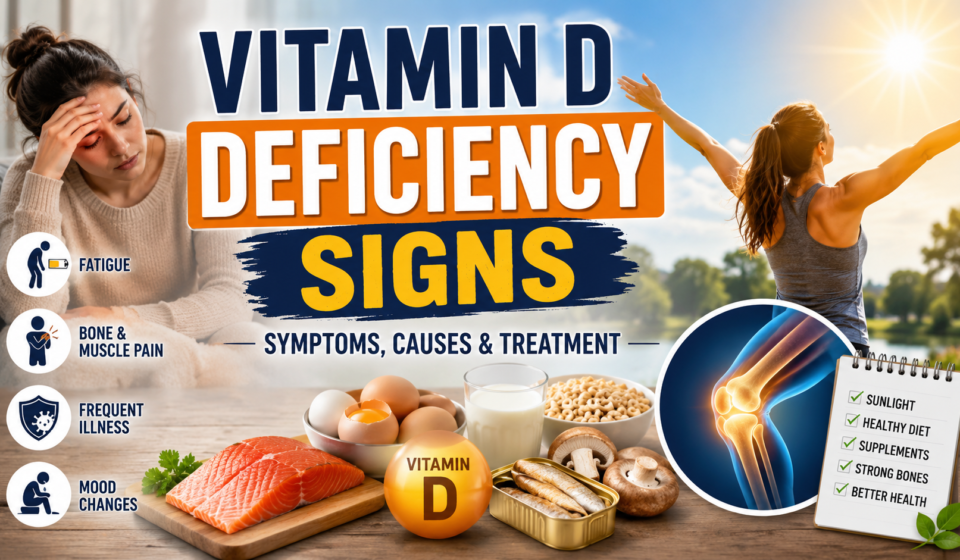
Vitamin D is an essential nutrient that helps your body absorb calcium, supports healthy bones, strengthens muscles, and plays an important role in your immune system. When vitamin D levels become too low, you may experience symptoms such as fatigue, muscle weakness, bone pain, frequent illness, or mood changes. Fortunately, vitamin D deficiency can often be identified through a simple blood test and managed with safe lifestyle changes, healthy foods, sunlight exposure, and supplements when recommended by a healthcare professional.
Table of Contents
- What Is Vitamin D Deficiency?
- Why Vitamin D Is Important
- Common Vitamin D Deficiency Signs
- What Causes Vitamin D Deficiency?
- Who Is More Likely to Become Deficient?
- How Vitamin D Deficiency Is Diagnosed
- Treatment Options
- Best Foods Rich in Vitamin D
- Tips to Prevent Vitamin D Deficiency
- When Should You See a Doctor?
- Conclusion
- Frequently Asked Questions
- Trusted Resources
What Is Vitamin D Deficiency?
Vitamin D deficiency happens when your body does not have enough vitamin D to perform its normal functions. This nutrient helps your body absorb calcium and phosphorus, which are necessary for building and maintaining strong bones.
Your body naturally produces vitamin D when your skin is exposed to sunlight. It is also available in certain foods and dietary supplements. However, many people in the United States still have low vitamin D levels because of limited sun exposure, diet, age, or certain health conditions.
If left untreated, vitamin D deficiency may increase the risk of bone problems and affect overall health.
Why Vitamin D Is Important?
Vitamin D supports several important functions throughout the body. It helps maintain healthy bones and teeth, supports muscle strength, contributes to immune system function, and plays a role in nerve and cell function.
Children need enough vitamin D for healthy bone development, while adults need it to maintain bone density and reduce the risk of fractures as they age.
Because vitamin D affects many body systems, low levels may cause symptoms that are sometimes mistaken for other health problems.
Common Vitamin D Deficiency Signs
Vitamin D deficiency may develop slowly, and some people have no noticeable symptoms at first. As levels continue to drop, symptoms may become more obvious.
1. Feeling Tired Most of the Time
One of the most common vitamin D deficiency signs is ongoing fatigue. Even after getting enough sleep, you may still feel low on energy throughout the day.
While tiredness can have many causes, vitamin D deficiency is one possibility your healthcare provider may consider.
2. Frequent Illness or Infections
Vitamin D helps support a healthy immune system. People with low vitamin D levels may notice they seem to catch colds or other infections more often than usual.
This does not mean vitamin D prevents every illness, but maintaining healthy levels supports normal immune function.
3. Bone Pain
Vitamin D helps the body absorb calcium. Without enough vitamin D, bones may become weaker, leading to discomfort or aching in areas such as the lower back, hips, legs, or ribs.
Persistent bone pain should always be evaluated by a healthcare professional.
4. Muscle Weakness
Weak muscles can make everyday activities feel more difficult. You may notice trouble climbing stairs, standing up from a chair, or carrying groceries.
Older adults with vitamin D deficiency may have a greater risk of falls because muscle strength may decrease.
5. Mood Changes
Some people with vitamin D deficiency report feeling down, less motivated, or experiencing mood changes, especially during seasons with limited sunlight.
Mood changes can have many different causes, so it is important not to assume vitamin D is the only reason.
6. Hair Thinning
Hair loss has many possible causes, including stress, hormonal changes, genetics, and nutritional deficiencies. In some cases, low vitamin D may contribute to hair thinning.
If hair loss continues or worsens, speak with your healthcare provider for proper evaluation.
7. Slow Healing
Cuts, scrapes, or minor injuries that seem to heal more slowly than expected may sometimes be associated with low vitamin D levels. However, many other medical conditions can also affect wound healing.
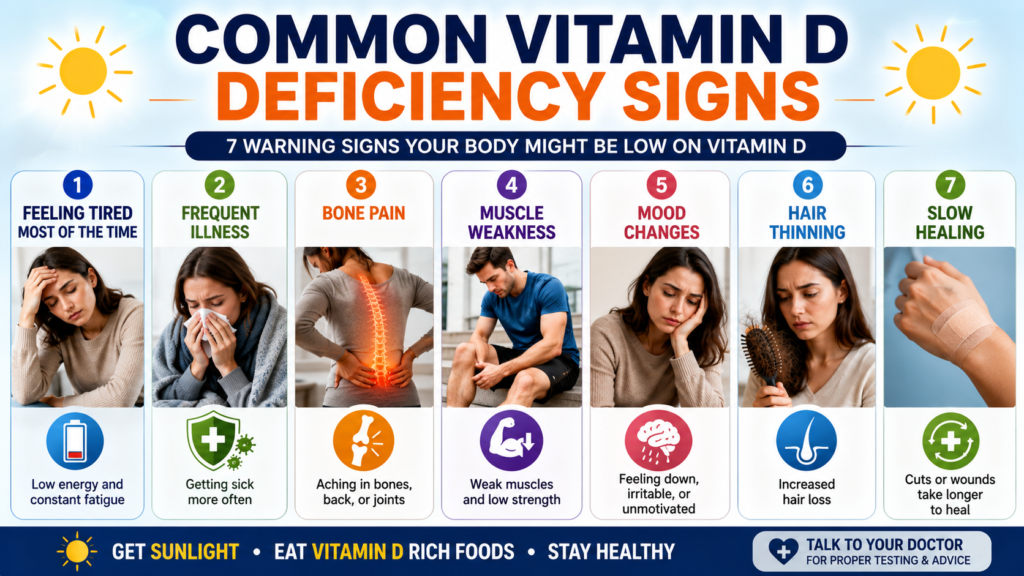
Infographic showing seven common vitamin D deficiency signs, including fatigue, frequent illness, bone pain, muscle weakness, mood changes, hair thinning, and slow healing.
What Causes Vitamin D Deficiency?
Several factors may increase the risk of vitamin D deficiency.
Limited sunlight exposure is one of the most common reasons. People who spend most of their time indoors or consistently use strong sun protection may produce less vitamin D.
Diet also matters. Since only a small number of foods naturally contain vitamin D, people who rarely eat these foods may not get enough through nutrition alone.
Certain medical conditions, including digestive disorders such as Crohn’s disease or celiac disease, may reduce the body’s ability to absorb vitamin D properly.
Kidney and liver diseases can also interfere with vitamin D metabolism.
Who Is More Likely to Become Deficient?
Although anyone can develop vitamin D deficiency, some people have a higher risk.
Older adults often produce less vitamin D through their skin.
People with darker skin naturally produce less vitamin D from sunlight because of higher melanin levels.
Individuals living in northern states with long winters may receive less sunlight during colder months.
People with obesity may also have lower available vitamin D levels because the vitamin can become stored in body fat.
Breastfed infants, people following strict vegan diets without fortified foods, and those with certain digestive disorders may also need closer monitoring.
How Vitamin D Deficiency Is Diagnosed
Vitamin D deficiency cannot be confirmed based on symptoms alone.
Healthcare providers usually recommend a blood test called the 25-hydroxy vitamin D test to measure vitamin D levels.
Depending on your symptoms, your doctor may also evaluate calcium levels, bone health, and other possible causes of your symptoms before recommending treatment.
Treatment Options
Treatment depends on how low your vitamin D levels are and your overall health.
Some people improve their vitamin D levels by spending safe amounts of time outdoors and including more vitamin D-rich foods in their diet.
Others may need vitamin D supplements prescribed or recommended by their healthcare provider. The correct dosage varies from person to person, so avoid taking high-dose supplements without medical guidance.
Your healthcare provider may repeat blood tests after treatment to ensure your vitamin D levels have improved.
Best Foods Rich in Vitamin D
Although food alone may not always provide enough vitamin D, it is an important part of a healthy diet.
Some excellent choices for people in the United States include:
- Fatty fish such as salmon, tuna, sardines, and mackerel
- Fortified milk
- Fortified plant-based milk like almond or soy milk
- Fortified breakfast cereals
- Egg yolks
- Fortified orange juice
- Yogurt with added vitamin D
- UV-exposed mushrooms
For example, adding fortified milk to breakfast cereal, enjoying grilled salmon for dinner, or choosing fortified yogurt as a snack can help increase your vitamin D intake naturally.
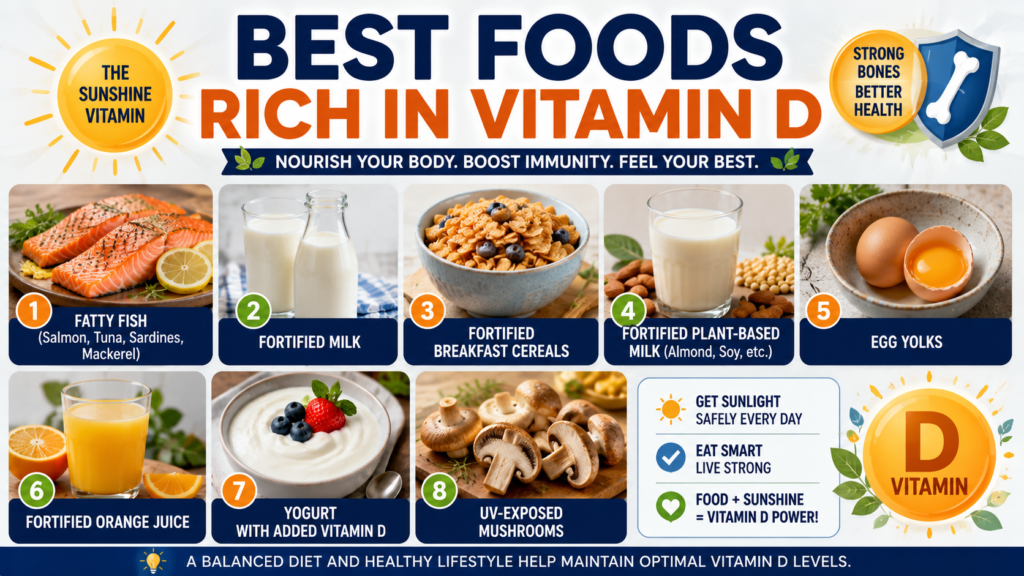
Infographic featuring the best vitamin D-rich foods, including salmon, fortified milk, fortified cereals, plant-based milk, egg yolks, fortified orange juice, yogurt, and UV-exposed mushrooms for healthy vitamin D levels.
Tips to Prevent Vitamin D Deficiency
- Preventing vitamin D deficiency often involves a combination of healthy lifestyle habits.
- Spend a moderate amount of time outdoors while following safe sun exposure practices recommended for your skin type.
- Choose foods naturally rich in vitamin D or those fortified with vitamin D whenever possible.
- Stay physically active and maintain a balanced diet that includes calcium-rich foods, since calcium and vitamin D work together to support bone health.
- If your healthcare provider recommends supplements, take them exactly as directed rather than guessing the dosage yourself.
- Regular medical checkups are especially helpful if you have risk factors for vitamin D deficiency.
When Should You See a Doctor?
You should schedule a medical appointment if you experience:
- Ongoing fatigue that does not improve
- Persistent muscle weakness
- Bone pain
- Frequent unexplained illnesses
- Repeated falls
- Symptoms that continue despite improving your diet
Your healthcare provider can determine whether vitamin D deficiency or another health condition is responsible for your symptoms.
Conclusion
Recognizing vitamin D deficiency signs early can help you protect your bone health, muscle strength, and overall well-being. While symptoms such as fatigue, bone pain, muscle weakness, and frequent illness may be linked to low vitamin D levels, they can also have many other causes.
The best approach is to eat a balanced diet, include vitamin D-rich foods, get appropriate sunlight exposure, and follow your healthcare provider’s recommendations. If you think you may have vitamin D deficiency, ask your doctor whether a simple blood test is appropriate. Early diagnosis and proper treatment can help restore healthy vitamin D levels safely.
Frequently Asked Questions (FAQs)
1. What are the first signs of vitamin D deficiency?
Early symptoms may include fatigue, muscle weakness, low energy, frequent illness, or mild bone discomfort. Some people have no symptoms at all.
2. Which foods naturally contain vitamin D?
Salmon, tuna, sardines, egg yolks, UV-exposed mushrooms, fortified milk, fortified cereals, and fortified plant-based milk are good sources.
3. Can I get enough vitamin D from sunlight alone?
Some people can, but this depends on factors such as where they live, the season, skin tone, age, sunscreen use, and time spent outdoors.
4. Is it safe to take vitamin D supplements every day?
Many people safely take vitamin D supplements, but the right dose depends on your individual needs. Always follow your healthcare provider’s recommendation.
5. How is vitamin D deficiency confirmed?
A healthcare provider typically confirms vitamin D deficiency with a blood test called the 25-hydroxy vitamin D test.
Disclaimer
This article is for educational purposes only and is not a substitute for professional medical advice, diagnosis, or treatment. If you have symptoms of vitamin D deficiency or concerns about your health, consult a qualified healthcare provider for personalized advice.
Trusted Resources
- National Institutes of Health (NIH)
- Centers for Disease Control and Prevention (CDC)
- Mayo Clinic
- Cleveland Clinic
- Harvard T.H. Chan School of Public Health