

Starting a fitness journey later in life may feel intimidating, but it doesn’t have to be. If you’ve been wondering how to start working out after 40, you’re certainly not alone. Many adults decide to become more active in their 40s because they want to improve their health, increase their energy, lose excess weight, or simply feel stronger in everyday life.
The good news is that it’s never too late to begin. A well-planned exercise routine can improve your heart health, strengthen your muscles, support healthy joints, and boost your overall well-being. The key is to start gradually, stay consistent, and choose exercises that match your current fitness level.
This guide explains how to start working out after 40 safely with practical advice, beginner-friendly exercises, and simple lifestyle tips that are easy to follow.
Table of Contents
- Why Fitness Becomes More Important After 40
- Is It Safe to Start Working Out After 40?
- Benefits of Exercise After 40
- How to Start Working Out After 40 Safely
- Best Exercises for Beginners Over 40
- A Simple Weekly Workout Plan
- Nutrition and Recovery Tips
- Common Mistakes to Avoid
- When to Stop Exercising and See a Doctor
- Conclusion
- Frequently Asked Questions
- Trusted Resources
Why Fitness Becomes More Important After 40
As we age, our bodies naturally go through changes. Muscle mass slowly decreases, metabolism becomes less efficient, and flexibility may decline. Many adults also spend long hours sitting at work, which can contribute to stiffness and reduced physical activity.
These changes don’t mean your healthiest years are behind you. In fact, many people experience significant improvements after adopting a regular exercise routine later in life. Learning how to start working out after 40 allows you to protect your muscles, support healthy bones, improve mobility, and maintain independence as you age.
Rather than focusing on achieving a perfect body, think about building a healthier lifestyle that supports your long-term well-being.
Is It Safe to Start Working Out After 40?
For most adults, the answer is yes.
Even if you haven’t exercised in years, your body can adapt remarkably well when you begin slowly. However, if you have heart disease, diabetes, uncontrolled high blood pressure, arthritis, or another chronic medical condition, it’s wise to schedule a medical check-up before beginning a new fitness routine.
Your healthcare provider may recommend specific activities based on your health history. Starting with realistic expectations and gradual progress greatly reduces the risk of injury while helping your body adjust comfortably.
Benefits of Exercise After 40
Regular exercise after 40 can support your health in several important ways:
- Strengthens the heart and improves blood circulation
- Helps maintain healthy blood pressure
- Preserves muscle mass that may naturally decline with age
- Supports stronger bones and better joint function
- Improves flexibility, balance, and coordination
- Makes daily activities, such as climbing stairs or carrying groceries, easier
- Supports better sleep and higher energy levels
- Helps reduce stress and improve mood
- Supports healthy weight management
- Encourages greater independence and mobility as you age
These benefits usually develop gradually, so staying consistent is more important than doing intense workouts occasionally.
How to Start Working Out After 40 Safely
1. Set Small and Realistic Goals
One of the biggest reasons people quit exercising is because they expect immediate results. Instead of trying to exercise every day or complete long workouts, begin with small goals that feel achievable.
For example, aim to walk for 20 minutes three days a week during your first week. Once this becomes comfortable, gradually increase either the duration or the number of workout days.
Small successes build confidence and make healthy habits easier to maintain.
2. Start Slowly and Build Gradually
When learning how to start working out after 40, remember that your body needs time to adapt.
During your first week, focus on gentle movement rather than intense exercise. In the following weeks, slowly increase your activity level based on how your body feels. Avoid the temptation to push yourself too hard because overtraining often leads to soreness, fatigue, or injury.
Progress may seem slow at first, but gradual improvement is far more sustainable than rapid changes.
3. Never Skip Your Warm-Up
Before every workout, spend five to ten minutes warming up your muscles and joints.
A warm-up can include gentle walking, shoulder rolls, arm circles, light leg movements, or slow bodyweight exercises. These simple movements increase blood flow and prepare your body for exercise.
After your workout, take a few minutes to cool down and stretch. This helps your body return to its resting state while improving flexibility over time.
4. Focus on Proper Technique
Many beginners believe heavier weights produce faster results. In reality, proper movement is much more important than lifting heavy.
If you’re new to exercise, begin with bodyweight movements or light resistance. Learning correct technique protects your joints and allows your muscles to work more effectively.
Watching demonstrations from trusted organizations or working with a certified fitness professional can be especially helpful during the first few weeks.
5. Listen to Your Body
Some muscle soreness is completely normal when beginning a fitness program. However, exercise should never cause severe pain. If you experience sharp pain, chest discomfort, dizziness, fainting, or unusual shortness of breath, stop exercising immediately and seek medical advice. Paying attention to your body’s signals is one of the smartest ways to prevent injuries.
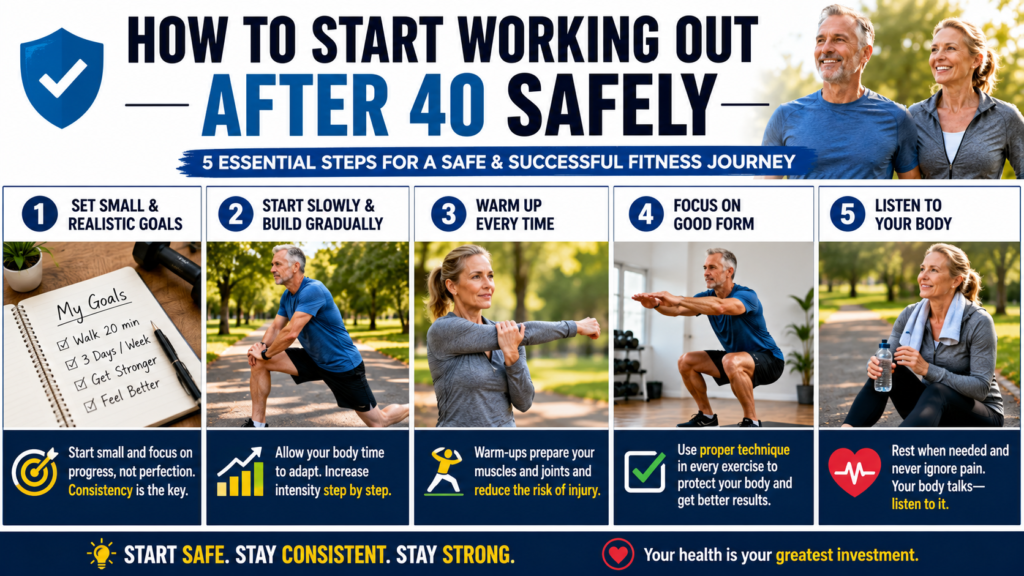
Infographic showing five safe steps to start working out after 40, including setting goals, starting slowly, warming up, using proper form, and listening to your body.
Best Exercises for Beginners Over 40
Choosing simple, low-impact activities helps you build confidence while reducing unnecessary strain on your joints.
1. Walking
Walking remains one of the best exercises for beginners. It requires little equipment, can be done almost anywhere, and allows you to control your pace. Walking regularly improves cardiovascular fitness, supports weight management, and strengthens the lower body.
Begin with comfortable walks lasting about 20 to 30 minutes and gradually increase your pace or distance over time.
2. Strength Training
Strength training is especially valuable after 40 because it helps preserve muscle mass and supports healthy bones.
You don’t need expensive gym equipment to get started. Bodyweight squats, wall push-ups, chair sit-to-stands, resistance bands, and light dumbbells provide an excellent foundation for beginners.
Aim for two strength-training sessions each week, allowing at least one day of recovery between sessions.
3. Flexibility Training
Stretching helps improve mobility and reduce stiffness that often develops with age.
Take a few minutes after each workout to gently stretch your major muscle groups. Slow, controlled stretches are generally more effective than bouncing movements.
4. Balance Exercises
Balance naturally becomes more important as we get older.
Simple exercises such as standing on one foot, heel-to-toe walking, gentle yoga, or Tai Chi can improve stability and reduce the risk of falls while increasing confidence during daily activities.
5. Low-Impact Cardio
If walking becomes easier, consider adding other joint-friendly activities such as cycling, swimming, water aerobics, or using an elliptical machine. These exercises improve cardiovascular health while placing less stress on many joints compared with high-impact workouts.
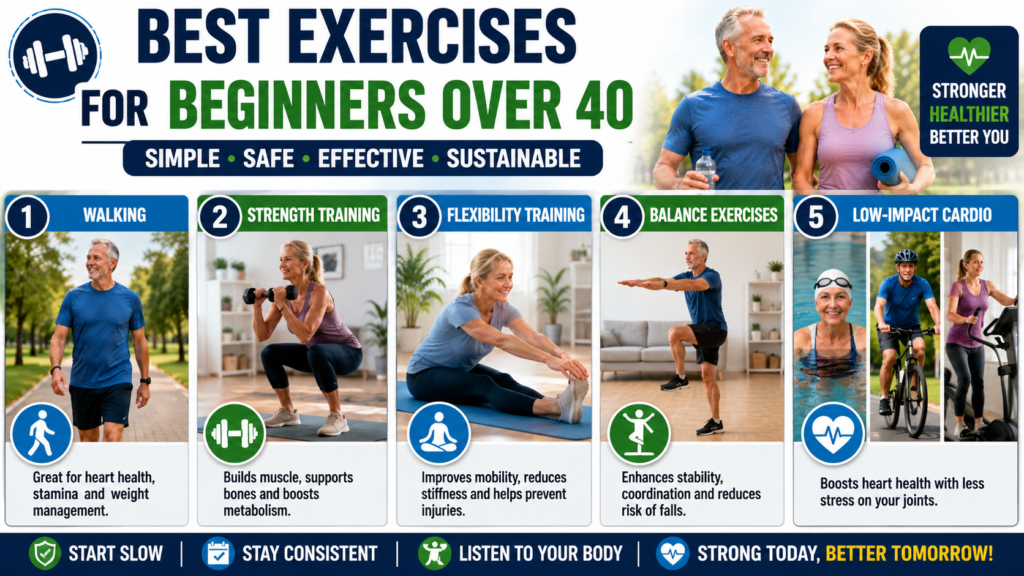
Infographic showing the best beginner exercises after 40, including walking, strength training, flexibility, balance exercises, and low-impact cardio.
A Simple Weekly Workout Plan
You don’t need to spend hours in the gym to become healthier. A balanced weekly schedule might begin with a 20-minute walk on Monday, followed by a light strength-training session on Tuesday. Wednesday can be a recovery day with gentle stretching or a short walk.
On Thursday, extend your walk slightly if you feel comfortable. Friday can include another strength-training session along with a few balance exercises. During the weekend, enjoy a longer walk, swimming, cycling, or another activity you genuinely enjoy, while allowing one day for rest and recovery.
This flexible approach makes it easier to stay consistent without feeling overwhelmed.
Nutrition and Recovery Tips
Exercise is only one part of a healthy lifestyle. Proper nutrition and recovery play equally important roles, especially when you’re learning how to start working out after 40.
Aim to eat balanced meals that include lean protein, vegetables, fruits, whole grains, healthy fats, and high-fiber foods. Protein supports muscle recovery, while fruits and vegetables provide important vitamins and minerals that help your body function properly.
Hydration also matters. Drinking water before, during, and after exercise helps replace fluids lost through sweat and supports normal body functions.
Sleep should never be overlooked. Most adults benefit from seven to nine hours of quality sleep each night. During sleep, your body repairs muscles, restores energy, and prepares for the next day’s activities.
Finally, don’t underestimate the importance of recovery days. Rest allows your muscles to rebuild and helps reduce the risk of overuse injuries.
Common Mistakes to Avoid
Many beginners unknowingly slow their progress by expecting too much too soon. Trying intense workouts during the first week often results in soreness or frustration. Skipping warm-ups, ignoring recovery days, comparing yourself with younger athletes, or exercising through pain are also common mistakes.
Remember that fitness is not a race. Consistency over months and years produces much better results than short bursts of extreme effort. Celebrate small improvements, such as walking farther, feeling stronger, or having more energy throughout the day.
When to Stop Exercising and See a Doctor
Although exercise is generally safe, certain symptoms require immediate attention.
Stop exercising and contact your healthcare provider if you experience chest pain, severe shortness of breath, dizziness, fainting, sudden joint swelling, irregular heartbeat, or severe pain that does not improve with rest.
You should also consult your healthcare provider before beginning a fitness program if you have heart disease, uncontrolled blood pressure, diabetes with complications, chronic lung disease, recent surgery, or any condition that limits physical activity.
Early medical guidance can help you exercise safely and confidently.
Conclusion
Learning how to start working out after 40 is one of the best investments you can make for your long-term health. You don’t need expensive equipment, complicated workout plans, or intense exercise sessions to see meaningful improvements. Starting with simple activities such as walking, light strength training, stretching, and balance exercises can gradually improve your strength, mobility, energy, and overall quality of life.
Remember that progress happens through consistency, patience, and healthy daily habits. Every workout is a step toward a healthier future. If you have any chronic medical condition, persistent pain, or concerns about exercising, always consult your healthcare provider before starting or changing your fitness routine.
Frequently Asked Questions (FAQs)
1. Is 40 too old to start working out?
No. Many adults begin exercising after 40 and enjoy improvements in strength, flexibility, heart health, and overall fitness. It’s never too late to develop healthier habits.
2. What is the safest way to start working out after 40?
The safest approach is to begin slowly with low-impact activities like walking, gentle strength training, stretching, and balance exercises while increasing intensity gradually over time.
3. How many days a week should I exercise after 40?
Most adults should aim for at least 150 minutes of moderate physical activity each week along with muscle-strengthening exercises on two or more days, depending on their health status and healthcare provider’s recommendations.
4. Can I build muscle after 40?
Yes. Although muscle growth may occur more slowly with age, regular strength training combined with adequate protein intake and recovery can help build and maintain muscle.
5. Should I consult a doctor before starting a workout routine?
Yes. If you have chronic health conditions, previous injuries, unexplained symptoms, or concerns about your fitness level, consult your healthcare provider before starting a new exercise program.
Trusted Resources
- Centers for Disease Control and Prevention (CDC)
- National Institute on Aging (NIA)
- American Heart Association (AHA)
- American College of Sports Medicine (ACSM)
- MedlinePlus – Exercise and Fitness
Disclaimer
This article is for educational purposes only and should not be considered medical advice. It is not a substitute for professional diagnosis or treatment. Always consult your healthcare provider before beginning a new exercise program, especially if you have a chronic medical condition, recent injury, or concerns about your health.