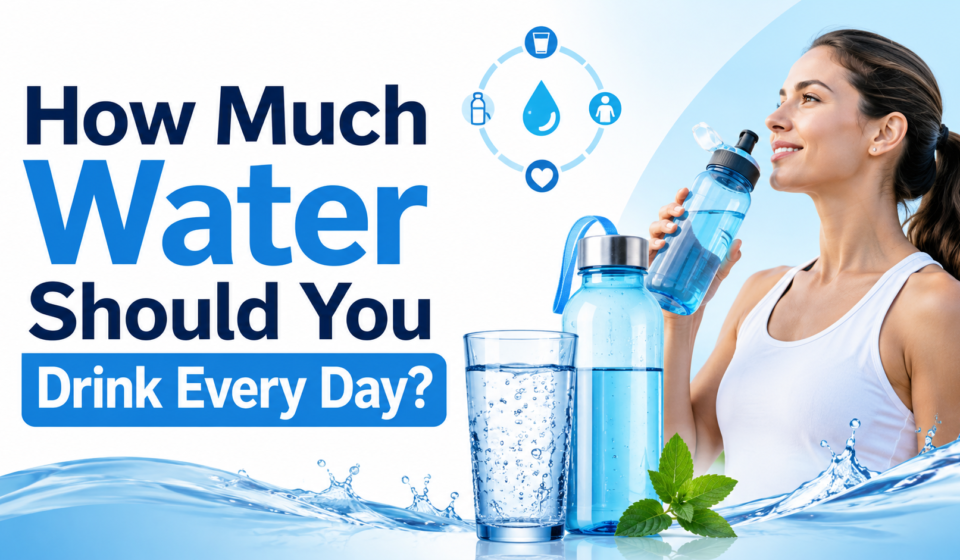

You have probably heard that everyone should drink eight glasses of water a day. It is a useful reminder, but hydration is more personal than that. Someone working outside in summer may need more fluid than a person spending the day in an air-conditioned office.
So, how much water should you drink every day? There is no perfect number for everyone. Activity, weather, diet, age, medications, pregnancy, and health conditions can all change your needs.
Water helps control body temperature, support digestion, move nutrients, protect tissues, and remove waste.
Quick Summary
General guidance suggests about 15.5 cups of total water per day for adult men and 11.5 cups for adult women. These amounts include water from food and all drinks, not only plain water.
Your needs may increase with exercise, hot weather, fever, vomiting, diarrhea, pregnancy, or breastfeeding. Drink regularly, notice your thirst and urine color, and avoid forcing large amounts of water at once.
Table of Contents
- How Much Water Do You Need?
- Is Eight Glasses Enough?
- What Changes Your Water Needs?
- Signs You Are Drinking Enough
- Dehydration: Causes, Symptoms, and Treatment
- Can You Drink Too Much Water?
- Practical Hydration Tips
- When to See a Doctor
- Frequently Asked Questions
- Disclaimer
How Much Water Do You Need?
The National Academies provides a general daily target of about 15.5 cups, or 125 fluid ounces, of total water for adult men and 11.5 cups, or 91 fluid ounces, for adult women.
“Total water” includes everything you eat and drink. It does not mean every man must drink 125 ounces of plain water or every woman must drink 91 ounces from a bottle.
Water also comes from milk, coffee, tea, soup, fruit, vegetables, yogurt, and other foods and beverages.
Plain water is still one of the best everyday choices because it has no calories or added sugar. Coffee and tea also contribute to hydration when consumed in moderate amounts. However, heavily sweetened drinks may add unnecessary sugar and calories.
These daily water amounts are starting points rather than strict prescriptions. A smaller adult with a quiet routine may need less than a larger person who exercises frequently.
Is Eight Glasses of Water Enough?
Eight 8-ounce glasses equal 64 ounces. This may be enough for some adults when food and other drinks provide additional water, but it is not a universal medical rule.
For example, 64 ounces may not be enough during a long summer hike. It may also be too much for someone with heart or kidney disease who has been given a fluid restriction.
Use the eight-glass rule as a simple reminder to drink regularly rather than a number everyone must reach.
What Changes Your Water Needs?
Several everyday factors can affect how much water you should drink.
1. Exercise and Physical Activity
You lose more fluid when you sweat. Running, playing sports, working outdoors, or doing a demanding workout can increase your water needs.
Drink some water before activity, take reasonable drink breaks, and replace lost fluids gradually afterward.
Water is usually enough for short or moderate workouts. Electrolytes may be useful during prolonged, intense activity with heavy sweating, but most everyday exercise does not require a sports drink.
2. Weather and Environment
Hot and humid weather can make you sweat more. Dry air and high altitude may also increase water loss through breathing.
Carry water when spending time outdoors, especially during the warmer months. Do not wait until you feel exhausted or extremely thirsty before taking a drink.
3. Illness
Fever, vomiting, and diarrhea can cause rapid fluid loss. If nausea makes drinking difficult, take small, frequent sips instead of trying to finish a full glass at once.
A commercially prepared oral rehydration solution may help when vomiting or diarrhea causes the loss of both water and electrolytes.
Continuing or severe symptoms should be discussed with a healthcare professional.
4. Pregnancy and Breastfeeding
Fluid needs generally increase during pregnancy and breastfeeding. Water supports the additional demands of pregnancy, while breastfeeding requires fluid for milk production.
Drinking water with meals and keeping a bottle nearby can make it easier to meet these increased needs. A prenatal healthcare professional can provide guidance based on your health and pregnancy.
5. Age, Medications, and Health Conditions
Older adults may not feel thirst as strongly as younger adults. Drinking water with meals and keeping fluids nearby can be helpful.
Diuretics and some other medications can affect the body’s fluid balance. Heart, kidney, or liver disease may require a carefully managed fluid plan.
Follow your healthcare professional’s instructions rather than automatically increasing your water intake.
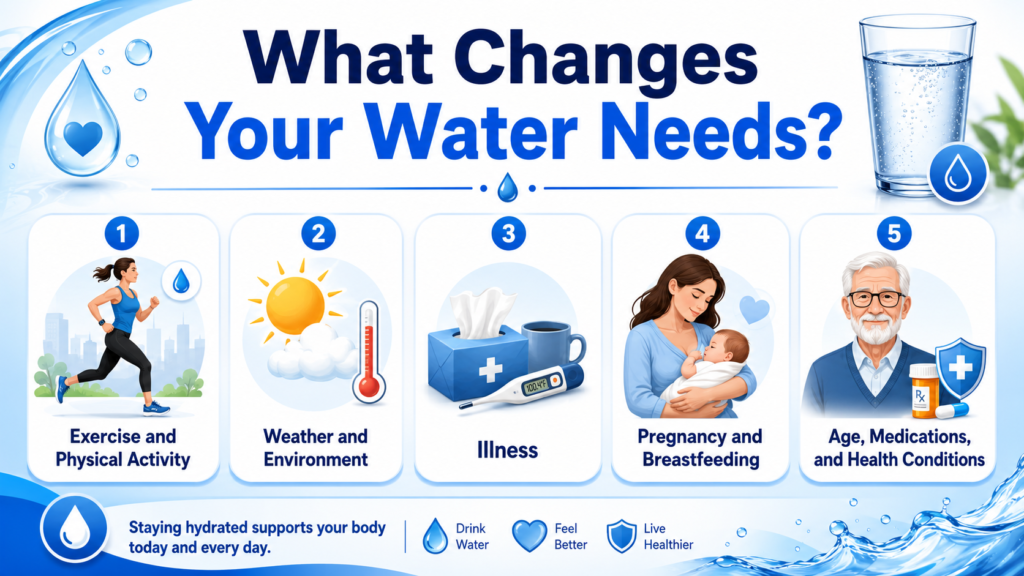
Infographic showing five factors that affect water needs: exercise, weather, illness, pregnancy, breastfeeding, age, medications, and health conditions.
Signs You Are Drinking Enough Water
For many healthy adults, thirst is a useful guide. If you rarely feel very thirsty, urinate regularly, and feel comfortable during normal activity, you may be drinking enough.
Urine color can provide another practical clue. Pale yellow urine often suggests reasonable hydration. Dark yellow urine or urinating much less than usual may mean you need more fluid.
However, your urine does not need to be completely clear throughout the day. Foods, vitamins, medications, and medical conditions can also change its color, so urine color should not be your only guide.
Dehydration: Causes, Symptoms, and Treatment
Dehydration happens when your body loses more fluid than it receives.
Common causes include heavy sweating, fever, vomiting, diarrhea, frequent urination, and simply not drinking enough water.
Common signs of mild or moderate dehydration include:
- Thirst, dry mouth, headache, or tiredness
- Dark urine or less frequent urination
- Dizziness, dry skin, or muscle cramps
For mild dehydration, stop strenuous activity, move to a cooler place if heat is involved, and sip water gradually. Drinking too quickly may make nausea worse.
When vomiting or diarrhea is involved, a commercial oral rehydration solution may help replace both water and electrolytes.
Do not use salt tablets or add large amounts of salt to drinking water. These approaches can be unsafe and may make the situation worse.
Confusion, fainting, very little or no urination, rapid breathing, rapid heartbeat, seizures, severe weakness, or difficulty staying awake may be signs of severe dehydration. Seek urgent medical care if any of these symptoms occur.
Can You Drink Too Much Water?
Yes. Although dehydration is more common, drinking an excessive amount of water in a short period can also be dangerous.
Too much water can dilute the sodium in your blood. This condition is known as hyponatremia.
Possible symptoms include nausea, headache, confusion, unusual tiredness, muscle weakness, vomiting, or seizures.
The risk may increase during endurance events when someone repeatedly drinks large amounts of plain water without considering sweat and electrolyte loss.
More water is not always better. Spread your fluid intake throughout the day and avoid forcing yourself to drink when you already feel well hydrated.
Practical Ways to Stay Hydrated
Small habits are usually more helpful than trying to drink your entire daily amount at the end of the day.
- Keep a refillable bottle near you at work, at home, or during exercise.
- Drink water with meals and during natural breaks in your day.
- Add lemon, lime, cucumber, mint, or berries for extra flavor.
- Choose water instead of sugary drinks more often.
- Eat water-rich foods such as fruit, vegetables, yogurt, and soup.
A simple routine could include drinking water with breakfast, lunch, and dinner, followed by additional drinks between meals according to your thirst, activity level, and weather.
You do not need to count every ounce unless a healthcare professional has advised you to monitor your fluid intake.
When to See a Doctor
Seek urgent medical attention if dehydration is accompanied by:
- Confusion or fainting
- Seizures or difficulty staying awake
- Very little or no urination
- Rapid breathing or a rapid heartbeat
- Severe weakness
- Signs of heatstroke
Contact a healthcare professional if you cannot keep fluids down, vomiting or diarrhea continues, thirst remains unusually strong, you are urinating much more than normal, or dehydration keeps returning.
Persistent thirst and frequent urination can sometimes be related to diabetes or another medical condition.
You should also ask your doctor for a personal hydration target if you have heart, kidney, or liver disease, take diuretics, are pregnant or breastfeeding, or have been told to follow a fluid restriction.
Frequently Asked Questions (FAQs)
1. Is 64 Ounces of Water a Day Enough?
It may be enough for some adults when water from food and other drinks is included. People who are physically active, live in hot climates, or are pregnant or breastfeeding may need more.
Your daily routine and health matter more than following a fixed 64-ounce rule.
2. Do Coffee and Tea Count Toward Hydration?
Yes. Coffee and tea contain water and contribute to your daily fluid intake.
Unsweetened options are generally better everyday choices than drinks containing large amounts of sugar, syrup, or cream.
3. Do I Need an Electrolyte Drink Every Day?
Most people do not need an electrolyte drink every day. Water and a balanced diet are usually enough for normal activities and shorter workouts.
Electrolyte drinks may be useful after prolonged heavy sweating or certain illnesses. Some products contain a lot of sugar or sodium, so they should not automatically replace plain water.
4. Can Drinking Water Help With Weight Loss?
Water has no calories. Replacing soda, sweet tea, or other sugary drinks with water may reduce your overall calorie intake.
However, drinking more water alone does not guarantee weight loss. Nutrition, physical activity, sleep, health conditions, and long-term habits also play important roles.
5. Is Clear Urine a Sign of Perfect Hydration?
Not necessarily. Pale yellow urine is usually a more practical sign of adequate hydration.
Completely clear urine from time to time is not usually a concern. However, urine that remains clear throughout the day may mean you are drinking more water than your body needs.
Conclusion: How Much Water Should You Drink Every Day?
There is no single water target that works for everyone. General guidance suggests about 15.5 cups of total water per day for men and 11.5 cups for women, including fluid from both foods and beverages.
Your ideal intake depends on your body, activity level, climate, diet, medications, and overall health.
Drink regularly, use thirst and urine color as practical clues, increase your fluid intake when fluid losses rise, and avoid drinking excessive amounts all at once.
Most healthy adults can stay hydrated through simple daily habits and do not need to track every ounce.
Consult a doctor or qualified healthcare professional if you experience persistent thirst, repeated dehydration, continuing vomiting or diarrhea, or any signs of severe dehydration. Personalized medical advice is especially important if you have a chronic health condition or have been prescribed a fluid restriction.
Trusted Resources
- National Academies of Sciences, Engineering, and Medicine
- Centers for Disease Control and Prevention
- MedlinePlus, U.S. National Library of Medicine
- National Institute of Diabetes and Digestive and Kidney Diseases
- Mayo Clinic
Disclaimer
This article is for educational purposes only and does not replace professional medical advice, diagnosis, or treatment. Ask a qualified healthcare professional about your fluid needs, especially if you have heart, kidney, or liver disease, take diuretics, are pregnant, or have been told to limit fluids.