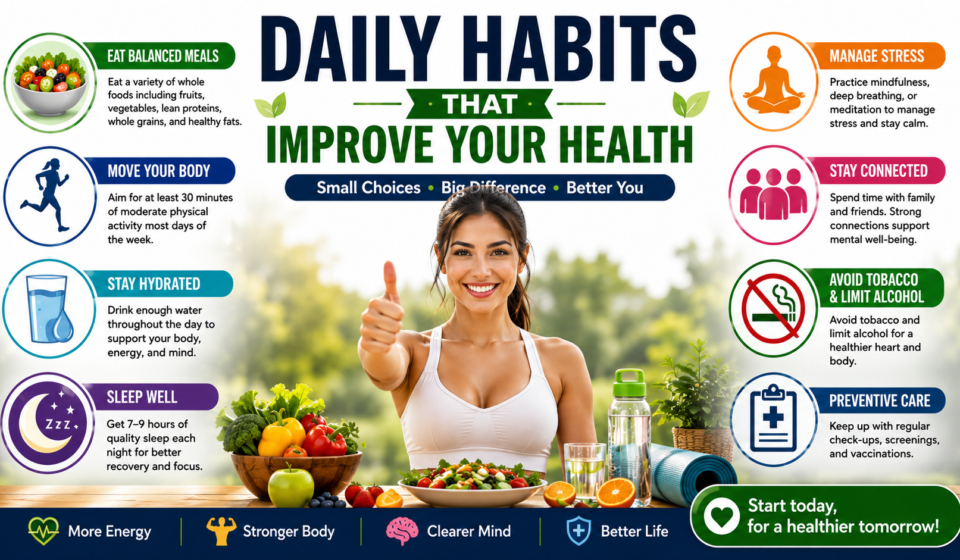

Better health is usually built through small choices repeated every day. You do not need an expensive gym membership, a strict diet, or a complicated wellness plan. Simple actions such as walking, eating balanced meals, drinking enough water, sleeping well, and managing stress can support your physical and mental well-being.
The best daily habits that improve your health are practical, safe, and easy to maintain. Start with one or two changes instead of trying to change your entire lifestyle at once.
Quick Summary
Healthy living depends on regular daily choices. Balanced meals, physical activity, proper sleep, hydration, stress management, and preventive healthcare can support energy, mood, fitness, and long-term wellness. Avoiding tobacco, limiting alcohol, using medicines safely, and staying socially connected are also important. Healthy habits may reduce some health risks, but they cannot prevent or treat every medical condition. Professional medical care is still necessary when symptoms or concerns arise.
Table of Contents
- Eat Balanced Meals
- Move Your Body
- Drink Enough Fluids
- Improve Your Sleep
- Take Breaks From Sitting
- Manage Stress
- Support Mental and Social Health
- Avoid Tobacco and Limit Alcohol
- Use Medicines Safely
- Keep Up With Preventive Care
- When to See a Doctor
- Frequently Asked Questions
- Conclusion
Eat Balanced Meal
A balanced diet gives your body energy and essential nutrients. Healthy eating does not mean avoiding every favorite food.
Try to include vegetables, fruits, whole grains, beans, lean proteins, fish, eggs, nuts, seeds, and dairy products in your meals.
A simple balanced meal may include:
- A source of protein
- A vegetable or fruit
- A high-fiber carbohydrate
- A small amount of healthy fat
For example, breakfast could be oatmeal with berries and nuts. Lunch might include a turkey sandwich on whole-grain bread. Dinner could be grilled chicken, brown rice, and vegetables.
Convenient foods can also be healthy. Frozen vegetables, canned beans, plain yogurt, canned tuna, and prewashed salad greens can save time.
Focus on your overall eating pattern rather than expecting every meal to be perfect. People with diabetes, kidney disease, food allergies, or digestive problems should consult a doctor or registered dietitian before making major dietary changes.
Move Your Body Regularly
Regular movement supports your heart, muscles, bones, mood, sleep, and daily functioning.
Adults are generally encouraged to work toward at least 150 minutes of moderate physical activity each week. Strength exercises are also recommended on at least two days.
You do not need to achieve this immediately. A person who is inactive can begin with five or ten minutes of movement.
Easy ways to stay active include:
- Walking after meals
- Dancing at home
- Gardening
- Taking the stairs when safe
- Using resistance bands
- Doing active household tasks
For example, if a 30-minute workout feels difficult, take three 10-minute walks during the day.
Choose activities you enjoy. A simple routine that you repeat is usually more helpful than an intense plan you quickly stop.
Seek medical advice if exercise causes chest pain, faintness, severe shortness of breath, or unusual weakness.
Drink Enough Fluid
Water supports digestion, circulation, body temperature, and many other body functions.
There is no single amount of water that is correct for everyone. Your needs depend on body size, weather, activity level, diet, pregnancy, medications, and medical conditions.
Keep water nearby and drink regularly throughout the day.
You can also support hydration by:
- Drinking water with meals
- Carrying a bottle during exercise
- Choosing water instead of sugary drinks
- Eating soups, fruits, and vegetables
For example, someone who forgets to drink while working can keep a reusable bottle beside the computer.
Drinking excessive amounts of water in a short time can be unsafe. People with kidney disease, heart failure, liver disease, or fluid restrictions should follow medical advice.
Improve Your Sleep Routine
Sleep affects memory, mood, appetite, concentration, immunity, and physical recovery. Most adults need at least seven hours of sleep per night, although individual needs may differ. Try to sleep and wake at approximately the same time each day. A regular routine helps your body develop a natural sleep pattern.
A relaxing bedtime routine may include:
- Lowering the lights
- Taking a warm shower
- Reading
- Practicing slow breathing
- Keeping your phone away from the bed
For example, place your phone across the room 30 minutes before bedtime instead of scrolling until midnight. Caffeine can affect sleep for several hours. Consider limiting coffee, energy drinks, and strong tea later in the day. Consult a healthcare professional if you regularly snore loudly, wake up gasping, feel very sleepy during the day, or remain tired despite sleeping long enough.
Take Breaks from Sitting
Many adults spend long hours sitting at work, driving, or watching television. Try to stand, stretch, or walk briefly every 30 to 60 minutes.
You might:
- Walk while talking on the phone
- Refill your water bottle
- Stretch your shoulders
- Stand during short meetings
- Walk around the room between tasks
For example, someone working from home could stand after each online meeting. These short breaks do not replace exercise, but they can reduce long periods of inactivity.
Manage Stress in Healthy Ways
Stress is a normal part of life, but ongoing stress may affect sleep, appetite, mood, digestion, and concentration.
Helpful stress-management habits include:
- Slow breathing
- Prayer or meditation
- Journaling
- Spending time outdoors
- Listening to music
- Talking with someone you trust
For example, before starting work, take five slow breaths and choose the most important task for the day. Stress management does not mean ignoring serious problems. Financial pressure, family concerns, or work difficulties may require practical support or professional counseling. Seek help if stress becomes overwhelming or interferes with daily life.
Support Mental and Social Health
Mental and social health are important parts of overall wellness.
Stay connected with friends, relatives, neighbors, or community groups. A short phone call, a shared meal, or a weekly walk with one trusted person can be meaningful. Activities that create a sense of purpose may also help. These can include volunteering, gardening, religious activities, learning, creative hobbies, or helping family members. Occasional sadness or worry is normal. However, persistent sadness, severe anxiety, hopelessness, loss of interest, or difficulty managing everyday tasks should be discussed with a qualified professional. In the United States, anyone experiencing suicidal thoughts can call or text 988. Call 911 if there is immediate danger.
Avoid Tobacco and Limit Alcohol
Avoiding tobacco is one of the most important steps you can take for your health. Cigarettes, cigars, smokeless tobacco, and other nicotine products can cause serious health problems. Quitting may be difficult, but counseling and approved medications can help. Free quit support is available in the United States at 1-800-QUIT-NOW. People who do not drink alcohol do not need to start. Those who drink should consider medical conditions, medications, pregnancy, driving responsibilities, and personal risk of addiction. Alcohol should be avoided during pregnancy, before driving, while operating machinery, and when it interacts with medication.
Use Medicines Safely
Take prescription and over-the-counter medicines exactly as directed.
Do not increase the dose, stop a prescribed medicine, or combine products without asking a doctor or pharmacist.
Many cold, pain, and allergy medicines contain similar ingredients. Using more than one may cause an accidental overdose.
Keep an updated list of:
- Prescription medicines
- Over-the-counter products
- Vitamins
- Herbal supplements
Natural products are not automatically safe. Supplements may cause side effects or interact with prescribed medicines.
Never share prescription medicine with another person.
Keep Up With Preventive Care
Healthy habits cannot replace regular medical care.
Preventive care may include blood pressure checks, vaccinations, dental exams, vision care, cholesterol testing, diabetes screening, and age-appropriate cancer screenings.
The tests you need depend on your age, family history, sex, lifestyle, pregnancy status, and medical conditions.
Some conditions, such as high blood pressure, may not cause early symptoms. Routine appointments can help identify problems sooner.
Write down questions before medical visits and keep a record of your medicines, vaccinations, and test results.
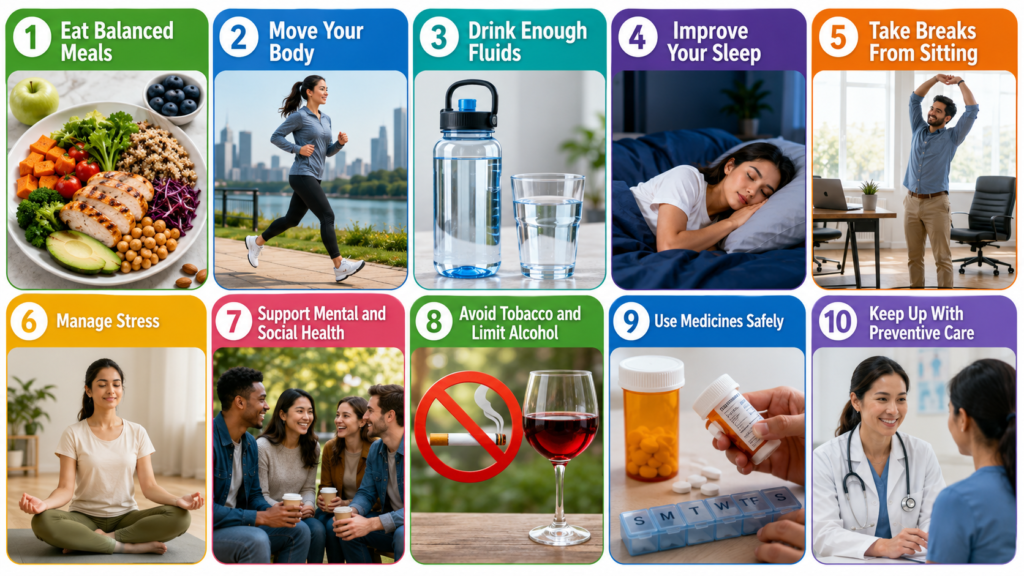
Infographic showing 10 daily habits for better health and wellness.
When to See a Doctor
Lifestyle changes can support wellness, but they should not be used to self-treat serious symptoms.
Contact a healthcare professional if you experience:
- Unexplained weight changes
- Persistent fatigue
- Frequent dizziness
- Ongoing pain
- Long-lasting sleep problems
- Breathing difficulty
- Anxiety or sadness that affects daily life
Call 911 for severe chest pain, major breathing difficulty, sudden confusion, loss of consciousness, sudden weakness on one side, or signs of a severe allergic reaction.
How to Make Healthy Habits Last
- Start with a small and specific goal.
- Instead of saying, “I will exercise more,” decide to walk for 10 minutes after dinner four times a week.
- Connect a new habit with something you already do. For example, drink water after brushing your teeth, walk after dinner, or prepare breakfast before going to bed.
- Do not treat one missed day as failure. Return to your routine the next day.
- A flexible and realistic habit is more likely to last than an extreme plan.
Frequently Asked Questions (FAQs)
1. What is the best daily habit for health?
There is no single best habit. Balanced eating, regular movement, enough sleep, avoiding tobacco, and preventive care all support good health.
2. How many habits should I start at once?
Start with one or two habits. Add another once they become easier.
3. Do I need to exercise every day?
You do not need a formal workout every day, but regular movement throughout the week is helpful.
4. Is drinking eight glasses of water necessary?
Not for everyone. Fluid needs vary depending on body size, weather, activity, diet, medications, and health conditions.
5. Can healthy habits prevent all diseases?
No. Healthy habits may reduce some risks, but age, genetics, environment, and other factors also affect health.
6. Should I consult a doctor before changing my routine?
Consult a healthcare professional before making major changes if you have a chronic condition, take regular medication, are pregnant, or have significant symptoms.
Conclusion: Small Habits Can Support Better Health
The most practical daily habits that improve your health are simple and repeatable.
Balanced meals, regular movement, proper sleep, hydration, stress management, and preventive care can work together to support your well-being.
You do not need to change everything at once. Choose one small habit, practice it consistently, and add another gradually.
Healthy habits support wellness, but they cannot diagnose or treat every condition. Consult a doctor or another qualified healthcare professional if you have persistent symptoms, medication concerns, or questions about major lifestyle changes.
Medical Disclaimer
This article is for general educational and informational purposes only. It is not intended to diagnose, treat, cure, or prevent any disease and should not replace professional medical advice, diagnosis, or treatment. Always consult a qualified healthcare professional regarding symptoms, medical conditions, medicines, dietary restrictions, or major lifestyle changes.
Trusted Resources
- Centers for Disease Control and Prevention
- MedlinePlus, U.S. National Library of Medicine
- U.S. Office of Disease Prevention and Health Promotion
- American Heart Association
- National Institute of Mental Health