
How to Lose Belly Fat Naturally? 15 Science-Based Tips That Actually Works

Quick Summary
Belly fat is more than a cosmetic concern—it can increase the risk of heart disease, type 2 diabetes, and other health conditions. The good news is that you don’t need extreme diets or expensive supplements. This guide shares simple, science-backed strategies to help you lose belly fat naturally through healthy eating, regular physical activity, better sleep, and sustainable lifestyle habits.
Table of Contents
- Why Belly Fat Matters
- Eat More Protein
- Cut Back on Added Sugar
- Increase Fiber Intake
- Stay Physically Active
- Choose Whole Foods
- Drink More Water
- Get Quality Sleep
- Manage Everyday Stress
- Include Strength Training
- Limit Alcohol Intake
- Avoid Crash Diets
- Eat Mindfully
- Stay Consistent
- Track Your Progress
- Know When to See a Doctor
- Final Thoughts
- Frequently Asked Questions
- Educational Disclaimer
- Trusted Resources
Why Belly Fat Matters?
If you’ve been wondering how to lose belly fat naturally, you’re not alone. Belly fat is one of the most common health concerns among adults in the United States. While it’s normal to have some fat around your abdomen, excess belly fat—especially the fat that surrounds internal organs—can affect your long-term health.
The good news is that healthy lifestyle changes can make a real difference over time. Small daily habits often produce better and longer-lasting results than quick-fix diets.
1. Eat More Protein
Protein helps you stay full for longer, which may reduce unnecessary snacking and support healthy weight management. It also helps preserve muscle while you’re losing weight.
Good protein choices include chicken, fish, eggs, Greek yogurt, beans, lentils, tofu, and low-fat dairy products. For example, choosing Greek yogurt instead of a sugary pastry for breakfast can help keep you satisfied until lunch.
2. Cut Back on Added Sugar
Sugary drinks, desserts, and many packaged foods can add hundreds of extra calories without making you feel full.
Instead of soda, try sparkling water with lemon or unsweetened iced tea. Reading food labels can also help you identify hidden sources of added sugar.
3. Increase Your Fiber Intake
Foods rich in soluble fiber may help you feel full for longer and support healthy digestion. They can also make it easier to maintain a healthy weight over time.
Simple ways to add more fiber include eating oatmeal for breakfast, adding vegetables to lunch and dinner, and choosing fruits like apples, berries, or pears for snacks.
4. Stay Physically Active
Regular movement plays an important role in reducing overall body fat, including belly fat. A combination of brisk walking, cycling, swimming, and strength training is often more effective than relying on diet alone.
Aim for at least 150 minutes of moderate-intensity physical activity each week, and remember that consistency matters more than perfection.
5. Choose Whole Foods
Whole foods are naturally rich in nutrients and usually lower in added sugars, unhealthy fats, and excess sodium than highly processed foods.
Fill most of your plate with vegetables, fruits, whole grains, lean proteins, nuts, seeds, and healthy fats. Making these foods the foundation of your meals can support gradual, sustainable fat loss.
6. Drink More Water
Staying hydrated supports your overall health and may help with weight management. Sometimes, people mistake thirst for hunger and end up eating when they simply need water.
A simple habit is to drink a glass of water before meals. Carrying a reusable water bottle can also make it easier to stay hydrated throughout the day. Plain water is the best choice, while sugary beverages should be limited.
7. Get Quality Sleep
Sleep is often overlooked when trying to lose weight. Adults who consistently get too little sleep may experience changes in hormones that regulate hunger and appetite.
Aim for 7–9 hours of quality sleep each night. Keeping a regular bedtime, limiting screen time before bed, and avoiding caffeine late in the day can help improve sleep quality.
8. Manage Everyday Stress
Long-term stress can make healthy habits harder to maintain. Some people may eat more comfort foods or snack more often during stressful periods.
Healthy ways to manage stress include taking a short walk, practicing deep breathing, reading, listening to music, or spending time with family and friends. Even 10–15 minutes of relaxation each day can be beneficial.
9. Include Strength Training
Building muscle helps your body burn more energy throughout the day. Strength training also supports healthy aging and improves overall fitness.
You don’t need a gym to get started. Bodyweight exercises such as squats, push-ups, lunges, or resistance band workouts can be effective when performed regularly two to three times per week.
10. Limit Alcohol Intake
Alcoholic drinks can provide extra calories with little nutritional value. In addition, alcohol may lower self-control, making it easier to overeat.
If you drink alcohol, do so in moderation according to current health recommendations, and balance it with healthy meals and regular physical activity.
11. Avoid Crash Diets
Very restrictive diets may promise rapid results, but they are often difficult to maintain. Many people regain the weight after returning to their normal eating habits.
Instead of looking for a quick fix, focus on small, realistic lifestyle changes that you can continue for months and years.
12. Eat Mindfully
Mindful eating means paying attention to your food without distractions. Eating slowly gives your body time to recognize when you’re comfortably full.
For example, try eating meals at the table instead of in front of the television or while scrolling through your phone.
13. Stay Consistent
Healthy weight loss doesn’t happen overnight. Small improvements repeated every day often lead to meaningful long-term results.
If you miss a workout or enjoy a special meal, don’t give up. Simply return to your healthy routine at your next meal or the following day.
14. Track Your Progress
Keeping track of your habits can help you stay motivated. Instead of focusing only on the number on the scale, notice other positive changes such as increased energy, better sleep, improved fitness, or clothes fitting more comfortably.
A simple journal or smartphone app can help you monitor your meals, exercise, and daily habits.
15. Know When to See a Doctor
If you’re following healthy habits but aren’t seeing progress after several months, or if you have symptoms such as unexplained weight gain, severe fatigue, or other health concerns, consult your healthcare provider. Certain medical conditions and medications can affect body weight, and a doctor can help identify the underlying cause and recommend appropriate treatment.
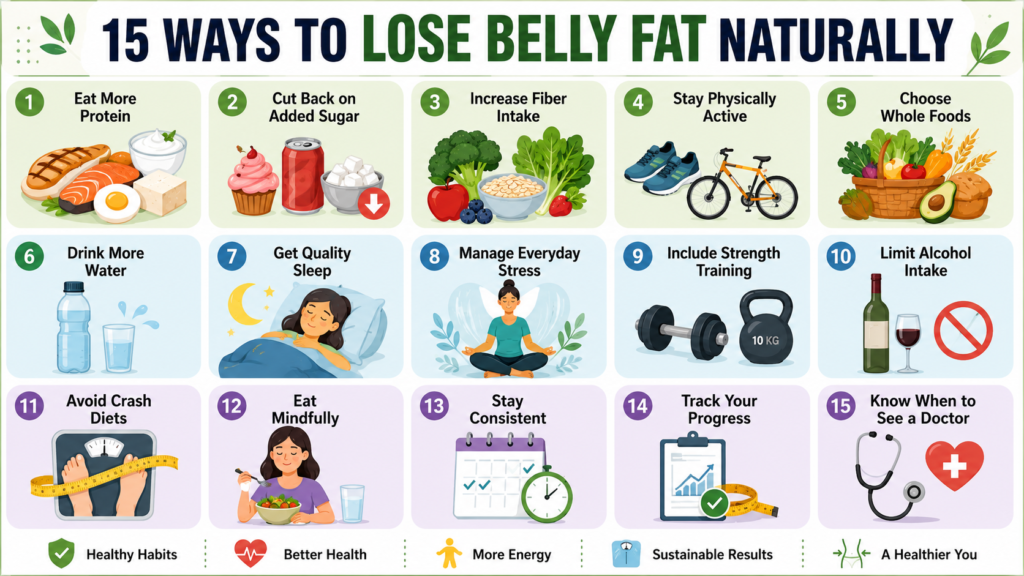
15 science-backed tips to lose belly fat naturally, including eating more protein, cutting added sugar, increasing fiber, staying active, drinking water, sleeping well, managing stress, strength training, mindful eating, tracking progress, and consulting a doctor when needed.
Final Thoughts
Learning how to lose belly fat naturally is about building healthy habits—not searching for a miracle solution. Eating a balanced diet, staying active, sleeping well, managing stress, and being consistent can help reduce belly fat while improving your overall health.
Remember that every person’s body responds differently. Focus on steady, sustainable progress rather than rapid weight loss. If you have an existing medical condition or need personalized guidance, speak with your doctor or a registered dietitian before making major lifestyle changes.
Frequently Asked Questions (FAQs)
1. Can I lose belly fat without going to the gym?
Yes. Regular walking, home workouts, bodyweight exercises, and a healthy diet can all contribute to reducing overall body fat.
2. Are these foods that burn belly fat?
No single food burns belly fat by itself. A balanced eating pattern combined with regular physical activity is the most effective approach.
3. How long does it take to lose belly fat naturally?
The timeline varies from person to person depending on age, activity level, diet, sleep, genetics, and overall health. Consistency is more important than speed.
4. Do abdominal exercises alone reduce belly fat?
No. Exercises like crunches strengthen abdominal muscles but cannot target fat loss in one specific area. Overall weight loss through healthy habits is more effective.
5. Is belly fat more harmful than other body fat?
Excess abdominal fat, particularly visceral fat around internal organs, has been linked to a higher risk of several chronic health conditions. Maintaining a healthy lifestyle can help lower these risks.
Educational Disclaimer
This article is intended for educational and informational purposes only. It is not a substitute for professional medical advice, diagnosis, or treatment. Always consult your physician or another qualified healthcare professional before making significant changes to your diet, exercise routine, or lifestyle, especially if you have an existing medical condition or take prescription medications.
Trusted Resources
- Centers for Disease Control and Prevention (CDC)
- National Institutes of Health (NIH)
- Harvard T.H. Chan School of Public Health
- Mayo Clinic
- American Heart Association