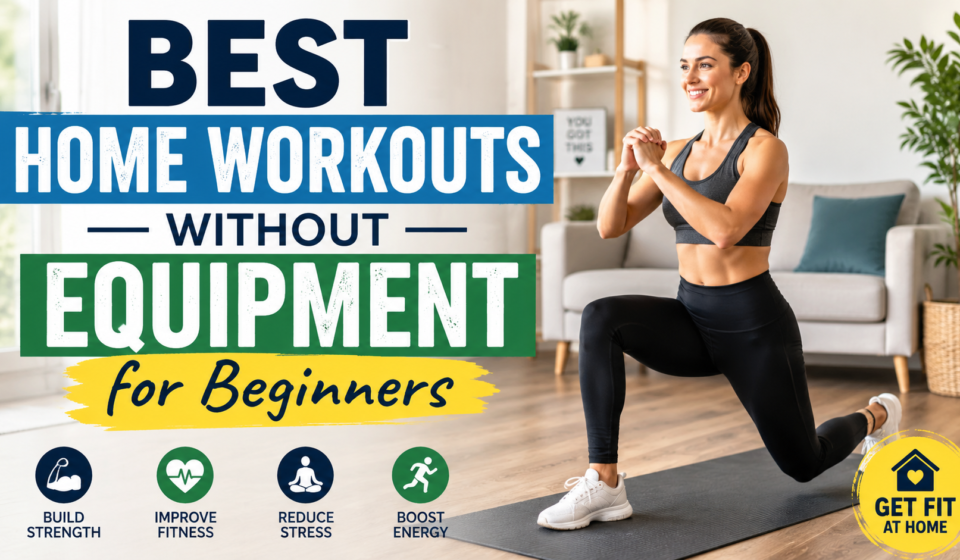

If you’ve been thinking about getting healthier but feel overwhelmed by gyms or expensive fitness equipment, you’re not alone. Many people in the United States want a simple and affordable way to become more active.
The good news is that the best home workouts without equipment for beginners can help you build strength, improve heart health, increase flexibility, and boost energy—all from the comfort of your home.
Bodyweight exercises use your own body as resistance, making them suitable for beginners who want to exercise safely and consistently. The key is to start slowly, focus on proper form, and gradually increase your activity level over time.
Quick Summary
Starting a fitness routine doesn’t require an expensive gym membership or fancy equipment. The best home workouts without equipment for beginners help improve strength, flexibility, balance, and overall fitness using only your body weight. This guide explains beginner-friendly exercises, proper form, workout plans, safety tips, common mistakes, and when it’s important to talk with a healthcare provider before exercising.
Table of Contents
- Why Choose Home Workouts?
- Benefits of Bodyweight Exercise
- How to Prepare Before You Start
- Best Home Workouts Without Equipment for Beginners
- A Simple 20-Minute Beginner Workout Plan
- Common Beginner Mistakes
- How to Stay Motivated
- Symptoms That Mean You Should Stop Exercising
- When to See a Doctor
- Final Thoughts
- FAQs
- Trusted Resources
Why Choose Home Workouts?
Home workouts have become increasingly popular because they fit almost any lifestyle. Whether you’re a busy parent, work from home, or simply prefer privacy, exercising at home removes many common barriers.
Working out at home also saves travel time and allows you to exercise whenever it fits your schedule. Even 20 minutes a day can make a meaningful difference when practiced consistently.
Another advantage is flexibility. You can adjust your workout based on your fitness level without worrying about keeping up with others.
Benefits of Bodyweight Exercise
Bodyweight exercises offer many health benefits without requiring machines or weights.
Regular exercise may help:
- Improve muscle strength
- Support heart health
- Increase flexibility
- Improve balance and coordination
- Help maintain a healthy weight
- Boost mood and reduce everyday stress
- Increase daily energy levels
- Improve posture
These benefits develop gradually with regular practice rather than overnight.
How to Prepare Before You Start
Before beginning your workout routine, prepare a safe exercise space with enough room to move comfortably.
Wear supportive athletic shoes if possible and choose comfortable clothing that allows free movement. Keep a water bottle nearby to stay hydrated.
Spend five minutes warming up with gentle movements such as walking in place, shoulder rolls, arm circles, and slow leg swings. A proper warm-up prepares your muscles and joints for exercise and may reduce the risk of injury.
If you’re new to exercise, remember that it’s perfectly acceptable to move slowly. Quality of movement is more important than speed.
Best Home Workouts without Equipment for Beginners
1. Bodyweight Squats
Bodyweight squats strengthen the legs, hips, and core while improving everyday movements such as sitting down and standing up.
Stand with your feet about shoulder-width apart. Bend your knees and push your hips back as though sitting into a chair. Keep your chest lifted and return to standing.
Start with 8 to 12 repetitions.
2. Wall Push-Ups
Wall push-ups are an excellent beginner version of the traditional push-up.
Stand facing a wall with your hands placed at shoulder height. Bend your elbows to move toward the wall, then push yourself back to the starting position.
As you become stronger, you can progress to incline push-ups on a countertop or knee push-ups.
Aim for 8 to 12 repetitions.
3. Glute Bridges
Glute bridges strengthen the hips, lower back, and core muscles.
Lie on your back with your knees bent and feet flat on the floor. Press through your heels and lift your hips toward the ceiling while squeezing your glutes. Lower slowly.
Repeat 10 to 15 times.
4. Bird-Dog Exercise
This exercise improves balance, coordination, and core stability.
Start on your hands and knees. Slowly extend one arm forward and the opposite leg backward. Hold briefly before returning to the starting position.
Switch sides and repeat.
Move slowly and avoid rushing.
5. Standing Marches
Standing marches provide gentle cardiovascular exercise and help improve coordination.
Lift one knee at a time while swinging your arms naturally. Continue for one to three minutes at a comfortable pace.
This is also a great warm-up exercise.
6. Modified Plank
A modified plank strengthens your core without placing too much stress on beginners.
Support yourself on your forearms and knees while keeping your body in a straight line from your shoulders to your knees.
Hold for 15 to 30 seconds while breathing normally.
Increase your holding time gradually as your strength improves.
7. Step-Ups
If you have a sturdy staircase or low step, step-ups are a simple way to strengthen your legs.
Step onto the platform with one foot, bring the other foot up, and then step back down carefully.
Repeat slowly, alternating legs. Always use a stable surface for safety.
8. Walking in Place
Walking in place may seem simple, but it effectively raises your heart rate and helps improve endurance.
Swing your arms naturally and maintain good posture.
Continue for five to ten minutes.
This exercise can easily be added between strength exercises to keep your workout active.
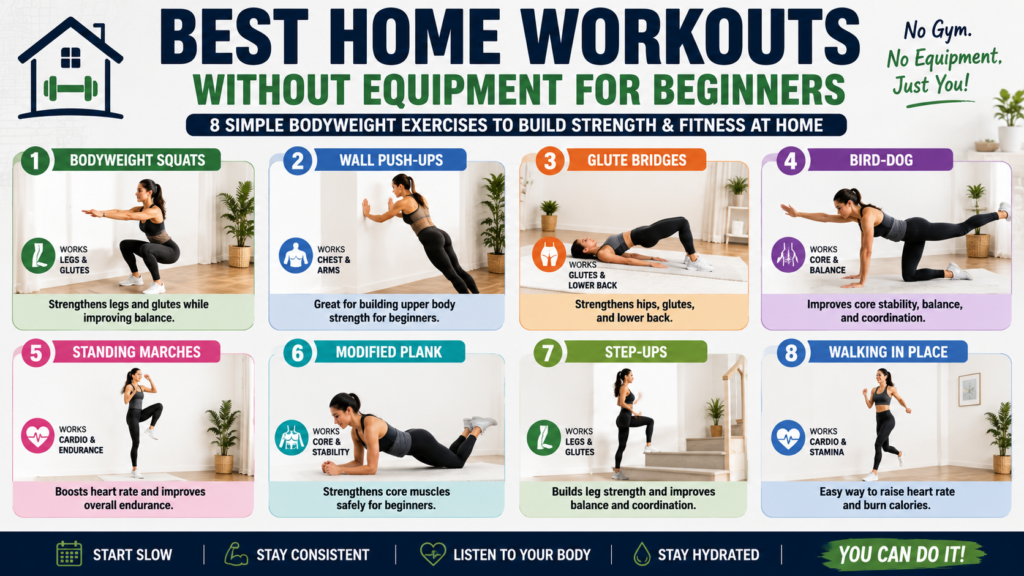
Infographic showing eight beginner-friendly bodyweight exercises that can be done at home without any equipment.
A Simple 20-Minute Beginner Workout Plan
- You don’t need a complicated program to get started.
- Begin with a five-minute warm-up that includes gentle walking in place and light stretching.
- Then perform each exercise one after another:
- Bodyweight squats, wall push-ups, glute bridges, bird-dog, modified plank, and standing marches.
- Complete each exercise for about 30 to 45 seconds, resting for 20 to 30 seconds between exercises.
- Repeat the circuit two or three times depending on your fitness level.
- Finish with five minutes of gentle stretching and slow breathing.
- As you become more comfortable, you can gradually increase your repetitions or workout time.
Common Beginner Mistakes
- Many beginners become discouraged because they expect quick results. Fitness improvements take time and consistency.
- Another common mistake is exercising too intensely during the first week. Starting slowly allows your body to adapt and reduces soreness.
- Poor exercise form may also increase the risk of injury. If you’re unsure about an exercise, use a mirror or watch instructional videos from trusted organizations.
- Skipping warm-ups and cool-downs is another habit worth avoiding. These short sessions prepare your body before exercise and help it recover afterward. Finally, remember that rest is an important part of any fitness program. Your muscles recover and grow stronger during recovery.
How to Stay Motivated
- Building a new habit is easier when your goals are realistic.
- Instead of focusing only on weight loss, celebrate improvements such as feeling stronger, having more energy, or completing another workout.
- Choose a consistent workout time that fits your schedule.
- Some people enjoy listening to music or exercising with family members to stay motivated.
- Keeping a simple workout journal can also help you track your progress and stay encouraged.
Symptoms That Mean You Should Stop Exercising
Exercise should challenge you, but it should not cause severe discomfort.
Stop exercising immediately if you experience:
- Chest pain
- Severe shortness of breath
- Dizziness or fainting
- Sudden joint pain
- Severe muscle pain
- Loss of balance
- Confusion
These symptoms require prompt medical attention if they do not improve quickly.
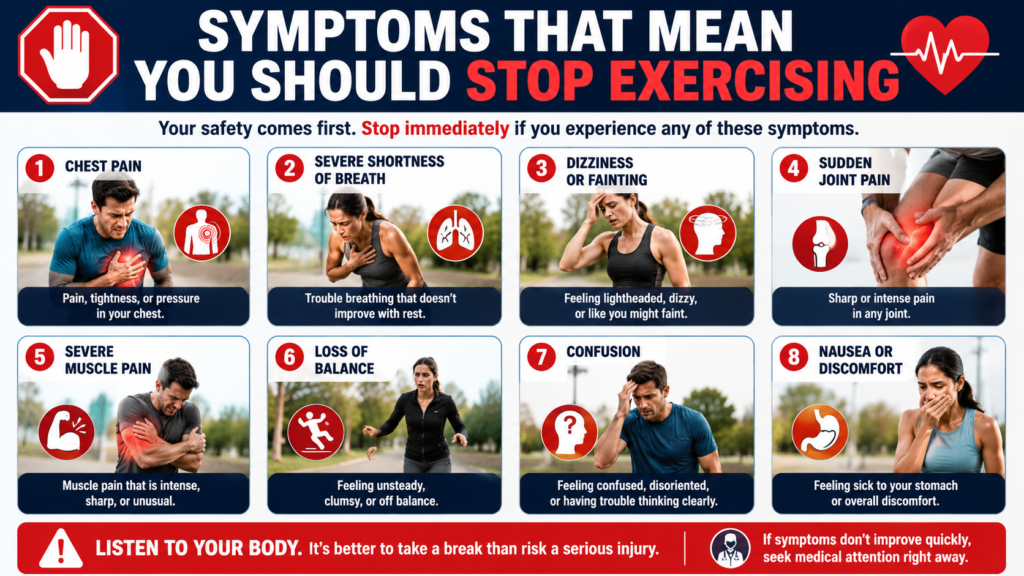
Infographic showing warning signs that mean you should stop exercising and seek medical attention if symptoms persist.
Prevention Tips for Safe Home Workouts
Preventing injuries starts with good habits.
Always warm up before exercising and cool down afterward. Drink enough water throughout the day, wear supportive footwear when appropriate, and exercise on a flat, non-slip surface.
Increase intensity gradually instead of doing too much too soon.
Listen to your body and take rest days when needed.
Proper sleep and balanced nutrition also support recovery and overall fitness.
Treatment Options for Minor Muscle Soreness
It’s normal to experience mild muscle soreness after starting a new exercise routine.
Gentle walking, light stretching, staying hydrated, and getting enough sleep often help relieve mild soreness.
If soreness becomes severe, lasts several days, or is accompanied by swelling or significant pain, reduce your activity and consult a healthcare professional.
When to See a Doctor
You should speak with your healthcare provider before starting a new workout routine if you have heart disease, uncontrolled high blood pressure, diabetes with complications, severe arthritis, chronic lung disease, or any other condition that may limit physical activity. Medical guidance is also important if you are recovering from surgery or frequently experience unexplained chest pain, dizziness, fainting, or unusual shortness of breath. A doctor or qualified healthcare professional can review your health history and suggest exercises that are safe and suitable for your fitness level.
Final Thoughts
The best home workouts without equipment for beginners prove that improving your health doesn’t require expensive machines or a gym membership. Simple bodyweight exercises performed consistently can help increase strength, improve flexibility, support heart health, and build confidence over time.
Start with realistic goals, focus on proper form, and allow your body to progress gradually. Small daily improvements often lead to lasting healthy habits.
Remember: This article is intended for educational purposes only and is not a substitute for professional medical advice, diagnosis, or treatment. If you have an underlying medical condition, experience unusual symptoms during exercise, or are unsure whether a workout program is right for you, consult your doctor or another qualified healthcare professional before beginning.
Frequently Asked Questions (FAQs)
1. Can beginners really get fit without equipment?
Yes. Bodyweight exercises can improve strength, endurance, flexibility, and overall fitness, especially when performed consistently.
2. How often should beginners work out at home?
Most beginners can aim for about 150 minutes of moderate physical activity each week, which may include 20 to 30 minutes on most days.
3. How long does it take to notice results?
Many people notice improvements in energy, endurance, and strength within several weeks of consistent exercise, although results vary by individual.
4. Is it okay to exercise every day?
Light activity like walking or stretching can often be done daily. More intense strength workouts should allow time for muscle recovery between sessions.
5. Do I need to lose weight before starting these workouts?
No. These exercises are suitable for many beginners regardless of weight. Focus on building healthy habits rather than achieving quick results.
6. What should I eat before a home workout?
A light snack containing carbohydrates and a small amount of protein, such as a banana with peanut butter or yogurt with fruit, may provide energy if eaten about 30 to 60 minutes before exercise.
Disclaimer
This article is for educational and informational purposes only. It does not replace professional medical advice, diagnosis, or treatment. Always consult your physician or another qualified healthcare provider before starting a new exercise program, especially if you have a medical condition, are pregnant, or have concerns about your health.
Trusted Resources
- American College of Sports Medicine (ACSM)
- Centers for Disease Control and Prevention (CDC)
- American Heart Association
- National Institute on Aging: Exercise and Physical Activity
- MedlinePlus: Exercise and Physical Fitness